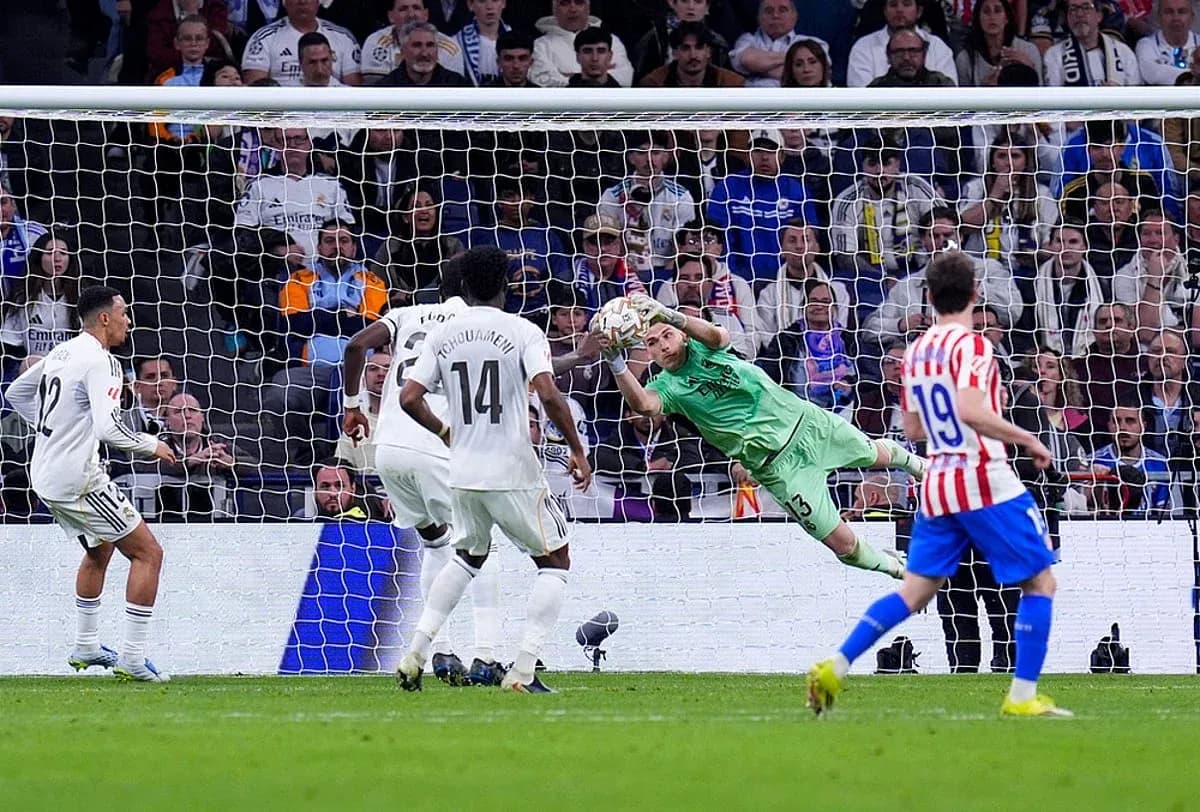
Elche vs Real Madrid: Tactical Analysis of a Narrow Defeat
The lights at Estadio Manuel Martínez Valero had barely cooled when the numbers began to tell their own story. Elche 2–3 Real Madrid, a narrow defeat on the night, but a result that felt entirely in keeping with the seasonal DNA of both sides.
I. The Big Picture – Two trajectories, one script
After six league matches, the standings frame this fixture perfectly. Elche sit 20th in La Liga with 2 points, still winless after 6 games (0 wins, 2 draws, 4 defeats overall). Their overall goal difference is -8, the product of 8 goals scored and 16 conceded. At home, the pattern is even starker: 3 defeats from 3, with 4 goals scored and 11 conceded.
Real Madrid arrive as a ruthless contrast: 2nd in the table with 15 points from 6 matches (5 wins, 0 draws, 1 defeat overall). Their overall goal difference stands at +11, built on 17 goals scored and 6 conceded. On their travels, they have won 2 and lost 1, scoring 5 and conceding 4.
The formations on the night crystallised those arcs. Martin Anselmi set Elche in a 4-5-1, a line of four protectors in front of Matías Dituro, with Buba Sangare, F. Redondo Solari, V. Chust and R. Revivo forming the defensive chain. A five-man midfield – G. Valera, M. Neto, M. Aguado, G. Villar and Tete Morente – tried to compress space and spring A. Osorio as the lone forward.
Jose Mourinho’s Real Madrid answered with their now-standard 4-2-3-1, a shape that has started all 6 league games this season. Thibaut Courtois guarded the goal behind a back four of Trent Alexander-Arnold, Ibrahima Konaté, D. Huijsen and Marc Cucurella. The double pivot of F. Valverde and A. Tchouameni anchored a devastating attacking quartet: Y. Diomande, Arda Güler, Vinícius Júnior and Kylian Mbappé.
II. Tactical Voids – Absences and discipline
Both squads came into this fixture with significant absences that shaped the tactical landscape.
For Elche, Y. Santiago was ruled out with a knee injury. In a team already conceding an overall average of 2.7 goals per game and 3.7 at home, every missing defender or defensive-minded player deepens the structural fragility. Anselmi’s choice of a back four, after previously leaning heavily on a five-at-the-back system (their most-used setup this season), underlined how stretched his options were.
Real Madrid’s defensive depth was also tested. Eder Militao (hamstring injury) and Ferland Mendy (hip injury) were both unavailable, while Rodrygo missed out with a knee problem. Mourinho responded by trusting Huijsen alongside Konaté and using Cucurella as the left-back, a decision that added technical security but removed some of the raw defensive edge Mendy brings.
Disciplinary trends also fed into the tactical risk. Elche’s yellow-card distribution this season shows a clear late-game spike: 26.67% of their yellows arrive between 61–75 minutes and another 26.67% between 91–105 minutes. It speaks of a side that tires, chases and fouls as matches drift away. Real Madrid’s bookings are more spread, but 30.00% of their yellows fall in the 61–75 window, suggesting that the third quarter of the match is often when their aggression and intensity peak.
III. Key Matchups – Hunter vs Shield, Engine Room vs Enforcer
Kylian Mbappé entered this fixture as one of La Liga’s deadliest forwards: 7 goals and 2 assists in 6 appearances, from 31 shots with 22 on target. His overall rating of 8.22 reflects a player not just finishing chances but driving Madrid’s entire attacking thrust.
Against him stood an Elche defence that, heading into this game, had conceded 11 goals at home in just 3 matches – an average of 3.7 per home game. Even with the shift to a 4-5-1, Sangare, Redondo Solari, Chust and Revivo were always going to be under siege. The matchup was brutally asymmetrical: Mbappé’s pace and movement against a back line that has yet to keep a single clean sheet this season, home or away.
For Elche, the attacking counterweight was on the bench at kick-off: Fer Niño, one of the league’s notable scorers with 3 goals in 6 appearances, and Lucas Cepeda, who has quietly delivered 2 assists from 6 substitute outings. Their profiles hint at Elche’s best route: use the midfield five to survive, then unleash physicality (Niño) and link play (Cepeda) against a Madrid back four missing Militao and Mendy.
The central duel was defined by contrasts. For Real Madrid, Arda Güler has emerged as a creative hub: 2 assists from 27 key passes in 6 appearances, with a passing accuracy of 91%. Jude Bellingham, waiting among the substitutes, adds 3 goals and 2 assists, plus 14 drawn fouls and 8 tackles – a complete midfielder capable of both breaking lines and breaking play.
Behind them, Tchouameni and Valverde are the stabilisers. Tchouameni screens, Valverde shuttles – a platform that allows Vinícius and Mbappé to attack with minimal defensive compromise.
Elche’s answer lies in the work of M. Neto, M. Aguado and G. Villar. Their mission: compress the central lane, deny Güler and Diomande the half-spaces, and force Madrid wide to Alexander-Arnold and Cucurella. The risk, of course, is that Vinícius thrives in exactly those wide isolations – and he comes into this game as La Liga’s top assister with 3 assists and 13 key passes, plus 22 fouls drawn, a magnet for contact and cards.
One more duel looms large: Konaté versus whoever leads Elche’s line. Konaté, already on 3 yellow cards this season and with 7 fouls committed in 5 appearances, walks a tightrope. His physical dominance is unquestioned, but against a striker like Niño, who has won 32 of 71 duels and is adept at using his body, the margins between a commanding display and a costly booking are thin.
IV. Statistical Prognosis – The numbers behind the narrative
Strip away the names and the story is written in the metrics. Elche’s overall scoring rate is 1.3 goals per game, both at home and on their travels, but they concede 2.7 overall and 3.7 at home. Real Madrid score 2.8 goals per game overall, with a staggering 4.0 at home and 1.7 away, while conceding just 1.0 overall.
Defensively, Madrid have only 1 clean sheet so far, and they have already failed to score once away from home, but their balance of 17 goals for and 6 against is that of a side whose xG profile would be expected to dominate most fixtures. Their penalty record adds a small wrinkle: 2 penalties taken this season, with 1 scored and 1 missed, underlining that their efficiency from the spot is not flawless.
For Elche, the fact they have scored in 5 of their 6 league games and converted their only penalty of the season suggests they will create moments, especially at home. But their structural leakiness, late yellow-card surges and lack of clean sheets make sustained resistance against this Madrid attack unlikely over 90 minutes.
Following this result, the 3–2 scoreline feels almost like a statistical compromise: Elche’s spirit and sporadic threat against a Real Madrid side whose attacking ceiling is simply higher. The tactical preview for any rematch is clear: unless Elche can transform that back line and reduce their home goals-against average, they will always be walking into the teeth of Mbappé, Vinícius and Güler with little more than hope and hard running as a shield.