Elche vs Mallorca: A Relegation Battle at Estadio Manuel Martínez Valero
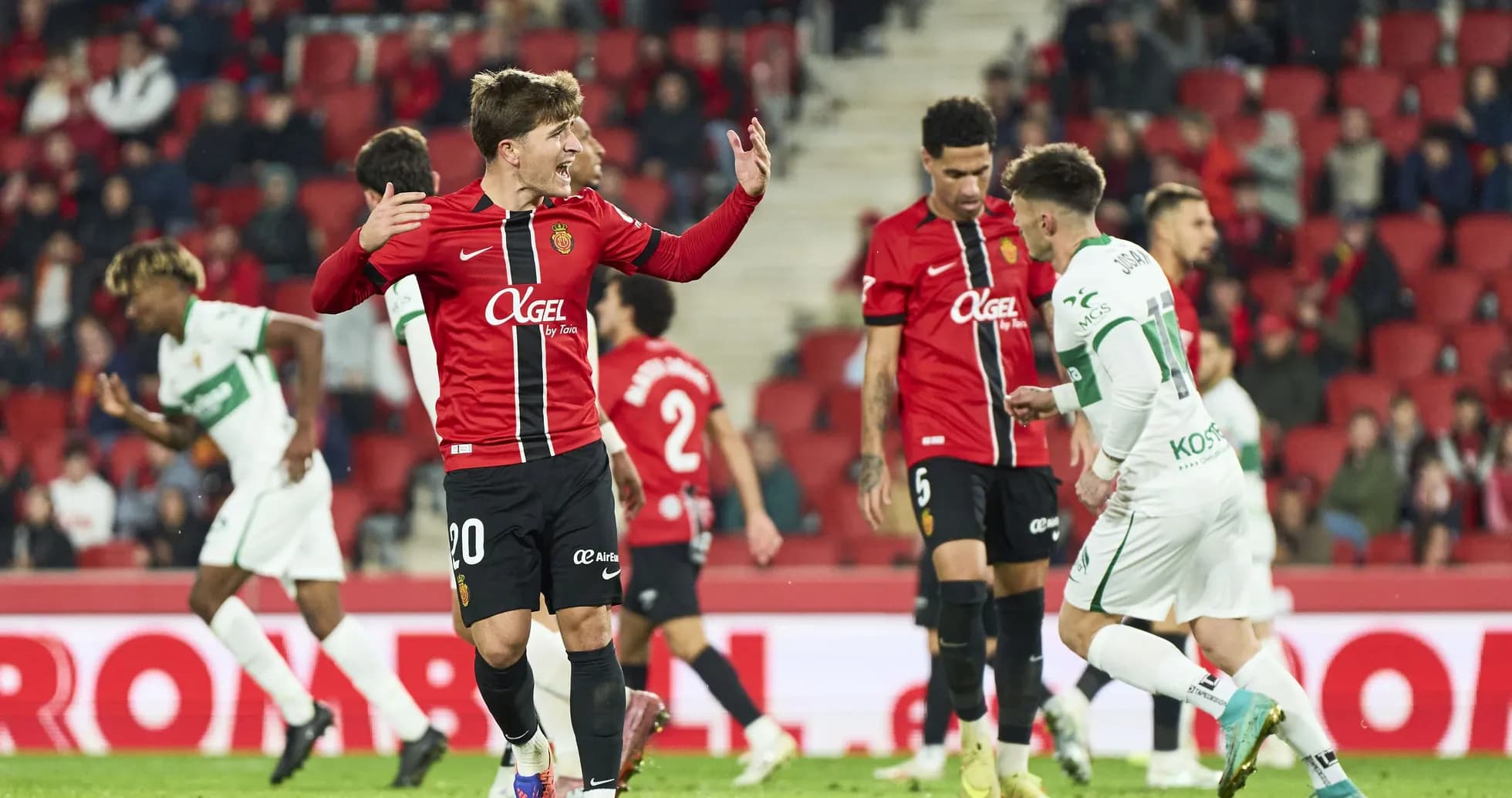
Under the early afternoon glare at Estadio Manuel Martínez Valero, this was not a glamour tie so much as a survival summit. Seventeenth versus eighteenth, Elche on 29 points, Mallorca on 28, both living on the fault line of La Liga’s relegation battle. The hosts arrived as home specialists clinging to their Primera División status; the visitors, a volatile side powered by one of the league’s deadliest strikers but sabotaged by their own fragility away from Son Moix.
Elche’s statistical DNA is that of a team built to suffer but rarely collapse in front of their own fans. Six wins, seven draws and just two defeats from 15 home matches, with 24 goals scored and 16 conceded, paint a picture of a side that leans on structure rather than chaos. Their 1.6 goals per game at home, against only 1.1 allowed, is the platform keeping them above the drop despite a winless, porous away record.
Mallorca, by contrast, are almost the inverse. Overall they have more wins than Elche (7 to 6) and only four home defeats all season, yet their away numbers are brutal: one win, three draws, eleven losses, with 13 scored and 29 conceded. They average just 0.9 goals per game on the road, ship 1.9, and have failed to score in six away outings. This is a team that depends on its offensive volume at home and then suffers badly when forced to chase in hostile territory.
Into that tension stepped Eder Sarabia’s 3-5-2 against Martin Demichelis’s familiar 4-2-3-1. Elche’s choice of a back three with wing-backs Tete Morente and Gerard Valera signalled their intent: protect the central lane, attack the flanks, and give Rafa Mir and Arnau Rodriguez the channels to exploit a Mallorca back line that has been repeatedly exposed away from home.
The Butterfly Effect: Absences and the Tactical Void
The team sheets were shaped as much by who was missing as by who started. Elche were without J. Donald and H. Fort, both out injured. While neither is a headline name in this campaign’s statistical charts, the cumulative effect matters: Sarabia’s defensive rotation has been thin, which partly explains why David Affengruber and Víctor Chust have logged heavy minutes and live permanently on the disciplinary edge. Affengruber already carries a red card this season; Chust has seven yellows and a yellow-red. Elche’s card distribution spikes after the hour mark, with 61-75’ and 76-90’ their most volatile windows, and that forces the back three to walk a disciplinary tightrope whenever the game stretches late.
Mallorca’s absences were more glaring and structurally damaging. Takuma Asano and L. Bergstrom were out injured, but it was the combination of J. Mojica’s suspension for yellow cards and J. Virgili’s red-card absence that really bent Demichelis’s options. Mojica’s absence stripped Mallorca of a natural up-and-down left-sided outlet; instead, Toni Lato had to balance defensive duties with providing width. With M. Kumbulla and J. Salas also unavailable, Mallorca’s defensive rotation was threadbare, which made the decision to stick with a back four and a high-ish line a calculated risk against Elche’s two-striker set-up.
Layer onto that Samu Costa’s season-long card profile: nine yellows, a magnet for duels and contact. Mallorca’s yellow-card map shows a spike between 46-60’ and a notable share deep into stoppage time. In a relegation six-pointer, that kind of edge can dictate whether they can maintain their aggressive double pivot or are forced to retreat into a passive low block.
The Hunter vs. The Shield
This matchup revolved around one central question: could Elche’s defensive structure withstand Vedat Muriqi?
Muriqi’s numbers are those of an elite La Liga finisher. Eighteen goals in 28 appearances, from 72 shots and 38 on target, make him the clear “Hunter” in this contest. He is not just a penalty-box poacher; he wins 180 of 343 duels, draws 49 fouls, and has scored five penalties. Mallorca’s entire offensive volume is bent around his presence as the reference point in Demichelis’s 4-2-3-1.
Waiting for him was Elche’s “Shield”: a back three anchored by Affengruber and Chust. The Austrian has 58 tackles, 18 blocks and 40 interceptions; Chust adds 54 tackles and 15 blocks, with a passing accuracy of 90 percent. Together, they embody Elche’s identity: defend the box aggressively, clear the first ball, then use secure distribution to launch transitions.
Given Mallorca’s away record—just 34 goals all season, and only 13 of those on the road—the duel was always likely to tilt on whether Muriqi could isolate one of the central defenders in transition rather than attack a settled low block. Elche’s three-man line was designed precisely to deny him those one-v-one channels.
The Engine Room Duel
Behind the front lines, the midfield battle was defined by contrast. For Elche, the creative burden has increasingly fallen on the type of profile represented by Martim Neto, the league’s 18th-ranked assister with five assists, 23 key passes and an 87 percent pass accuracy. He did not start here, but his statistical imprint explains the template: Elche’s central midfield—Aguado, Febas, Diangana—are tasked with combining short, clean circulation with vertical passes into Mir and Rodriguez.
Opposite them, Samu Costa is Mallorca’s enforcer and metronome rolled into one. With 969 passes, 47 tackles, 12 blocks and 20 interceptions, he is the player Demichelis relies on to both break up play and launch transitions. His duel volume (334) and fouls committed (50) underline how often he operates on the edge of legality. Against Elche’s five-man midfield, his ability to dictate tempo without being dragged into reckless challenges was always going to be decisive.
Omar Mascarell’s role alongside him was to stabilize and help build through the thirds, while the trio of Zito Luvumbo, Pablo Torre and Malick Joseph were meant to swarm between the lines, drawing out Elche’s wide centre-backs and creating space for Muriqi.
Depth and Game-Changers
On the benches, the contrast was subtle but important. Elche’s attacking change of pace was likely to come from Josan and L. Cepeda, with Gonzalo Villar and F. Redondo Solari offering technical control if Sarabia wanted to tilt the game towards possession. A. Pedrosa gave him the option to flip to a back four or push a full-back high, further pinning Mallorca’s wide defenders.
Mallorca’s bench, meanwhile, was rich in potential game-changers but also loaded with risk. Sergi Darder offers line-breaking passes and late runs, while Abdón Prats and J. Llabres can add penalty-area presence and pace respectively. Pablo Maffeo, one of the league’s most carded defenders with eight yellows, was a high-intensity option to either lock down a flank or, if the game turned frantic, to tilt it further into chaos.
The substitution patterns—IN came on for OUT—were always likely to reveal the managers’ intentions: Sarabia protecting a lead by reinforcing his low block, Demichelis chasing by flooding the last line around Muriqi.
The Statistical Prognosis
Strip away the emotion and the numbers point to a narrow Elche edge, especially at Martínez Valero. They score more and concede less at home than Mallorca do away, keep six clean sheets at home to Mallorca’s single away shutout, and fail to score in just two home matches compared to Mallorca’s six away blanks.
With no minute-by-minute goal distributions available, the “Critical Tactical Intersection” is inferred rather than explicit: Mallorca’s card spikes after the break, combined with their defensive leakage on the road, suggest that the 46-60’ window is where Elche can most effectively dismantle them—pressing a tiring double pivot, forcing mistakes around the box, and exploiting Mir’s penalty-area instincts.
In the end, this fixture always felt like Elche’s structure against Mallorca’s star power. If Affengruber and Chust could neutralize Muriqi’s presence, the hosts’ superior home solidity and more balanced attack were primed to dictate the terms. The decisive factor, both in the preview and in the 2-1 final scoreline, was Elche’s ability to withstand Mallorca’s direct threat while exploiting the visitors’ chronic away fragility.