England's Victory Over Croatia: Tactical Insights and Warnings
England’s win over Croatia was wild, open and, in the eyes of their former greats, nowhere near as clean as a 4-2 scoreline suggests.
They scored four. They thrilled going forward. But the post-match conversation from Wayne Rooney and Micah Richards circled back to the same point: this team is still giving opponents too much encouragement.
Rooney’s warning: “England can do better to prevent it”
Wayne Rooney has seen enough big tournaments to know the danger signs, and his focus went straight to Croatia’s first goal.
“We could do so much better with the first goal,” he said, picking apart the move with a striker’s ruthless eye. Jude Bellingham, he felt, was “a bit flat-footed” as the ball was nicked away. John Stones, instead of holding his ground, committed when there was “no real danger” with Jordan Pickford well set behind him.
Once Stones dived in, the whole defensive line tilted. Nico O’Reilly had to shuffle across, Croatia worked a neat set, a sharp cut-back, and a tidy finish. It looked slick from a Croatian perspective. From England’s, Rooney saw preventable damage.
He lingered on Pickford’s role too. The goalkeeper got a strong touch on the shot, enough for Rooney to suggest he will be “disappointed” not to have kept it out, even while acknowledging the speed and quality of the strike.
“It’s a good goal from a Croatia point of view,” Rooney admitted, but his verdict on England’s part was clear: there were enough chances to kill the move before it became a problem.
Richards: England “played into Croatia’s hands”
If Rooney drilled into the detail, Micah Richards zoomed out to the pattern.
For him, both Croatian goals shared the same root cause. England, he argued, allowed Croatia’s technicians too much time and space to dictate.
“What England did was played into their hands,” Richards said. Croatia’s creators were allowed to get on the ball and “do what they wanted to do.”
The frustration for Richards lay in the contrast. In terms of energy, England were “all over Croatia”. The legs were there, the intensity was there. The problem came from where they chose to use it.
Push “ten or fifteen yards further forward”, he argued, and those dangerous situations never materialise. Instead of suffocating Croatia high up, England dropped just enough to invite them in.
Richards did, though, point to a crucial positive: the depth of running power. The “flexibility of the energy off the bench” could define how far this team goes. In a tournament that often belongs to the sides who finish games stronger, that matters.
Stones, Konsa and Tuchel’s defensive dilemma
Behind those critiques sits a very specific question for Thomas Tuchel: does he keep faith with John Stones and Ezri Konsa at the heart of his defence?
Both started against Croatia. Neither looked entirely settled.
Stones, short of minutes at Manchester City last season, saw plenty of the ball. He stepped into midfield, took responsibility, and tried to dictate England’s build-up. That ambition came with risk. A misplaced touch here, a heavy pass there, and Croatia sensed a route in.
Alongside him, Konsa showed flashes of the calmness Tuchel has trusted since taking charge. Yet even he looked a touch off the rhythm required at this level, especially in a partnership still in its infancy.
Conceding twice in the first half underlined the uncertainty. The structure didn’t collapse, but it wobbled often enough to raise a legitimate selection debate.
Ghana await next. Tuchel now has a choice: double down on Stones and Konsa and bank on cohesion growing, or turn to Marc Guéhi to steady the picture. The decision will say plenty about how he reads the balance between continuity and corrective action after a chaotic opener.
Gordon’s grounding message: “Self-centredness is a disease”
Amid the tactical dissection, Anthony Gordon cut through with something simpler: perspective.
The winger’s first World Cup appearance, in a 4-2 win, would be enough to send most players into orbit. He didn’t dress it down. “It has been a crazy couple of weeks and that just topped it off,” he said. “First World Cup game, something I have dreamed about as a kid. Special…”
Then he pivoted.
“…but it is not about me. Self-centredness is a disease and I don’t want to be a part of that.”
Gordon pointed straight to the collective. Marcus Rashford’s impact from the bench. Bukayo Saka. Morgan Rogers. For him, the story of the night lived in the group effort, not the individual breakthrough.
On the match itself, he admitted England were “stunned” by Croatia’s first goal, which “came from nowhere” in his eyes. The response, though, pleased him. England “came out really strong in the second half and got what we wanted.”
He made sure to underline Croatia’s quality too. “They were really good and that can't be underestimated when you look at the game.” No complacency, no glossing over the problems. Just a reminder that four goals don’t erase the demands of tournament football.
Rashford’s timely reminder and a club future in limbo
Marcus Rashford needed a moment. He found one.
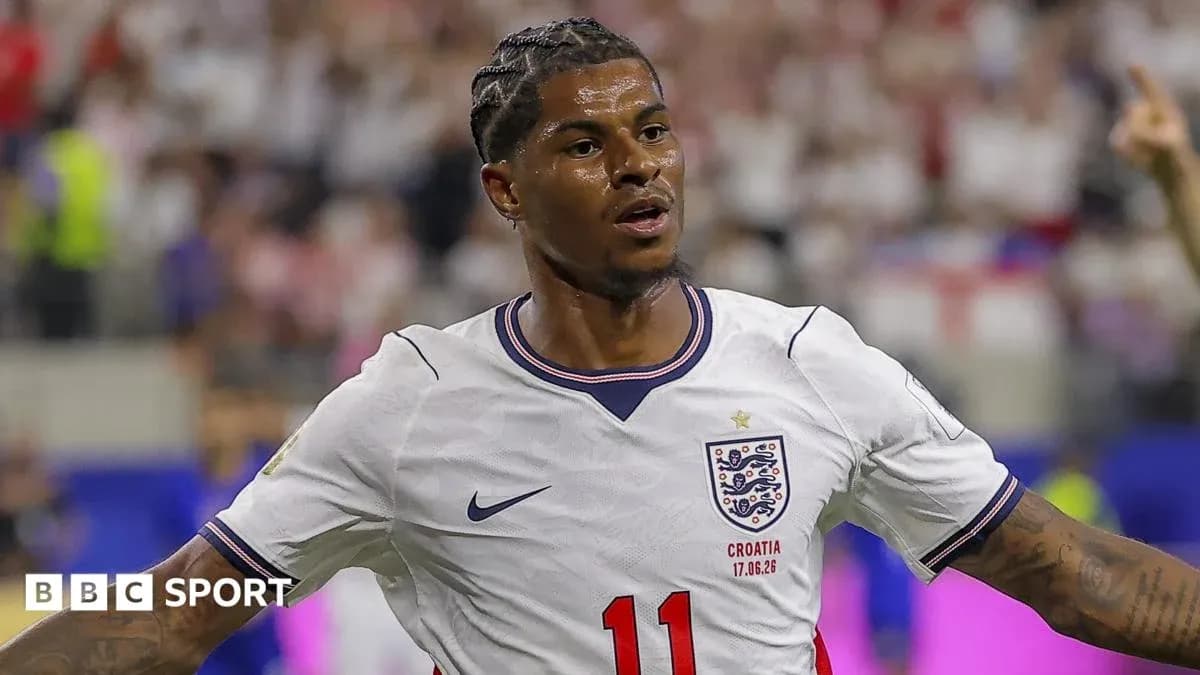
Coming off the bench, he scored and made what was described as a “pretty positive impact” in the closing stages. For England, it was another weapon off the bench. For Rashford, it was something else as well: leverage.
On 1 July, he formally becomes a Manchester United player again. Barcelona have decided against activating a £26m option to buy the 28-year-old after his loan spell.
United’s stance is firm. They want £40m. They will not entertain another loan with Barcelona, even though the La Liga club would prefer to go down that route again.
The complication is obvious. Rashford’s £325,000-a-week wages narrow the field of potential buyers to a handful of clubs. United cannot force him into a move he does not want, and any negotiations will have to respect both his contract and his ambitions.
For now, the plan is straightforward. After his mandatory three-week post-World Cup break, United expect him back in time for a training camp in the Republic of Ireland.
There is time for the market to move. Performances like the one against Croatia only help. Every sharp run, every decisive finish, feeds into the summer’s bigger question: is Rashford the forward United build around again, or the asset they finally cash in on?