England vs DR Congo: A Critical World Cup Knockout Clash
England reach the point of no return on Wednesday night in Atlanta, walking into the noise and glare of the Mercedes-Benz Stadium with a simple brief: prove they are more than a collection of big names and soft performances.
They face DR Congo in the World Cup last 32, a tie that looks comfortable on paper but feels anything but. DR Congo arrive as the highest-ranked third-place qualifier, awkward, organised and with nothing to lose. England come in as group winners, but not unscarred. The questions around this team have grown louder with every laboured passage of play in the group stage.
This is where they have to answer them.
Right-back roulette and a reshaped defence
The build-up has been dominated by one position. Right-back has turned into a revolving door.
Reece James, who began the tournament as first choice, missed the Panama game with a hamstring problem. That injury now effectively ends his World Cup. Jarell Quansah, the next man up, then rolled his ankle against Panama. Thomas Tuchel played down the severity afterwards, describing it as an issue of days rather than weeks, but this is knockout football. There is no appetite to gamble.
So the responsibility falls to Djed Spence. He came on in New Jersey and now walks into a World Cup knockout tie as England’s starting right-back. It is a huge step, but there is no time for easing in. Ezri Konsa and Marc Guehi continue in the centre, a partnership that has quietly settled, while Nico O’Reilly stays at left-back. Jordan Pickford, as ever, anchors the back line in goal.
Stability at the back has been one of the few reassuring themes of England’s campaign. The injuries on the right have tested that resolve. Spence’s performance will go a long way to deciding how calm or chaotic this night becomes.
Rice returns, Bellingham drives, Kane hunts
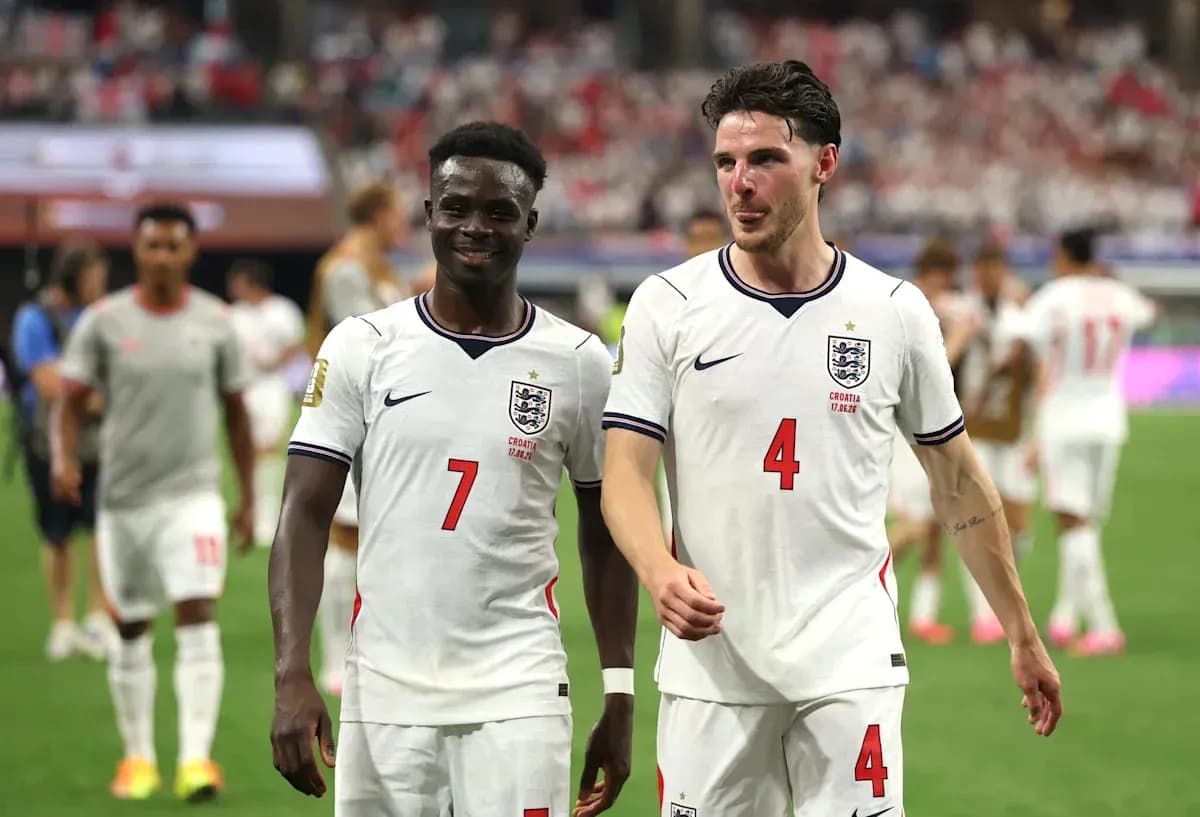
The mood in midfield, by contrast, lifts with one name on the teamsheet. Declan Rice is back.
The Arsenal midfielder sat out the Panama match to protect a calf issue picked up in the draw with Ghana. His absence was felt. England lost their balance without him, their control of the middle third fading too easily. He is expected to start here, and his presence changes everything.
Rice slots in alongside Elliot Anderson, whose energy and range give England a different kind of rhythm in possession. Kobbie Mainoo waits again, a weapon held in reserve for later in the night if the game demands fresh legs and daring from the bench.
Ahead of them, Jude Bellingham continues to own the number ten role. He has been England’s most decisive figure at this tournament, the player who has found the right moments against Croatia and Panama when the team around him stalled. When England need a surge, a tackle, a line-breaking run, the ball finds Bellingham. It usually stays found.
Out wide, Bukayo Saka plays through the pain. The Achilles problem that shadowed his season at Arsenal has followed him into the World Cup, limiting his training and forcing careful management, but he is still expected to start off the right. On the opposite flank, Marcus Rashford keeps his place, having edged ahead of Anthony Gordon for now. Rashford’s direct running and threat in behind remain vital weapons when England try to stretch a compact defence.
And then there is Harry Kane.
Three goals in the group stage, the Golden Boot already in his sights, and yet the conversation around him is not just about numbers. Kane’s movement, his ability to drop in and connect play, and his cold composure in front of goal give England a cutting edge that DR Congo must somehow blunt. This is the kind of stage he relishes: knockout jeopardy, the margins thin, the punishment for wastefulness severe.
A tricky opponent, an unforgiving stage
For all England’s star power, DR Congo will not arrive as spectators. Their status as the top-ranked third-place qualifier underlines the threat. They have enough quality to punish lapses, enough resilience to drag a game into uncomfortable territory if England drift or grow impatient.
This is where the tone of a campaign can flip. A confident, controlled win, and the narrative shifts: England as slow starters, now building momentum. A nervy, scrappy night or worse, and the old doubts return with a vengeance about whether this squad’s talent is being used to its full extent.
Kick-off comes at 17:00 BST on Wednesday, 1 July 2026, beamed back home on BBC One and BBC iPlayer. A familiar stage, a familiar pressure.
The group stage allowed stumbles. Atlanta will not.