England’s Fantasy Back Four and Manufactured Outrage
English football rarely lacks drama on the pitch. Off it, the noise machine is working even harder.
This week’s offering: England could apparently win the World Cup if Thomas Tuchel simply borrowed Arsenal’s back four, Cristiano Ronaldo has been “blasted” by a Portugal team‑mate who… didn’t blast him, and a Match of the Day presenter has been accused of breaking an “unwritten rule” by saying goodbye like a normal human being.
Welcome to the ecosystem.
England’s defence and the fantasy back four
In The Sun, Charlie Wyett sketches out a glorious parallel universe for England. Drop in Arsenal’s back four – Jurrien Timber, William Saliba, Gabriel and Riccardo Calafiori – and the World Cup is as good as won, he argues, because the midfield and attack are already strong enough.
If you’re going to lean into fantasy, you may as well go all in. Why stop at the defence? David Raya behind them, Kylian Mbappé and Lionel Messi rotating as impact subs with Djed Spence for good measure – it’s roughly as grounded as the original suggestion.
Wyett’s wider point is that England’s full-back situation is “a mess”. He argues that the injury to Tino Livramento should have been addressed with a like-for-like replacement, rather than Trevoh Chalobah, a centre-back.
But this is where the rhetoric starts to wobble. Swapping out a player who was unlikely to see many minutes for another player unlikely to see many minutes is hardly the stuff of structural crisis. We’re talking about the 25th man in a tournament squad, not the spine of the team.
Wyett presses on: England, he writes, “do not have a fully fit, in-form, natural full-back.” It’s a bold line that glides past the two full-backs who actually started in the win over Croatia. Reece James’s fitness is a legitimate concern, but stretching that into a blanket statement about the entire position is something else.
And then there’s Nico O’Reilly.
Nico O’Reilly and the “natural full-back” myth
Wyett describes Nico O’Reilly as a midfielder being “squeezed in at the back”. In reality, he is Manchester City’s starting left-back. Pep Guardiola trusts him there. That tends to be a fairly strong endorsement of a player’s suitability to the role.
The “natural full-back” label is doing a lot of heavy lifting. If that’s the standard, then the dream England defence of Timber, Saliba, Gabriel and Calafiori doesn’t contain a single natural full-back either. Modern defenders slide across positions; coaches pick profiles and partnerships, not birth certificates.
Wyett also calls it “ridiculous” that Tuchel left Luke Shaw out of the squad after a good season at left-back for Manchester United, before conceding that Shaw has not played for England since the Euro 2024 final and that his omission “was not a surprise”.
If it wasn’t a surprise, it probably wasn’t ridiculous. Just a selection call that fits with recent history.
Ronaldo “blasted” – or just treated like a teammate
The word “brutal” has been getting a heavy workout on the Sun website.
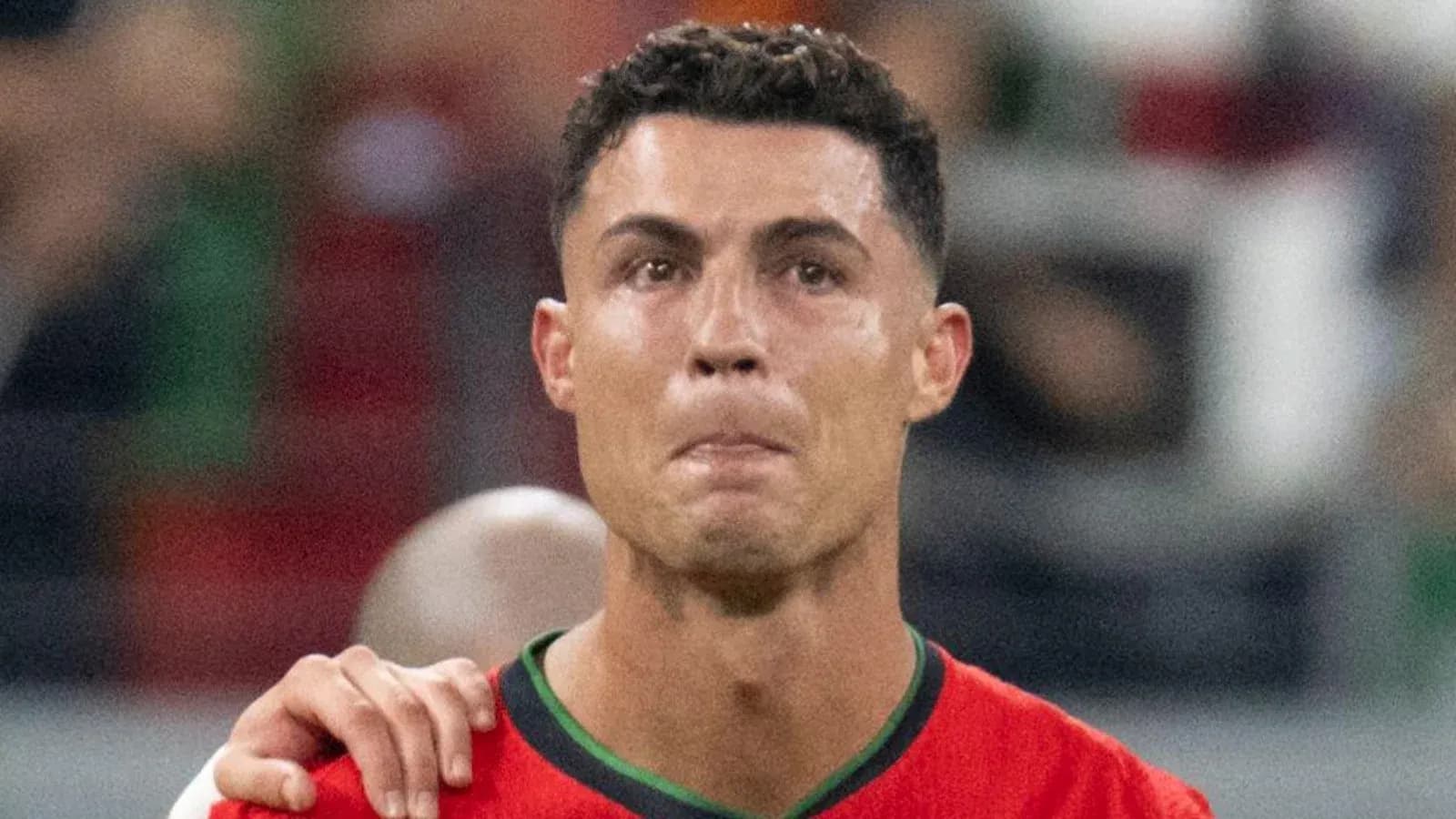
“JUST ANOTHER PLAYER: Portugal World Cup star sparks storm with brutal comments on Ronaldo,” one headline screams. Another adds: “‘He’s just another player’ – Cristiano Ronaldo blasted by Portugal World Cup team-mate after DR Congo horror show.”
That framing invites visions of a dressing-room reckoning, a senior pro finally calling out Ronaldo’s ego. Maybe Bruno Fernandes tearing into him. A long‑awaited moment of catharsis.
The reality is Joao Neves calmly explaining how the Portugal squad see their captain:
“We know what Cristiano has done for us, for our national team, and for the world of football. But at this moment, he and we know that he is no different. He is just another player here to help. He is no different from the others. He is here to contribute, just like all of us.”
That’s not a blast. That’s a 19‑year‑old paying respect to Ronaldo’s legacy while underlining the collective nature of the current group. It’s the kind of thing coaches beg players to say in front of microphones.
Yet it’s packaged as a “storm”, largely because a swarm of Ronaldo devotees on social media didn’t like the idea of their hero being described as part of the team rather than above it. If every minor online tantrum is a “storm”, the word stops meaning anything.
Cole Palmer, Jet2 and selective humility
Cole Palmer has been labelled a “humble star” for flying with Jet2. The same paper once described Raheem Sterling as “penny pinching” and “slumming it on the budget airline” EASYJET – their capital letters – while highlighting his weekly wage.
Palmer boards a budget flight: humility. Sterling does it: paraded as a millionaire tightwad. The act is identical. The framing could not be more different.
The contrast is so stark it barely needs analysis. It just hangs there, exposing itself.
Mark Chapman and the “unwritten” MOTD rule
Then there’s Mark Chapman, apparently guilty of breaking an “unwritten MOTD rule”.
The Sun reports that the BBC host “makes feelings perfectly clear after World Cup clash as he breaks unwritten MOTD rule”. The mind races. A profanity? A political statement? A direct shot at officials or organisers?
After Czechia’s draw with South Africa, Chapman signed off with:
“Sometimes a game does not deserve a really clever closing link. Goodbye.”
That’s it. No rant. No explosion. Just a wry acknowledgement that the match didn’t exactly set the tournament on fire.
We are told “it is an unwritten rule in the BBC that there is always a clever link at the end of match coverage”. As if basic broadcasting craft has been elevated into sacred doctrine.
Two points stand out. First, “good broadcasting” is an odd thing to call an unwritten rule; it’s just the job. Second, Chapman’s line was a clever link. It undercut the expectation of a polished sign‑off and nodded to what everyone had just watched: a flat game.
If that’s a rebellion, it’s a very British one – dry, self‑aware and over in a single sentence.
Emma Hayes and the “tiny blackboard”
Finally, Emma Hayes. A coach who has won almost everything available to her in the club game, and whose every move now triggers instant discourse.
On the Sun website, we’re told: “Hayes was forced to do her tactical analysis on a tiny blackboard on a set that looked like a little kitchen, sparking outrage online.”
The language is doing acrobatics. “Forced” suggests some kind of indignity, as though a Champions League‑winning manager had been dragged into a broom cupboard against her will. The “tiny blackboard” is treated like a symbol of disrespect rather than a stylistic choice for a TV segment.
Yes, the set looked more homely than high‑tech. No, it wasn’t exactly Michael Scott’s prized plasma TV. But the leap from “unusual presentation” to “outrage” says more about the appetite for culture‑war content than it does about Hayes’s actual analysis.
Strip away the noise and the week’s stories are fairly simple. England’s full-backs are being over‑dramatized, a teenager in Portugal’s midfield has spoken sensibly about Ronaldo, a presenter has made a dry joke, a young star has flown economy, and a top coach has used a small blackboard.
The football remains serious. The narratives wrapped around it, increasingly, do not.