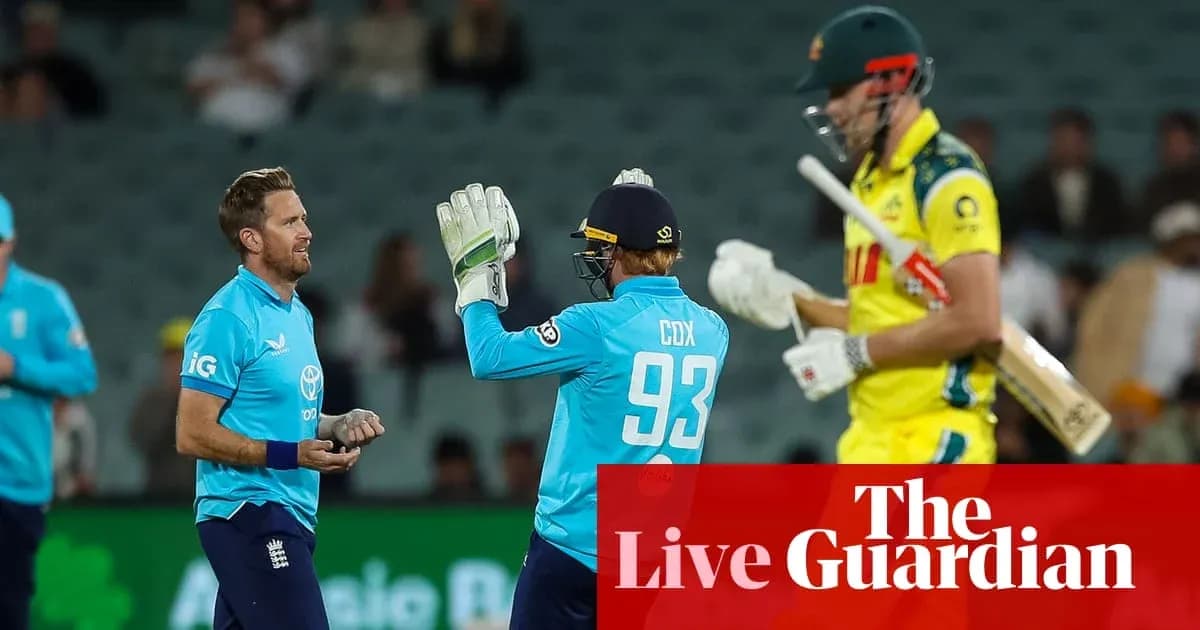
England's Stunning ODI Performance vs Australia: Atkinson Leads the Charge
England arrived in Adelaide needing a response. They left with a record, a statement and the faint sound of a series swinging back their way.
Having piled up 355 – their highest ODI total in Australia – they then ripped through the home side’s top order and squeezed the life out of a daunting chase. By the time Australia reached 100 for 4 after 20 overs, Matt Renshaw and Cameron Green were clinging on to a contest that had been all but torn away in the first hour.
This was England going from bust to boom in a day.
Atkinson sets the tone
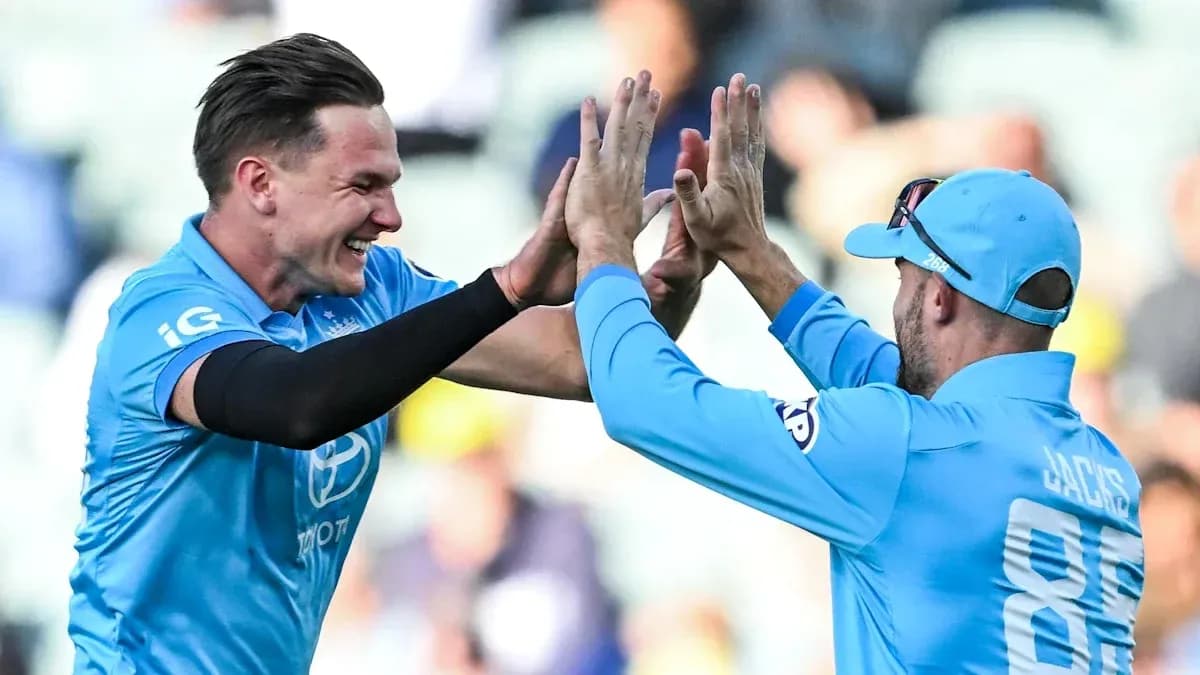
The tone had already been set with the bat, Gus Atkinson clubbing two late sixes in a brutal final over from Jack Edwards as Will Jacks powered to a 39-ball fifty and finished the innings with a straight blow down the ground. The tail – Cox, Jacks, Curran and Atkinson – plundered 148 off 102 balls with five sixes, a savage final act after Tom Banton’s composed 121 off 99 had anchored the innings.
Australia were left chasing 356, a record ODI target on home soil. The previous best successful chase in Australia stood at 334. They needed history. They got Atkinson.
Given the new ball ahead of Jofra Archer, Atkinson started with a full, attacking length and immediate shape. His first over to Mitch Marsh and Travis Head brought just a single and a broken bat. His second over changed the match.
Head, fresh from flicking him for six over midwicket to start the third, went again at a lifter outside off. This time he found only a thick edge and Joe Root at slip. One ball later Cooper Connolly, pinned back and prodding, steered another edge to Harry Brook at second slip. Catching practice, and Australia 13 for 2.
When Josh Inglis followed for 3, faintly edging a ball that held its line after an initial in-ducker, Atkinson’s figures read 4-0-11-3. He had conceded fewer runs in four overs than he had scored in four balls earlier in the day. England, who had been fretting over their white-ball identity, suddenly looked like themselves again.
Baker joins the party, Marsh goes
At the other end, Harry Brook rolled the dice. Instead of Archer, he turned to Sonny Baker and stationed himself at second slip.
The call paid off quickly. Baker found swing – an inswinger clipped by Marsh for one, an outswinger beating him. Then came the key moment: Mitchell Marsh, Australia’s captain and most obvious game-breaker, fenced at a ball and saw Root launch himself to his left, goalkeeper-style, to pull off a superb catch.
Australia were 13 for 3. Their two major enforcers, Head and Marsh, were gone. Adelaide, a ground that so often stages chases, watched a collapse instead.
Inglis and Renshaw tried to rebuild, but even when England erred, Australia couldn’t fully cash in. Inglis survived a sharp low chance to Root at slip off Baker, then edged Atkinson with no help from the umpire before technology intervened. Three wickets to Atkinson, one to Baker, and the chase lay in tatters at 29 for 4.
Renshaw and Green resist
From that wreckage, Renshaw and Green began the long, slow climb. There was no other way. With the required rate hovering around eight and a half an over and four wickets already gone, they needed to bat almost the rest of the innings together.
Renshaw started to look like he was playing a different game. While the rest of the top order had limped to 13 for 3 off 26 balls, he moved to 16 from 20 with calm drives and tidy clips. He off-drove Baker for three, glanced him fine for four, then turned his attention to spin.
Liam Dawson’s arrival offered a hint of release. Renshaw thumped him over mid-off, then feathered a lap for three. When Dawson returned, he slashed to short extra cover and saw Will Jacks spill a chance – England’s third drop of the innings after Dawson himself had failed to cling on to a top-edged pull from Green and Root had missed Inglis earlier.
On another day, those misses might have changed everything. Here, they barely dented England’s control.
Green, after a jittery start, began to find his range. Against Sam Curran – introduced as Brook shuffled his fifth-bowler options – he rolled out the full repertoire: a leg glance for two, then a booming pull for six in an over that cost 11. The partnership ticked past fifty in 11 overs. Renshaw moved into the 40s, Green into the 30s. Australia reached 85 for 4, then 93 for 4, then 100 for 4.
The numbers said there was a chance. Win probability nudged up from a miserable four per cent. The required rate stayed just about manageable. But the clock was ticking, and the margin for error had gone.
England’s attack holds its nerve
Brook’s management of his bowlers underlined England’s depth. Atkinson pounded away for seven overs on the bounce, finishing with 3 for 22 in a spell of hostile, disciplined fast bowling. Baker’s figures – 5-0-25-1 – were tidy and spirited. Dawson’s left-arm spin offered control and variation, even if his hands let him down in the deep.
Then came the luxury: Jofra Archer as third seamer.
Archer’s first over brought three dots, three singles and that familiar, easy lift through the pitch. His second was a reminder of the threat he still carries. The ball that defeated Green swung too late to be of any use to the batter – movement after it passed the bat, flying through to Jordan Cox for four byes with Root understandably reluctant to fling himself in front of it. Before that, Green had driven him straight for three, a rare moment of dominance against a bowler who looked in cruise control.
Curran, operating as the fifth option, had his own say. The “Little and Large” duel with the towering Green produced that pulled six and some fleeting Australian hope, but Curran’s variations and angles kept the rate from exploding.
Through it all, England never lost their grip. The fielding lapses – three drops, all of them chances you’d expect this side to take – might have haunted a more fragile team. Here, they were blemishes on a dominant performance rather than turning points.
At 20 overs, Australia were 100 for 4, Renshaw 47, Green 33. The partnership was worth 69. The equation still demanded something absurd: another 256 runs from the final 30 overs against an attack that had barely offered a bad ball.
They needed a miracle. England had already delivered theirs with the bat and the new ball.
A different England
This felt different. This felt like a white-ball side rediscovering its edge.
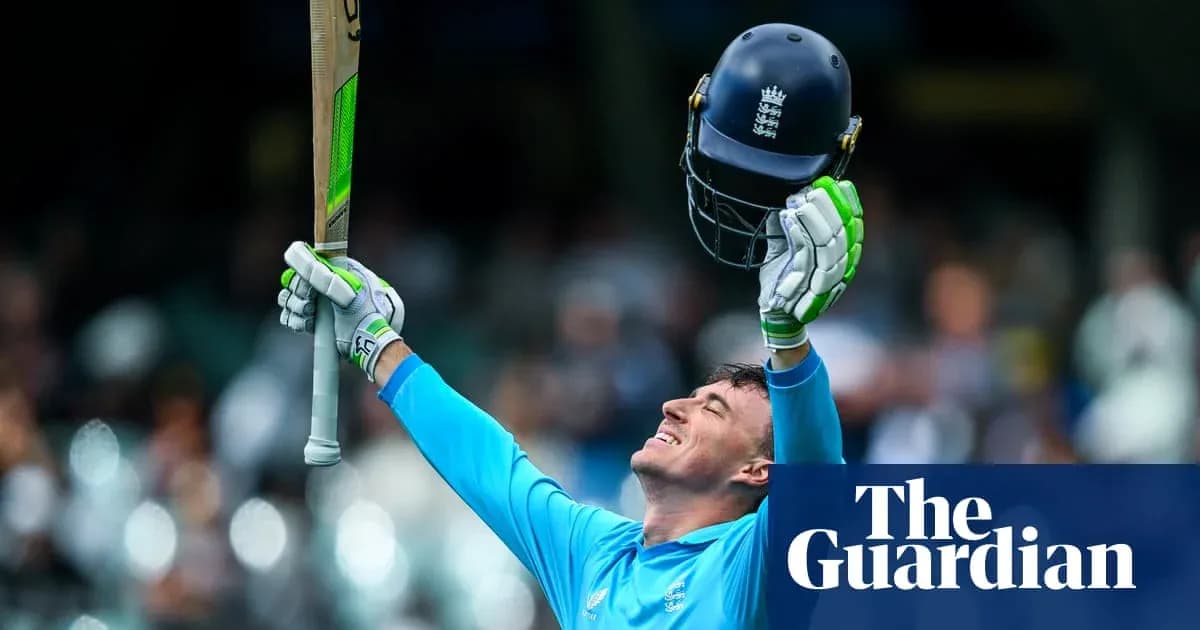
Banton’s 121 off 99, all timing and tempo. The middle overs, where Duckett, Root and Brook compiled a relatively sedate 76 off 99 to hold the innings together. Then the late onslaught – Cox, Jacks, Curran and Atkinson tearing into Australia’s death bowling, 148 off 102 balls, five sixes, and an 18-run final over that turned a strong total into a towering one.
Australia walked out needing a record chase. They walked back in having been rattled by Atkinson and suffocated by an attack that still had Archer in reserve.
The Gabba’s future might be under debate, but on this evidence England’s white-ball future in Australia is not. If this is the standard they can hit, how many more records are they about to chase down?