England’s Second-Best World Cup Campaign: A Surprising Journey
It still probably isn’t coming home. That’s the blunt reality England walk into tonight in Atlanta. The odds say they are more likely to finish fourth – beaten by Argentina and then France – than to thread the needle and beat both Argentina and Spain to lift the World Cup.
And yet, somewhere beneath the fatalism and the gallows humour, something undeniable has already happened.
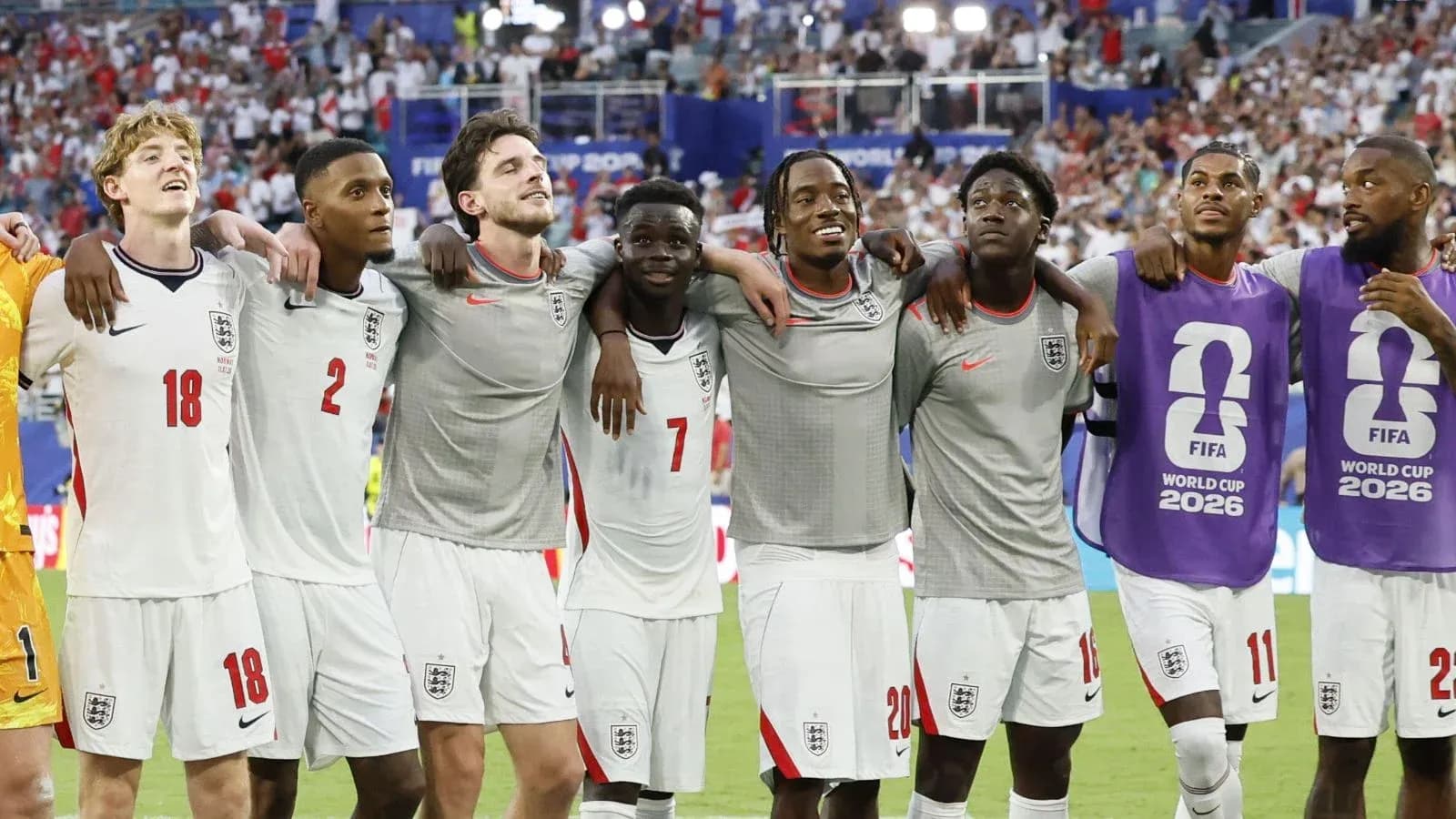
This is England’s second-best men’s World Cup. Ever.
Not in mood. Not in memes. In cold, hard tournament facts.
A campaign that quietly slipped past the usual ceiling
This was a squad that carried the familiar scent of an England World Cup: play okay, maybe a bit flat, bow out in the quarters, appoint a national scapegoat and replay the inquest on loop until the next crisis. Instead, they’ve stepped beyond that line.
They have not sparkled from first whistle to last. They have not dominated every game. But nobody has. Not Spain, who were dreadful against Cape Verde. Not France, who were unwatchable for an hour against Senegal and for the entirety of their semi-final. You remember England’s stumbles more vividly because you live inside them.
Strip away the noise and the neuroses and you get this: England have navigated a tough, honest World Cup, away from Europe, and gone deeper than any previous England side outside their own confederation. On the basic conditions of the thing, that alone makes it their second-best run.
It just doesn’t feel like it.
England don’t do full-blown collapses
Part of that is expectation. Part of it is the way England lose when they lose.
For all the jokes about “typical England”, they almost never get absolutely taken apart on the big stage. Embarrassing exits? Yes. Upsets? A few too many. But real, old-fashioned thrashings? Almost none.
Ignore the third-place play-off – the sport’s equivalent of a deleted scene – and since 1988 England have lost exactly one major tournament match by more than a single goal.
One.
Even that day, when Germany outclassed them in the last 16, the scoreline should have read 2-2 at half-time. Only an officiating howler – one of the great modern flashpoints – stopped it, a mistake so glaring it helped shove football down the technology-heavy road it still stumbles along today.
Think about the volume of tournaments involved. Since the start of the 1990s, England have missed only two. They have won none of the 17 they’ve contested. Yet only once have they been truly dumped out, the result obvious long before the final whistle finally put everyone out of their misery.
So yes, Lionel Messi and Argentina could still carve out a brutal night for them in Atlanta. But England do not tend to collapse. They rarely submit. They usually go out swinging, teeth gritted, complaining about a decision.
That’s why, short of a genuine humiliation, this World Cup is already locked in as their second-best effort.
The path wasn’t a gift – it was exactly what seeding looks like
Another reason the achievement feels muted: the narrative around the route. The Scottish chorus has been particularly loud, and you can understand why. Getting knocked out of the same tournament four times will do that to a fanbase.
The gripe goes like this: Scotland had to face two strong sides in the group, Brazil and Morocco, while England drifted through a softer section. On the surface, it sounds like a valid complaint. Look closer and it’s simply how seeded draws work.
If you’re in the lower pots, you are more likely to be thrown in with multiple heavyweights. That’s the price of your ranking. The “unlucky” seeded teams are the ones who draw another top-10 side in their group, like Brazil did. The likelier outcome for a top seed is a group with nobody else from that elite bracket.
England’s group reflected that logic. At the time of the draw, Croatia sat 10th in the FIFA rankings. Panama, from pot three, were the highest-ranked team England could possibly have drawn, behind only Norway – who couldn’t be grouped with both England and Croatia anyway.
So when people now weaponise those same FIFA rankings to belittle England’s path, pointing out they haven’t faced a top-10 side, they’re playing games with numbers. Croatia sit right on that level. Mexico at the Azteca are a top-10 test in all but name. And nobody can convincingly claim there are 10 better international teams on the planet than Norway at this precise moment.
England’s route has been almost exactly what you’d sketch out on paper for a seeded side that wins its group. Group winners meet a third-placed team in the last 32. The last 16 brought Mexico, as expected. The bracket has behaved like a bracket is supposed to behave: the top four seeds reached the semi-finals.
In that context, Norway knocking out Brazil simply by being better organised, more coherent and, bluntly, a better football team, stands as one of the few genuine shocks this World Cup has produced – alongside Paraguay yanking down Germany’s lederhosen.
There has been no miraculous opening of the draw for England. No absurdly kind route to the last four. They’ve walked the road laid out in front of them and beaten what was put there.
Glory, even in failure
Now comes the hard part. Argentina, battle-hardened and belligerent, are built for tournament nights like this. Spain, if it comes to that, are operating with the cohesion of an elite club side. To beat both, back to back, would be a generational achievement.
The likelier outcome? Glorious failure. The familiar ache. Another tournament that ends with what-ifs and rueful smiles.
But this time, that failure would sit at the very top of England’s long catalogue of heartbreaks. The most glorious of all the nearly moments in 60 years of hurt.
And if that’s the floor for this team now, not the ceiling, then the real question is not whether it’s coming home this month.
It’s how long the rest of the world can keep the door shut.