England's World Cup Challenge: Tuchel's Third Chapter
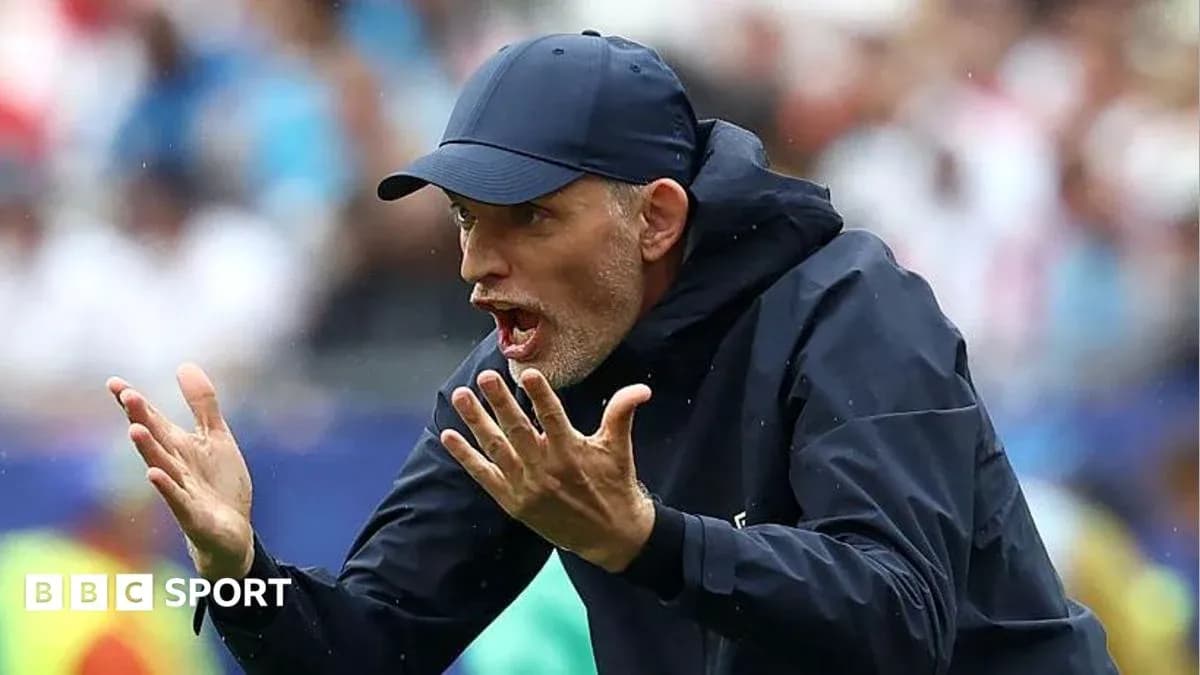
Thomas Tuchel calls it “the third chapter”. For England, it is the part of the story where one bad twist rips up the script.
The World Cup has moved into knockout mode. The preparation camp in Miami was Chapter One, topping Group L was Chapter Two. Now comes the stretch that defines legacies. Win or go home. Glory or autopsy.
On Wednesday in Atlanta, under the closed roof and cool air of the $1.6bn Atlanta Stadium, England face DR Congo in the last 32. On paper, it is a tie they should control. On the pitch, in a tournament already littered with shocks, nothing feels secure.
A fragile spine at the back
Tuchel has spent the group stage juggling line-ups, adjusting for injuries, rationing minutes. For the most part, it has been “job done”. But the further England go, the more one flaw screams for attention.
The defence.
“The area of the pitch you want stability in is your goalkeeper and back four,” former England captain Wayne Rooney told BBC Sport. “With the back four we haven't had that.”
He is right. The warnings were there before a ball was kicked. Tino Livramento ruled out before the tournament. Reece James arriving with a thick medical file and leaving Tuchel “surprised” – if few others were – when the Chelsea captain’s hamstring gave way against Croatia.
Then came another blow. Jarell Quansah, James’ deputy, injured against Panama. One position, right-back, stripped bare in a matter of days.
James and Quansah will both miss the DR Congo tie. Tuchel insists “they are getting closer and closer”, with Quansah “a bit ahead of Reece”, but that does nothing for Wednesday. For now, Djed Spence is the last specialist right-back standing, unless Tuchel shunts Ezri Konsa wide and reopens the door for John Stones in the centre.
This is where Tuchel’s fondness for versatility cuts both ways. He has stacked his squad with defenders who can shuffle across the line, centre-backs who can step into full-back roles. It offers tactical flexibility. It also leaves England short of pure specialists in the very games where one-on-one duels decide everything.
Look ahead a round. If England reach a quarter-final in Miami against Brazil and Vinicius Jr, that is not a night for improvisation. That is a night for a natural, battle-hardened right-back. Tuchel will be desperate that his optimistic updates on James’ recovery are not just wishful thinking.
Jordan Pickford remains the constant behind them, but the partnership in front of him keeps changing. Stones and Konsa started the 4-2 win over Croatia. Konsa and Marc Guehi took over next time out, with Stones dropping out, his lack of recent football an unavoidable factor.
Stones, 32, started only five Premier League games before leaving Manchester City at the end of last season. James played 20 league matches for Chelsea. This is not a back line built on rhythm and repetition. It is being patched together on the fly.
Rice, Kane, Bellingham – and the man England cannot lose
The vulnerabilities at the back only amplify the importance of what sits in front of it.
Declan Rice.
Tuchel rested him against Panama after England qualified early, a rare moment of indulgence in a tournament where he has had to manage the Arsenal midfielder’s yellow card, a hamstring issue and a kick on the calf against Ghana.
The performance in his absence told its own story. England won, but Panama took 13 shots and repeatedly sliced through on the counter. Elliot Anderson, left to plug gaps on his own while Jude Bellingham and Morgan Rogers surged forward, was simply outnumbered.
More ruthless opposition would have cashed in.
Rice is now bracketed with Harry Kane and Bellingham as utterly non-negotiable. He is the screen in front of an unsettled defence, the organiser, the first line of resistance. He is also a playmaker, a set-piece weapon, a player who changes the tempo as well as the tone.
He gives England a platform to attack without losing their shape. He covers for full-backs, tidies up loose balls, senses danger early. Strip him out of this team and the whole structure sags.
In short, he is irreplaceable.
Saka, selection calls and Tuchel’s tightrope
Tuchel’s margin for error has now vanished. Every selection, every tweak, carries weight.
Bukayo Saka is a prime example. The Arsenal winger made his first start of the World Cup against Panama, lasting 63 minutes while still managing an Achilles tendon issue. Does Tuchel risk him from the outset against DR Congo, or hold him back with potentially bigger tests to come?
The head coach knows the stakes. “We know these are the moments where we have to find ways to win,” he said in Atlanta. “We need to dig in and to play at the highest level.”
He did not shy away from the expectations either. “We are the favourites. We play against our own expectations. We expect to go further than the round of 32, so why should the public not expect that?”
He cannot afford a misstep. Not with the defence already a puzzle and key players carrying knocks. Not in a tournament that is swallowing giants.
A World Cup that punishes complacency
If anyone in England’s camp needed a reminder of how quickly things can unravel, they have had it in bold letters.
Germany, with Julian Nagelsmann under intense scrutiny and a powerful lobby pushing for Jurgen Klopp, went out to Paraguay on penalties. The Netherlands, loaded with Premier League names, fell to a vibrant Morocco, prompting Ronald Koeman’s resignation within 24 hours.
These are not gentle warnings. They are flashing red lights.
Tuchel has read them. “There is no percentage of over-confidence in our approach,” he said. “The games in the round of 32 speak a very clear language. It is very narrow margins.
“It actually makes me more calm than nervous.”
He pointed to the nature of this World Cup: Netherlands v Morocco, Japan v Brazil – ties that would not look out of place in a quarter-final or semi-final – all coming early and all decided on tiny details. “Teams are well prepared. It is difficult for any team to break another down.”
Even Brazil, coached by Carlo Ancelotti and loaded with attacking talent, needed a stoppage-time winner from Gabriel Martinelli to squeeze past Japan. The favourites are advancing, but they are limping, not cruising.
England are not immune. Their own group stage contained enough warning signs: the sterile draw with Ghana, the defensive looseness against Panama, the churn in the back four.
And yet, the opportunity is there. The draw is open, the traditional powers look vulnerable, and England have a coach who relishes this high-wire phase of a tournament.
Chapter Three begins in Atlanta. The conditions are controlled, the stakes are not. With the World Cup threatening to turn into a catalogue of shocks, Tuchel and England cannot afford to become the next plot twist.