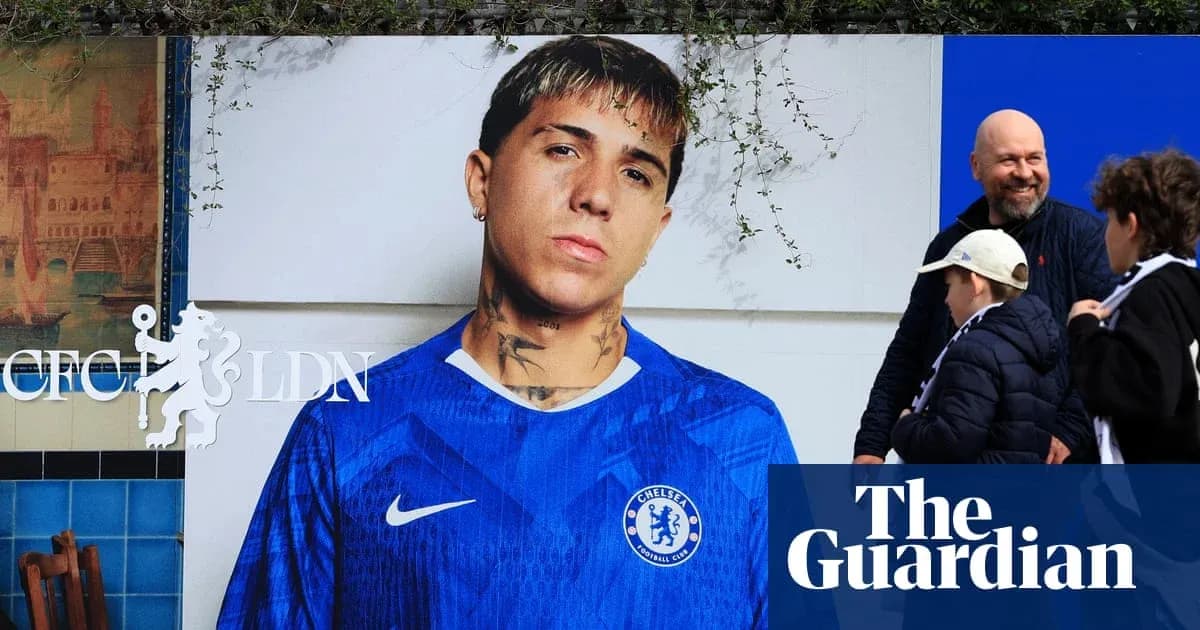
Chelsea are prepared to hand Enzo Fernández the armband again this season, but only once the dust settles on a row that has exposed the fault lines between one of their marquee signings and the club’s new regime.
The midfielder, signed for £106.7m and long viewed as part of the club’s leadership core, is being slowly brought back into the fold after a fortnight in the cold. His future, though, hangs over everything.
From leadership group to the naughty step
The rupture began during the last international break. On duty with Argentina, Fernández spoke with a freedom that jarred badly at Stamford Bridge.
He namechecked Madrid as the European city where he would most like to live. He went out of his way to praise Real Madrid icons Luka Modric and Toni Kroos. At a time when the Spanish giants are actively drawing up plans to refresh their midfield, the subtext hardly needed decoding.
Then came the comments that really stung Chelsea. Fernández publicly questioned the departure of Enzo Maresca, who had been replaced by Liam Rosenior as head coach in January. Inside the club, that was seen as a direct challenge to the project and to the authority of those running it.
Rosenior responded firmly. Backed by the hierarchy, he suspended Fernández for the FA Cup win over Port Vale and for this Sunday’s Premier League meeting with Manchester City. Two games out. A clear line drawn.
Vice-captain in all but name?
The ban immediately raised an awkward question: what exactly is Fernández’s status in this squad?
From the outside, he has often looked like the de facto vice-captain. When Reece James has been injured, it has frequently been Fernández leading the team out, barking orders, gesturing to the crowd, setting the tone.
Inside Stamford Bridge, the picture is more layered. Club figures stress he was never officially appointed vice-captain. Instead, he is seen as one of several “co-captains” in a broader leadership group. He does not, for example, sit above Moisés Caicedo in any formal hierarchy.
That was underlined last weekend. With James sidelined by a hamstring problem and Fernández suspended, Cole Palmer wore the armband against Port Vale. Against City, Caicedo is expected to captain the side.
The club recognise what they call Fernández’s “alpha” personality. The authority in his body language. The way he naturally assumes responsibility on the pitch. That has made it easy, almost automatic, to hand him the armband when James is missing. But because nothing has ever been codified, Chelsea have not had to wrestle with the politics of stripping him of a title he never officially held.
Punished, but still part of the core
For all the noise around his comments and his suspension, Chelsea insist Fernández has not been cast out.
Club sources are adamant he remains a central figure in the leadership group. The punishment, they argue, was about standards and respect, not about downgrading his importance or pushing him towards the exit.
Rosenior, for his part, was encouraged that Fernández turned up at Stamford Bridge for the Port Vale tie, watching his teammates rather than retreating into isolation. The club are closely watching how he responds to the sanction, how he trains, how he carries himself around Cobham.
If he reacts in the way they want, they expect him to be in a position to captain the side again before the season is out.
Contract tension and the Madrid question
Beneath the disciplinary issue lies a broader tension over Fernández’s long-term future.
His frustration has been linked internally to a lack of movement on an improved contract. He is already tied to Chelsea until 2032 on the long, heavily amortised deal that has become a hallmark of the club’s new ownership. But those around him believe his status and influence should be reflected in better terms.
Real Madrid, meanwhile, have placed him on their shortlist as they look to reshape a midfield that has leaned for years on Modric and Kroos. The attraction is obvious. A Champions League heavyweight, a city he has publicly admired, and a club that has built its modern identity around elite midfielders.
The finances are less straightforward. Chelsea are understood to want around £100m. Madrid are unlikely to go that high, and there are currently few alternative suitors able or willing to meet that valuation for the former Benfica man.
His agent, Javier Pastore, added fuel to the fire last week. Pastore described the two-game ban as unfair and made it clear that Fernández would explore his options if a new deal is not agreed after the World Cup. Chelsea, for their part, are unmoved: they believe the suspension was necessary, a message to the entire dressing room as much as to one player.
A line in the sand
The club’s stance is simple. Feedback is welcome. Dissent, in public, is not.
Chelsea’s owners and sporting directors are open to robust conversations behind closed doors. They see that as part of building a competitive, ambitious squad. But they felt Fernández’s comments crossed a line, both in questioning a managerial decision and in flirting so openly with another club.
They chose this moment to make a stand, even though it meant going into a crucial period without one of their most gifted players, at a time when they are trying to claw their way back into the Champions League places. To them, the principle mattered more than the short-term hit.
Now comes the delicate part. Reintegration. Restoring trust without backtracking. Re-establishing Fernández as a leader without appearing to capitulate.
Chelsea still see an “alpha” midfielder who can drive their next era. Real Madrid still see an opportunity. Somewhere between those two visions lies the decision that will shape the next chapter of Enzo Fernández’s career – and perhaps the direction of Chelsea’s midfield for the rest of the decade.