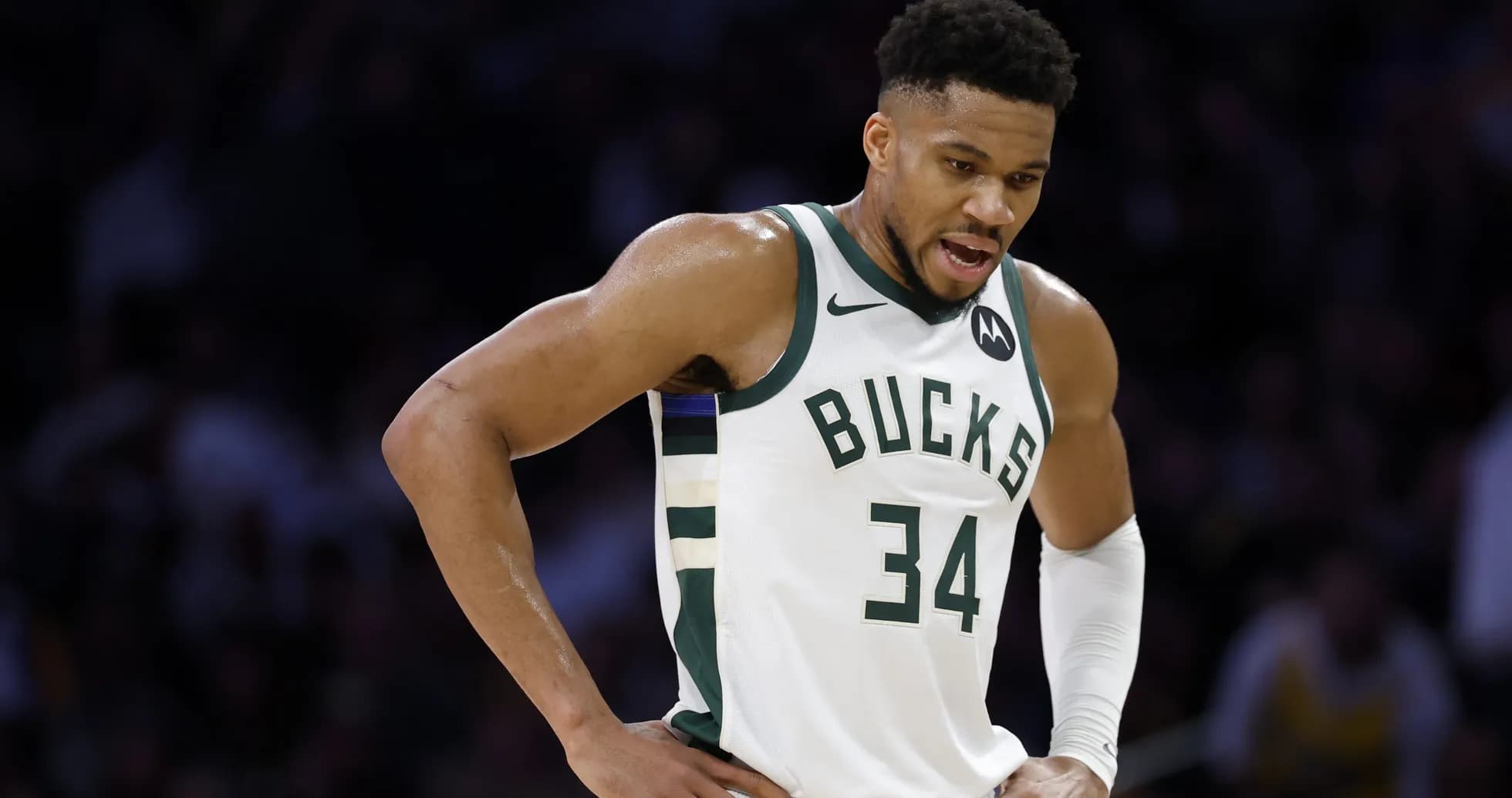
Giannis Antetokounmpo and the Bucks: A Franchise at a Crossroads
The Milwaukee Bucks didn’t just open the 2025-26 season under pressure. They walked straight into a storm.
At the center of it all: Giannis Antetokounmpo, the player who dragged the franchise to a title, now openly questioning whether the Bucks could still build a contender around him. Months before the February trade deadline, he had already voiced “serious doubts and concerns” about the roster, according to Shams Charania on ESPN. That wasn’t background noise. That was a warning.
Milwaukee had spent years cashing in chips to keep Giannis in a championship window. Jrue Holiday. Damian Lillard. Multiple first-round picks scattered across the league. The bill finally came due. Three straight first-round exits later, the two-time MVP started to wonder if the partnership had run its course — and he didn’t hide that feeling behind closed doors.
“One source told ESPN, “Giannis has wanted to handle this professionally by being very up front with the team… This could have been a happy resolution but instead might end up being a nasty breakup.” The message was clear: if this ended, it didn’t have to end like this.
For a brief stretch before the deadline, it nearly ended with a seismic trade that would have reshaped the NBA map.
A Franchise Flirts With the Unthinkable
In late January, Antetokounmpo and his representatives sat down with ownership, including Jimmy Haslam and Wes Edens. The conversation went beyond the usual midseason check-in. It revisited a prior understanding: if the time came, the franchise and its superstar would work together on a trade.
That time suddenly felt very close.
As the deadline neared, the Bucks listened. Minnesota called. Golden State called. Front offices around the league circled, sensing vulnerability in Milwaukee’s core. But one team, more than any other, pushed its chips in.
Miami.
According to Charania, the Bucks “seriously considered” sending Antetokounmpo to the Miami Heat in a blockbuster that would have detonated the Eastern Conference hierarchy. The Heat’s proposal centered on Tyler Herro, promising big man Kel’el Ware, additional players, and a stack of draft picks and swaps. This wasn’t a feeler. It was a real offer, serious enough that Milwaukee internally weighed pulling the trigger on February 4.
Jon Horst and the Bucks’ front office had set a ruthless standard for any deal. They wanted elite young talent and heavy draft capital. Around the league, their reported asks included names like Evan Mobley and VJ Edgecombe in separate talks, a clear signal: if they were giving up Giannis, they wanted a haul that could define the next decade.
The pressure built. The conversations deepened. Some rival teams grew frustrated, convinced Milwaukee was dragging its feet. Others felt the asking price bordered on unrealistic.
On the morning of February 5, the Bucks made their call.
They told Miami no.
Giannis stayed. The league-altering trade died before it left the table.
Staying Put, But Not Settled
Keeping Antetokounmpo might have calmed the headlines. It did not calm the organization.
The same issues that pushed Milwaukee to the brink of trading its superstar didn’t vanish with one phone call. According to ESPN, the mood inside the building remained fraught, with one team source capturing the unease: “The crux of the issue is feeling Giannis doesn’t want to be here on any given day.”
That kind of line lingers. It hangs over practices, over film sessions, over every bad loss.
Antetokounmpo missed 15 games around the deadline with a calf injury, a stretch that only amplified the questions about where this was all heading. When healthy, he made it clear he wasn’t interested in coasting or shutting things down. He aligned with Horst and head coach Doc Rivers on chasing wins, not lottery odds. The star, the GM, and the coach were at least united on that front.
The results didn’t match the intent. Milwaukee sputtered, searching for an identity that used to come naturally when Giannis bulldozed his way to the rim and the roster around him felt sharper, younger, hungrier. The uncertainty now ran deeper than a cold shooting night or a rough week.
It reached the bench.
Doc Rivers on Shaky Ground
Doc Rivers arrived in Milwaukee with pedigree and expectations. Now his future is part of the same cloud hanging over the franchise.
Marc Stein has reported “an anticipation” that Rivers and the Bucks could move toward a separation or some form of restructuring after a disappointing campaign. Even as Rivers celebrated his selection to the 2026 Basketball Hall of Fame class, his grip on this job didn’t feel secure.
He has navigated injuries, roster churn, and the weight of a superstar who might already be halfway out the door. Still, questions about his long-term role won’t go away. Not when the team looks stuck between eras and styles, trapped in the middle of a conference that no longer fears them the way it once did.
The Bucks are no longer just managing a season. They’re managing an era.
Extension or Exit
The stakes could not be clearer at ownership level.
Wes Edens has drawn a sharp line: Giannis Antetokounmpo will either sign an extension or be traded. No limbo. No slow fade. In October, the two-time MVP becomes eligible for a four-year, $275 million extension, the kind of deal that usually signals a clean, emphatic commitment from both sides.
Right now, that commitment isn’t there.
Milwaukee’s choice to walk away from Miami’s offer in February didn’t close the door on a trade. It only pushed the decision into a different window. Trade interest will roar back in the offseason. Teams will rework their boards, re-open cap sheets, and ask the same question: what would it take to land Giannis?
The Bucks, meanwhile, stand at the edge of a summer that could define their next decade. Either they convince Antetokounmpo that the roster, the coaching, and the vision still match his championship ambitions, or they pivot into a future built on the kind of “major return” they demanded at the deadline.
They avoided a franchise-altering move in February.
They may not be able to avoid one much longer.