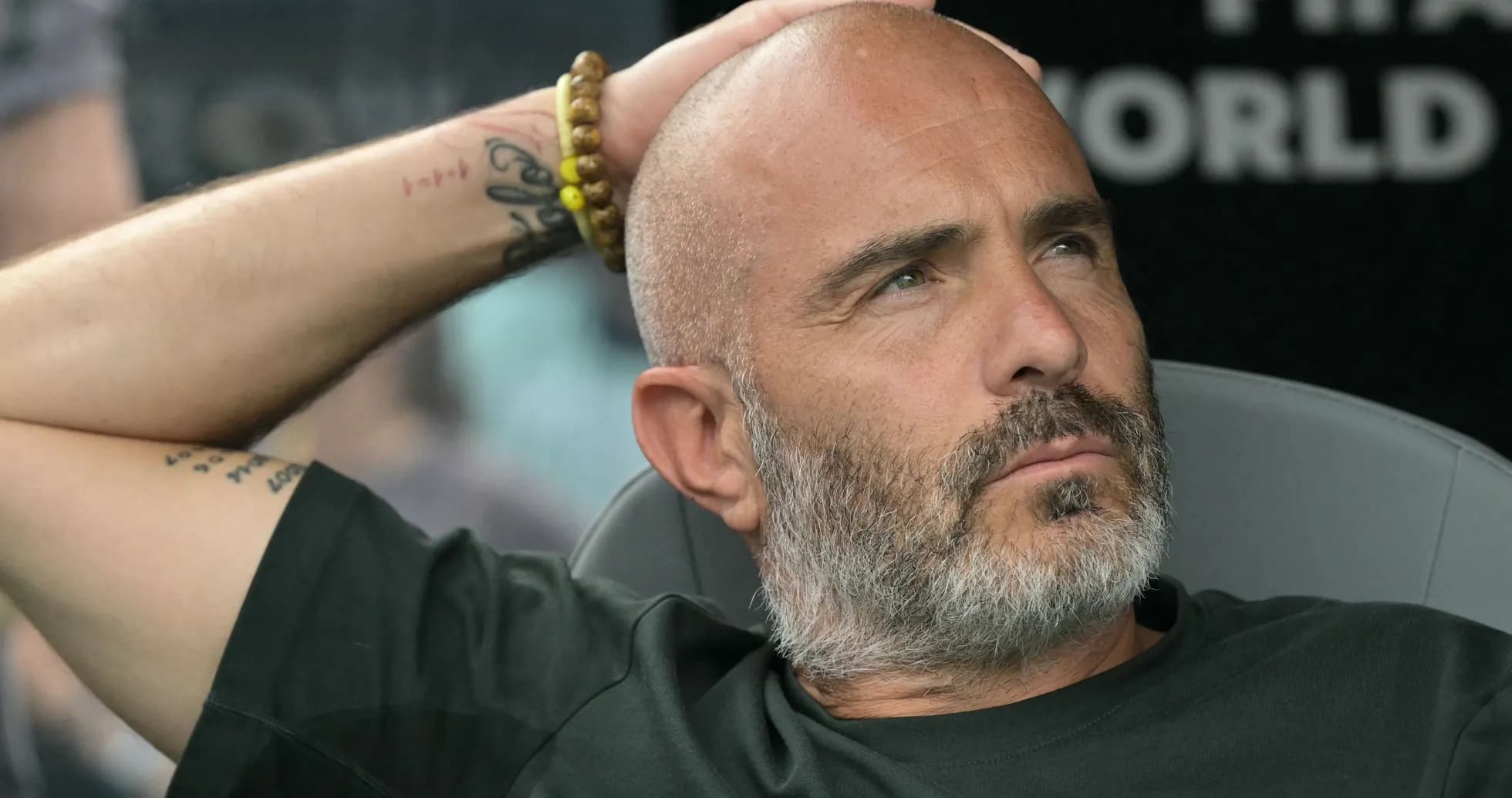
Enzo Maresca's Return to Manchester City: A New Era After Guardiola
Enzo Maresca walks back into Manchester City not as a wide‑eyed newcomer, but as a man who knows exactly what he is stepping into – and exactly whose shadow he is walking under.
This is not a gentle handover. This is following Pep Guardiola.
A homecoming with weight
Before he spoke about tactics, transfers or titles, Maresca paused. His first words as City head coach were a tribute, a message of sympathy to the family of Kevin Keegan. It was a small moment, but a telling one: a nod to the club’s history before he began to sketch its future.
Only then did he allow himself to talk about the feeling of being back.
He described it as coming “home”, and for him it is no empty line. This is his third spell at City. He has worked inside the building, coached the elite development squad, sat alongside Guardiola on the technical staff in 2022–23. He knows the corridors, the faces, the structure. That familiarity, he said, was decisive.
He pointed to the club’s rare stability – just three head coaches in roughly 17 years – as the anchor that drew him back. In an era when big clubs burn through managers, City’s succession from Roberto Mancini to Manuel Pellegrini to Guardiola stands out. Maresca sees that as proof of an institution that backs long-term projects and gives ideas time to breathe. Once the call came, he said, there was no hesitation.
The project now is his.
The man after Pep
There is no disguising the scale of what he inherits. Replacing Guardiola is one of the hardest jobs in modern football. Maresca did not try to soften that.
He called it “a great privilege” that City chose him, but he also framed it as a “wonderful challenge” to follow a coach he described as perhaps the best in the world over the last two decades. He referenced the long dynasties of Sir Alex Ferguson and Arsène Wenger, and the turbulence that usually follows such eras. The message was clear: the bar is historic, the margin for error slim.
His response is to focus on the basics from day one – doing “the right things” for the club and the fans, leaning on the strength of the structure around him. The institution, he stressed again, is what gives him confidence that this transition can be managed rather than endured.
Transfers, surgery and a calm word on Rodri
Maresca did not pretend City’s squad is complete. He was open that there is still work to do in the market, that there are “things that need to be completed” and that the club is already moving on them. The goals are clear, but the timing, he admitted, will be dictated by the shifting dynamics of the window.
Amid that, the future of one of his most important players has been a talking point. Rodri, the metronome of City’s midfield, has been surrounded by speculation after a World Cup win and a run of dominant performances that have made him a target for every elite club on the continent.
Maresca sounded utterly unmoved by the noise. Rumours, he said, are natural for players of that level. Any coach would want Rodri. His concern right now is not a transfer but an operation: the Spaniard is due for surgery on Monday, then rest, recovery and, crucially, a return to City.
No war of words with Chelsea
If there was any appetite for a feud with Chelsea after their statement on his departure, Maresca shut it down quickly.
He looked back on Leicester City and Chelsea as positive chapters: clubs where he said he found success and a clear identity. Gratitude, not grievance. That was as far as he was willing to go. His attention, he insisted, is now fully on Manchester City, and he has “nothing to add” on his former employers.
The clean break suits him. He arrives in Manchester with fresh medals – a Championship title with Leicester, then the UEFA Conference League and FIFA Club World Cup with Chelsea – but without the baggage of a public row.
Waiting for the full cast
For now, Maresca is working with only part of his squad. The last group of senior players will not report until three or four days before the Community Shield. Only then will he have the full group together.
Until that point, his sessions are dominated by youth.
He spoke with clear enthusiasm about the energy of the young players currently under his eye, some of whom, he said, are performing at very impressive levels. Pre-season, often a grind for established stars, is an opportunity for them to force their way into his thinking. Maresca sounds open to that.
Grealish, Trafford and the realities of the window
Jack Grealish’s name was always going to surface. So did that of goalkeeper James Trafford, a player Maresca knows from his time with City’s under-23s.
On Grealish, the message was straightforward: he is here, he is a Manchester City player, and as long as that remains the case, Maresca considers it his duty to work with him. He spoke warmly about Grealish’s character – “big heart”, “wonderful personality” – but refused to step into the realm of guarantees. The market is open. “We will see what happens later.”
The same tone carried into his comments on Trafford. Maresca underlined their shared history, recalling the keeper as his No. 1 at under-23 level. Right now, Trafford is one of City’s goalkeepers. With the window open, “anything is possible”. Again, no promises, no drama, just a recognition of how fluid squads can be in July and August.
Adapting to a changing game
If there was one area where Maresca widened the lens, it was on the evolution of the game itself.
Football, he argued, is in constant motion. Set pieces shift, defensive schemes change, man-to-man systems come and go. The responsibility on coaches is to keep finding new solutions, to adapt or fall behind. It is a view that fits a club that has spent a decade pushing tactical boundaries under Guardiola.
Maresca does not intend to rip that up.
A familiar identity, a different voice
He was clear that the football he wants to play at City will echo the identity his teams showed at Leicester and Chelsea. That continuity, he suggested, is one of the reasons City turned to him in the first place: some of his ideas are naturally aligned with what Guardiola built.
He talked about aggressive pressing after losing the ball, controlling matches, imposing a style rather than reacting to opponents. The priority, he reminded everyone, remains the simplest and hardest thing in the sport: winning football matches.
The blueprint sounds familiar. The challenge will be to keep it fresh.
Long balls, Donnarumma and Haaland
One question cut to the heart of that balance between principle and pragmatism. With Gianluigi Donnarumma in goal and Erling Haaland up front, could the long ball become a deliberate weapon?
Maresca did not blink.
Yes, he admitted, that could be one of the solutions. Some games demand short build-up, some demand direct play. The opponent dictates, the situation dictates. Having a goalkeeper like Donnarumma and a striker like Haaland gives City a “great advantage” if they choose to go long.
But he was careful to stress it will not be the only route. City, under him, must have “varied solutions” for different matches. The idea of a one-note, dogmatic City under Maresca does not fit the way he talks.
He walks into a club that has grown used to winning, used to Guardiola’s genius, used to a certain way of playing. The new head coach embraces that history rather than running from it. Now comes the hard part: turning familiarity, structure and ideas into something that can live with what came before – and maybe, in time, write a chapter of its own.