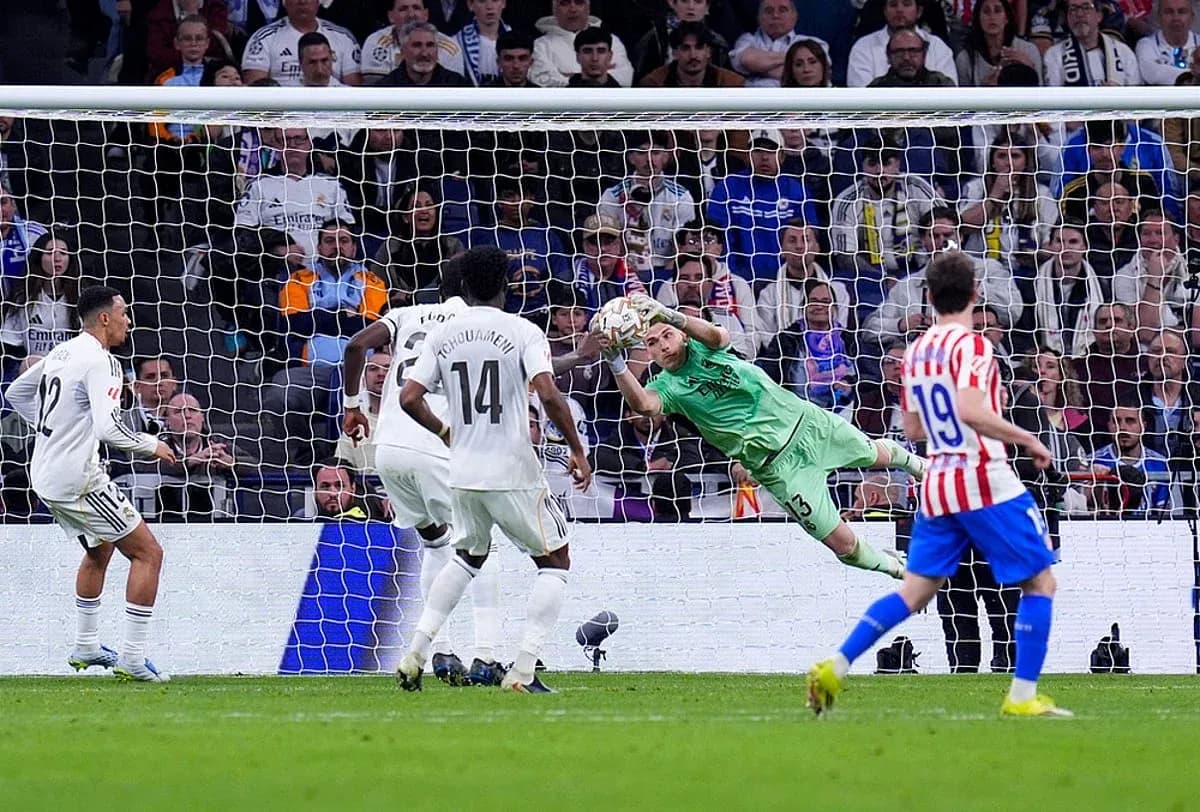
Espanyol's Tactical Masterclass in 2–0 Win Over Athletic Club
Under the grey May sky at RCDE Stadium, Espanyol’s 2–0 victory over Athletic Club felt less like a routine late-season win and more like a manifesto. In a La Liga campaign where both sides have lived in the middle ground, this was a night when structures, absences and season-long tendencies converged into a clear tactical story.
I. The Big Picture: Structure and Season DNA
Following this result, Espanyol sit 14th on 42 points, their overall goal difference at -13 after scoring 40 and conceding 53. The numbers tell of a side living on the edge: at home they have scored 20 and conceded 23 across 18 matches, averaging 1.1 goals for and 1.3 against. Yet within that volatility there is resilience: 5 clean sheets at home, and a capacity to string runs together, including a biggest winning streak of 5 in total this campaign.
Athletic Club, 9th with 44 points and also on an overall goal difference of -13 (40 scored, 53 conceded), arrived in Cornella as a classic split-personality team. At San Mamés they are robust, but on their travels they have lost 11 of 18, conceding 33 and scoring 19, with an away goals-against average of 1.8. Their 4-2-3-1 has been a near-constant this season (35 matches in that shape), but the system’s stability has not translated into defensive security away from home.
Espanyol, by contrast, have alternated between a 4-2-3-1 and 4-4-2. Here, Manolo Gonzalez went with the latter: a classic, almost old-school structure that gave clarity to roles and zones. The back four of Omar El Hilali, C. Riedel, L. Cabrera and C. Romero shielded M. Dmitrovic, with a flat but industrious midfield line of R. Sanchez, U. Gonzalez, Pol Lozano and A. Roca behind the front pair of Edu Expósito (listed as “Exposito”) and R. Fernandez Jaen.
Ernesto Valverde mirrored his season template: U. Simon behind a back four of J. Areso, Dani Vivian, A. Laporte and A. Boiro; a double pivot of I. Ruiz de Galarreta and A. Rego; a three of A. Berenguer, U. Gomez and R. Navarro behind lone striker I. Williams. On paper, it was a familiar Athletic Club: 4-2-3-1, vertical, reliant on wide threats and the running of Williams.
II. Tactical Voids: Absences and Discipline
The line-ups, however, were shaped by who was missing as much as who played. Espanyol were stripped of F. Calero and T. Dolan through yellow-card suspensions, and lost attacking variety with C. Ngonge and J. Puado out injured. That forced Gonzalez into a cleaner, more functional 4-4-2: full-backs asked to be conservative, wide midfielders to work both ways, and Expósito and R. Fernandez Jaen to share creative and finishing duties.
Athletic Club’s absences were even more structural. Without Y. Berchiche, Valverde lost his natural left-back who often underpins their build-up. More damaging was the absence of O. Sancet and N. Williams: the former the creative hinge between lines, the latter their most explosive wide outlet. In their place, U. Gomez and R. Navarro were tasked with providing incision, but the drop-off in individual threat was obvious. Williams up front became an isolated runner rather than the final piece of a multi-pronged attack.
Disciplinary trends from the season added another layer of tension. Espanyol’s yellow-card distribution shows a clear late-game spike: 29.55% of their yellows arrive between 76–90 minutes, with a further 17.05% between 91–105. Athletic Club, too, lean into the chaos phases: 22.37% of their yellows come between 61–75, and 17.11% from 91–105. This match was always likely to be decided in the trenches of the second half, where fatigue and desperation blur the edges of structure.
III. Key Matchups: Hunter vs Shield, Engine Room vs Enforcer
Without full top-scorer data, the “Hunter vs Shield” narrative shifted from individuals to units. Espanyol’s home attack, modest at 1.1 goals per game, met an Athletic defence that, away from home, concedes 1.8 on average. The 2–0 scoreline felt like the statistical midpoint between Espanyol’s usual restraint and Athletic’s recurring away frailty.
The decisive battle, though, lay in the “Engine Room”. On one side, Pol Lozano and U. Gonzalez; on the other, Ruiz de Galarreta and Rego. Lozano arrives as one of La Liga’s leading yellow-card collectors, with 10 yellows and 1 yellow-red in 32 appearances, built on 38 tackles, 6 blocks and 22 interceptions. He is Espanyol’s enforcer, but also a passer: 925 passes at 87% accuracy. Alongside him, U. Gonzalez provided balance and coverage, freeing A. Roca to tuck in and help overload the middle.
Opposite them, Ruiz de Galarreta is Athletic’s metronome and shield. In total this campaign he has played 32 times, with 1 goal and 2 assists, 1,137 passes at 82% accuracy, 60 tackles and 5 blocks. He is both organiser and firefighter. But without Sancet ahead of him, his passing lanes were shorter, more predictable. Rego, more functional than creative, could not compensate.
In wide areas, El Hilali’s duel with Berenguer and Navarro was pivotal. El Hilali’s season numbers underline his defensive value: 69 tackles, 14 blocked shots and 38 interceptions, plus 9 yellow cards that speak to how often he is forced into last-ditch interventions. Here, his positioning and timing allowed Espanyol to squeeze Athletic’s right flank, cutting supply lines into Williams and forcing Athletic’s attacks into crowded central zones where Lozano thrived.
For Espanyol, Expósito was the quiet architect between lines. Across the season he has produced 6 assists from 79 key passes and 31 shots, with 950 completed passes and a 7.06 rating. His role as a nominal forward in this 4-4-2 was deceptive: he dropped into pockets, linked with Roca and Lozano, and drew Athletic’s centre-backs into uncomfortable zones. Every time he received between Vivian and Laporte, the visitors’ structure wobbled.
At the back, Vivian’s profile hinted at the tightrope he walks. With 52 tackles, 13 blocked shots and 31 interceptions, he is an aggressive front-foot defender; but 8 yellow cards and 1 red show how often he pushes the limit. Against a dual front line that alternated between dropping and running in behind, his decision-making was repeatedly tested.
IV. Statistical Prognosis: xG Shadow and Defensive Solidity
There is no explicit xG data in the snapshot, but the season-long patterns frame a plausible reading. Espanyol at home create enough to average 1.1 goals, while Athletic on their travels concede 1.8. A 2–0 outcome suggests Espanyol outperformed their typical attacking output while exploiting Athletic’s systemic away weaknesses.
Defensively, Espanyol’s overall goals-against average of 1.5 and only 10 clean sheets in total underline that this shutout was not routine. It was built on structure: a settled back four, double pivot protection, and wide midfielders who tracked diligently. Dmitrovic, rarely protected this well all season, finally saw the benefit of a compact block that denied Athletic their preferred transition lanes.
Athletic’s attacking profile—1.1 goals per game overall, but only 19 away—combined with the absence of Sancet and N. Williams, pointed toward a low-probability scoring night. Williams’ isolation up front, facing a centre-back pair protected by Lozano and U. Gonzalez, further depressed their expected output.
Following this result, the statistical verdict is clear. Espanyol leveraged a disciplined 4-4-2, maximised the creative influence of Expósito and the destructive edge of Lozano and El Hilali, and turned a fragile season defensive record into a statement clean sheet. Athletic Club, stripped of key creators and wide threats, reverted to their worst away tendencies: sterile possession, limited penetration, and a defensive line that once again conceded more than their structure on paper should allow.