Everton 1–3 Sunderland: Match Analysis and Tactical Insights
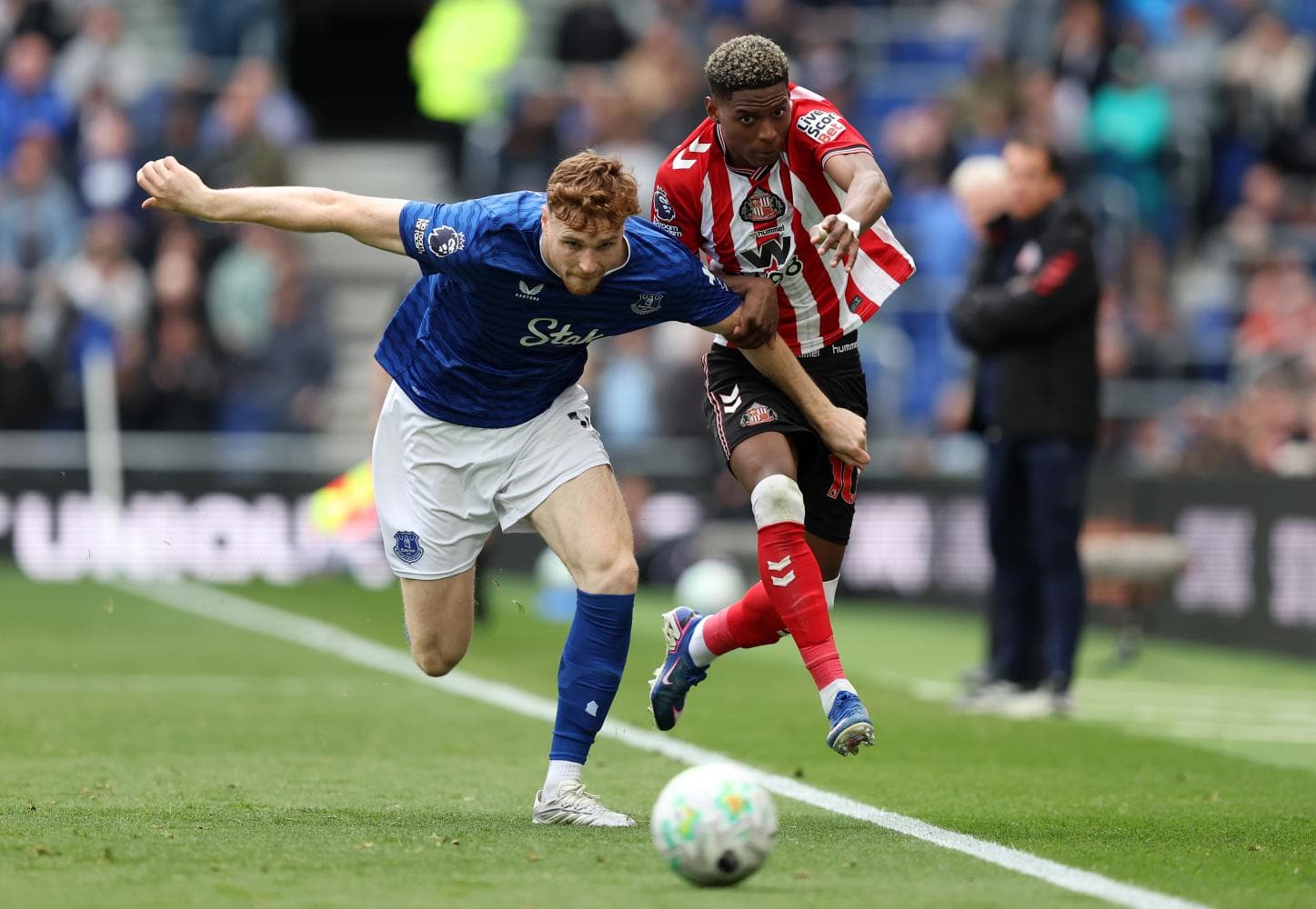
Everton 1–3 Sunderland at Hill Dickinson Stadium, a result that dents Everton’s push for a top-half finish while significantly boosting Sunderland’s late-season surge. Everton, who started the day on 49 points in 11th, slip further away from the European conversation, whereas Sunderland, beginning on 51 points in 9th, strengthen their position in the upper mid-table with an impressive away comeback.
Everton made the first change to the game’s rhythm without altering the scoreline, as Sunderland reacted early to defensive concerns. On 23 minutes, Luke O'Nien replaced Omar Alderete for the visitors, a proactive reshuffle from Regis Le Bris in the back line. Two minutes later, Everton’s aggression without the ball was underlined when Tim Iroegbunam was booked for tripping in midfield on 25 minutes, signalling the hosts’ intent to disrupt Sunderland’s buildup.
The breakthrough arrived just before half-time. In the 43rd minute, Merlin Rohl put Everton 1–0 up, finishing a move created by Michael Keane, whose involvement as the assister highlighted Everton’s willingness to push a centre-back into advanced areas. That goal gave Leighton Baines’s side a narrow but deserved interval lead.
Early in the second half, Everton’s defensive line came under scrutiny again. On 47 minutes, Jake O'Brien received a yellow card for holding, reflecting growing pressure from Sunderland as they searched for a route back into the match. The equaliser came on 59 minutes: Brian Brobbey made it 1–1, converting a chance fashioned by Enzo Le Fée, whose supply from the attacking midfield pocket finally opened Everton up.
Sunderland immediately doubled down on their momentum. In the 60th minute, Chemsdine Talbi replaced Trai Hume, adding fresh attacking energy on the flank. Everton responded with a double change on 73 minutes, chasing renewed impetus in the final third: Tyrique George replaced Tim Iroegbunam, and Thierno Barry came on for Beto, reshaping the home side’s attacking structure and pushing more direct running into the front line.
The decisive phase arrived as Sunderland’s bench made a telling impact. On 77 minutes, Le Bris executed a triple substitution: Chris Rigg replaced Nilson Angulo, Wilson Isidor came on for Brian Brobbey, and Habib Diarra replaced Noah Sadiki. That injection of energy and technical quality immediately tilted the contest. In the 81st minute, Enzo Le Fée completed the turnaround, putting Sunderland 2–1 ahead with a composed finish from a move created by Chris Rigg, whose introduction between the lines paid instant dividends.
Everton tried to respond late. On 88 minutes, Dwight McNeil replaced Merlin Rohl to add crossing threat from wide areas, while Séamus Coleman came on for Jake O'Brien to provide fresh legs and experience at right-back. But as Everton pushed forward, Sunderland punished them in stoppage time. In the 90+1 minute, Wilson Isidor made it 3–1, finishing off a breakaway crafted by Habib Diarra, whose forward surge and final ball exposed Everton’s stretched structure.
Frustration boiled over in the dying seconds. At 90+6 minutes, James Garner was booked for tripping, a late yellow card that encapsulated Everton’s loss of control after surrendering their first-half advantage.
Fixture Statistics & Tactical Audit
- xG (Expected Goals): Everton 1.07 vs Sunderland 0.73
- Possession: Everton 49% vs Sunderland 51%
- Shots on Target: Everton 4 vs Sunderland 3
- Goalkeeper Saves: Everton 0 vs Sunderland 3
- Blocked Shots: Everton 2 vs Sunderland 0
The underlying numbers suggest Everton created the slightly better quality of chances, edging xG 1.07 to 0.73 and leading in total shots (10 vs 7). However, Sunderland were far more ruthless in front of goal, scoring three times from their three shots on target (3 goals from 3 shots on target), while Everton converted only once from four efforts on goal (1 goal from 4 shots on target), a clear example of clinical finishing from the visitors (3 goals vs 0.73 xG). Sunderland’s marginal possession edge (51% vs 49%) reflects a fairly balanced contest, but their ability to turn limited volume into maximum output, combined with Robin Roefs’ three saves to preserve the lead, explains why the scoreline tilted heavily in their favour despite the relatively even territorial and chance profile.
Standings Update & Seasonal Impact
Everton started the afternoon on 49 points with a goal difference of -2, having scored 47 and conceded 49. The 1–3 defeat adds one goal to their “goals for” column and three to “goals against”, moving them to 48 scored and 52 conceded. Their new goal difference drops to -4, and they remain on 49 points, leaving them still in mid-table and further adrift of the European places as the season nears its conclusion.
Sunderland began on 51 points with a goal difference of -7, built on 40 goals scored and 47 conceded. This win lifts them to 54 points, with their three goals here taking them to 43 scored and the single goal conceded moving them to 48 against. Their new goal difference improves to -5. That shift consolidates their position in the top half and keeps them within touching distance of the teams chasing European spots, turning this away comeback into a potentially pivotal result in their upward trajectory.
Lineups & Personnel
Everton Actual XI
- GK: Jordan Pickford
- DF: Jake O'Brien, James Tarkowski, Michael Keane, Vitaliy Mykolenko
- MF: James Garner, Tim Iroegbunam, Merlin Röhl, Kiernan Dewsbury-Hall, Iliman Ndiaye
- FW: Beto
Sunderland Actual XI
- GK: Robin Roefs
- DF: Lutsharel Geertruida, Nordi Mukiele, Omar Alderete, Reinildo Mandava
- MF: Granit Xhaka, Noah Sadiki, Trai Hume, Enzo Le Fée, Nilson Angulo
- FW: Brian Brobbey
Expert's Post-Match Verdict
Baines’s Everton executed a coherent first-half plan built on compact defending and selective progression, reflected in their narrow xG edge and a balanced share of possession (49%) that allowed them to control long stretches without overwhelming Sunderland. However, their inability to translate territorial phases into a higher volume of clear chances (1.07 xG from 10 shots) and the lack of cutting edge in front of goal (1 goal from 4 shots on target) turned a promising platform into a collapse once they fell behind.
Le Bris, by contrast, maximised efficiency and substitutions. Sunderland’s three goals from only three shots on target (3 goals vs 0.73 xG) underline a brutally efficient attacking display, while the timing and impact of the triple change on 77 minutes – Rigg, Isidor and Diarra all involved in the second and third goals – showed superior in-game management. With Roefs making three saves and Sunderland conceding just four shots on target, their defensive structure held firm after the interval. Tactically, this was a story of Everton losing control once asked to chase the game, and Sunderland exploiting transitions and fresh legs to engineer a comeback that, while harsh on the underlying numbers, was fully earned by their second-half aggression and precision.