Experiencing the World Cup in Los Angeles: A Unique Perspective
Los Angeles doesn’t so much host a World Cup as swallow it whole. The city rolls on and on, strip mall after strip mall, six-lane roads shimmering in the heat, the football squeezed into pockets of air‑conditioned bars and hotel lobbies. Somewhere in all that sprawl, the biggest tournament in the world is unfolding – and half the time it feels like it’s happening on your phone rather than outside your front door.
Twenty years since the last time I was in a host country for a major tournament – Germany 2006, a car full of Ian, Matt and Oli, steins appearing as if by magic, Trinidad and Tobago fans turning town squares into carnivals, and a hangover so severe I was grateful to miss Brazil v Australia. This time it’s different. Less wandering, more Wi‑Fi. Less spontaneity, more studio calls and running orders. The job has grown up, even if I haven’t.
People back home ask the same thing, every time: “So, is there World Cup fever over there?” They want shots of packed streets, horns blaring, a country stopping for kick-off. What they’d mostly get is me in a small radius of a Trader Joe’s, a cafe and a hotel pool, trying to find somewhere that sells half-decent coffee and isn’t full of people filming themselves.
It takes me back to a local TV crew in Cambridge in 1990, roaming the city centre on the eve of an FA Cup quarter-final against Crystal Palace, asking gently baffled people how they felt about the big game. Most didn’t know Cambridge had a football team. The same energy, decades later, when someone asks from a studio in London, “What’s the atmosphere like in LA?” and the honest answer is: “Mainly I’m in a room watching Fox Sports with a man who’s annoyed I put yoghurt in a bowl.”
The truth is, life doesn’t stop for a World Cup, even when it’s on your doorstep. When the Ashes hits Melbourne, people imagine you drifting from bar to bar, analysing field placements. In reality, you’re on your knees with a wet wipe, scraping rice off the floor while two under-fives ignore the deficiencies of Bazball and demand another episode of whatever cartoon is currently ruining your life. To the partners of journalists, players and officials holding everything together at home while we gad about North America: there is a debt there that can’t really be measured in air miles.
My own 18‑month‑old, Willie Rushden, has chosen this moment to get hand, foot and mouth. If he ever reads this, he should know: the timing was terrible, but he is forgiven.
The scale of the US hits you hardest when you try to do something simple. I decided to LimeGlide – think bike, no pedals, mild delusion – from West Hollywood to Santa Monica. One minute I’m coasting along, sun on my face, feeling like I’ve cracked sustainable transport. The next, the app dumps me in a non‑cycling zone on a dual carriageway, dragging an immovable lump of metal through a hedge, miles from anything resembling a beach. LA doesn’t bend to your plans. It just lets you know how small you are.
So with only an hour between games, our world shrinks. Trader Joe’s. The cafe across the road. A hotel pool populated by influencers with washboard stomachs, workshopping their next TikTok series and comparing guest lists for the opening of Nylon nightclub. Football, though, has found its way into the cracks. Bars in West Hollywood have the games on. There are US shirts, a few curious glances, the odd “Good luck later” tossed towards a passing Bosnian. It’s not Brazil 2014, but it’s not nothing either.
For the first few days, basketball muscled football off the screen. You don’t choose to become a Knicks or Spurs fan; it seeps in through osmosis. Spurs felt like the natural fit, so of course they promptly blew the biggest lead in NBA finals history, or whatever the exact number was. Some sporting destinies are universal.
The most stirring thing I’ve seen so far wasn’t a goal or a tackle, but a speech. Zohran Mamdani, Guardian Football Weekly listener and, incidentally, mayor of New York, addressing the Knicks parade. A roll call of basketball players I’d never heard of, delivered with such conviction the hairs on the back of my neck stood up anyway. That’s the thing about sport in this country – when it hits, it hits hard.
And now, at last, the football has started to land. The US win over Paraguay didn’t just lift a team; it lifted a community. Not the blow‑ins who buy a scarf for a month, but the people who’ve covered this game for years, who’ve fought for column inches and TV slots in a country that still calls it “soccer” with a smirk. Their relief and joy felt almost physical. For them, this isn’t just about a run in a tournament. It’s about proving the sport belongs.
England can win this World Cup or go out in the last 32 and it won’t change whether the game is popular at home. The Premier League will still own weekends. The pubs will still fill. For the US and Australia, it’s different. A quarter-final run, or better, can change everything – budgets, youth systems, respect. It’s a heavy, unnecessary weight on the players’ shoulders, but it’s real.
From afar, the scenes in Fed Square in Melbourne hit me hardest. That great bowl of concrete turned into a sea of limbs and noise as Nestory Irankunda, a refugee, took one perfect touch and scored one perfect goal. In a time when populism and nationalism are on the rise, when borders and walls dominate so much of the conversation, watching someone whose family fled conflict light up a World Cup for Australia – a country built on immigration, much like the US – felt like a quiet, beautiful rebuke.
Connor Metcalfe watching his goal back in the mixed zone, as Aussie as it gets – “Far out that was far out, that was ick!” or something very close to it – only added to it. I don’t fully understand why I love the Socceroos as openly as I do, especially when the sight of Australia’s cricketers still triggers something more primal. But there it is.
Distance from England has its uses. You’re spared the full force of the culture war over whether Thomas Tuchel belts out the national anthem. Somewhere, someone is furious about it. Somewhere else, someone is furious that they’re furious. King Charles, I suspect, has other things on his mind. Who cares? England are good, and fun. Harry Kane finally has pace around him. Noni Madueke is grinning his way through games. Elliot Anderson is in the right place at the right time. Djed Spence is suddenly moving like the Road Runner. There’s hope, but not the old, suffocating, terror‑based hope. Not yet.
Most of my days are a blend of watching games and watching Barry Glendenning react to the world. We share a place, a TV and a growing list of grievances. Fox Sports hums in the background, with the ever‑present question: will Zlatan Ibrahimovic eventually throttle Alexi Lalas live on air, or will Barry get to me first?
The US coverage is… fine. Better than fine at times. There’s plenty of basic “soccer” chat, but then BBC and ITV do the same when England play. A World Cup game draws in people who don’t know their xG from their elbow. Not everyone has spent their life watching Crystal Palace v Brentford on a Monday night. You make room for them. What I could do without is seeing Christian Pulisic sell Wells Fargo during a hydration break ever again.
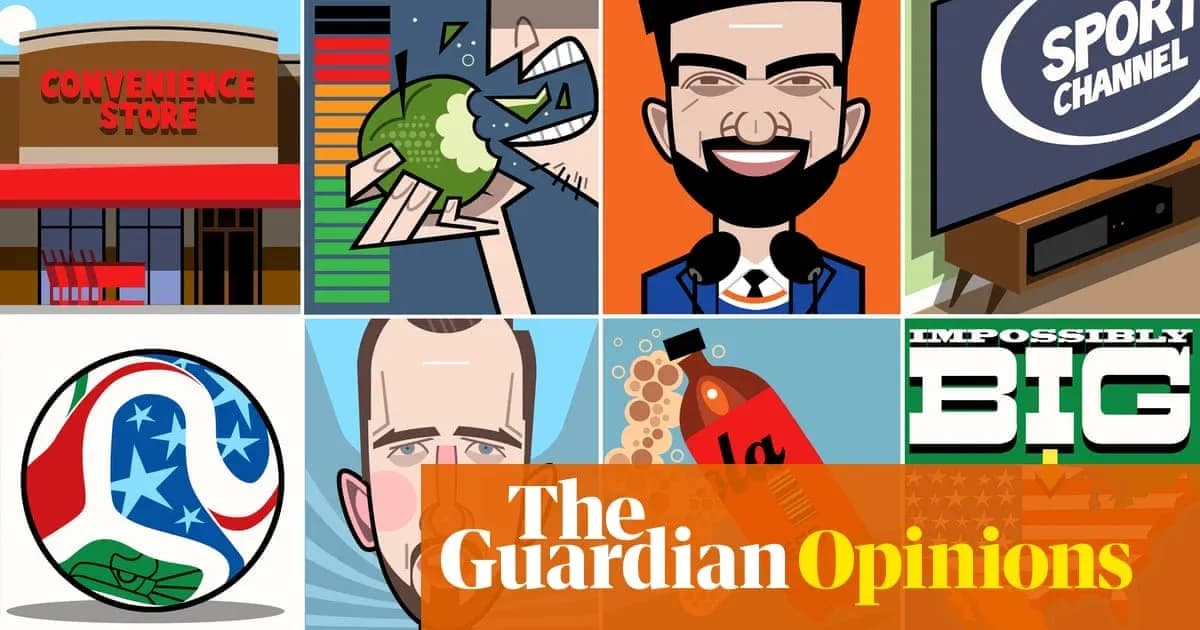
As for domestic harmony, let’s say it’s a work in progress. Fair to say Barry and I won’t be signing a 10‑year lease together. I’m confident I haven’t annoyed him at all, apart from – deep breath – eating an apple too loudly, failing to screw the lid on a bottle of Coke Zero properly, offering unsolicited advice on how to chop a chilli, asking if he needed the big saucepan, daring to put yoghurt into a bowl, doing too much laundry and criticising his unapologetic flatulence, in both directions. Otherwise, flawless.
Somehow, people find this compelling. The bickering, the logistics, the mundanity around the matches. They follow it on Instagram, listen on the pod, watch on YouTube, or wherever they get their content. Maybe this is pilot season. Maybe this is how we crack America: two middle‑aged men arguing about cookware between World Cup fixtures.
Barry has already helped the star of Selling Sunset with her key fob – not a euphemism, just a sentence that tells you exactly where we are and how weird this all is. Big things, we’re told, are coming.
For now, there are games to watch, stories to tell, and a tournament trying to elbow its way into a country that still thinks in yards and timeouts. The World Cup is here. The question is whether the US will let it leave a mark.