Feyenoord's Victory Overshadowed by Fireworks Chaos
The red flares came first.
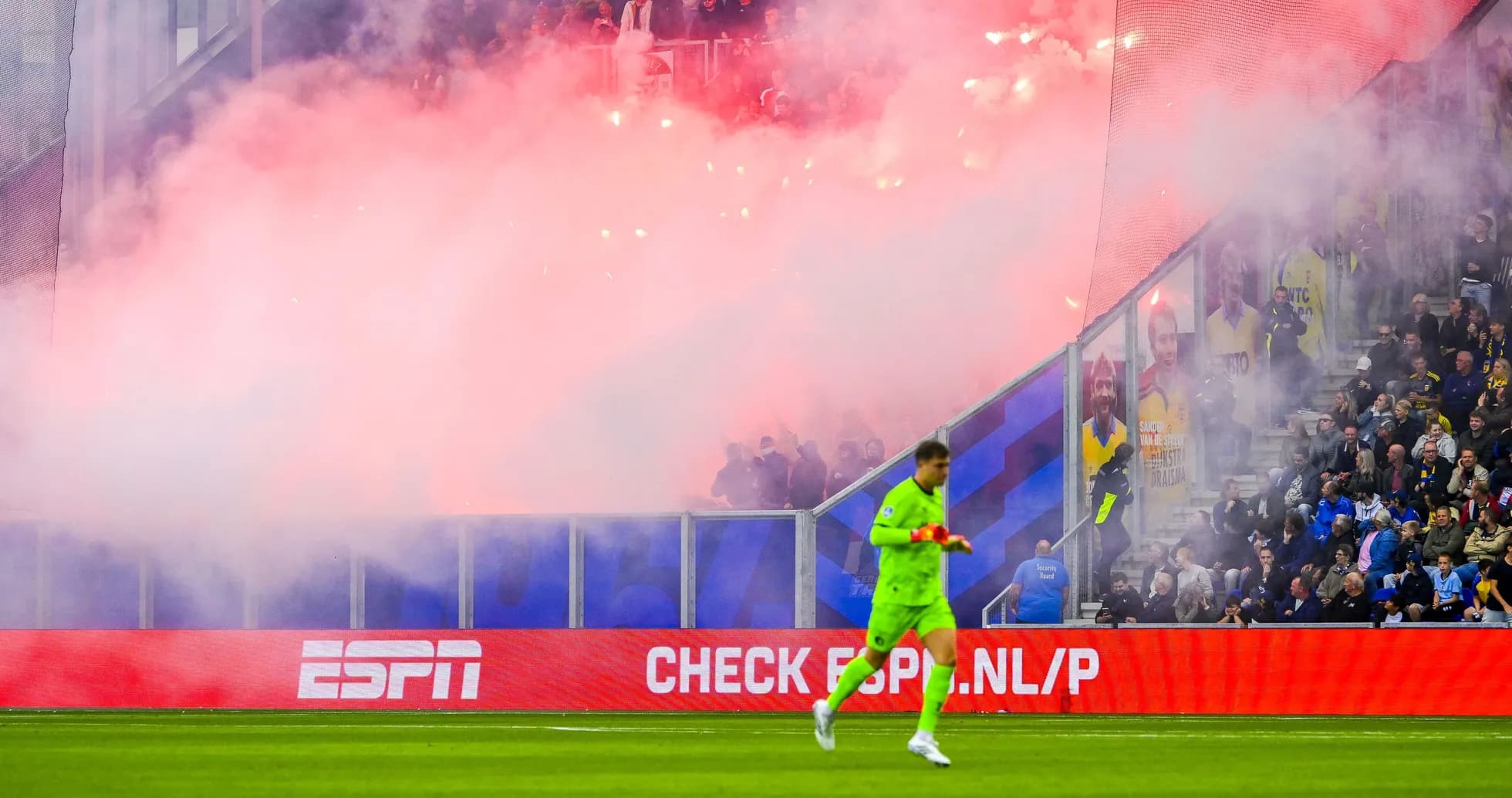
Then the fireworks followed, screaming out of the away end at the Kooi Stadion and arcing towards the pitch, towards the home crowd, towards the players. By the 12th minute of Feyenoord’s 5-2 win at SC Cambuur, the football had already been pushed to the background. Smoke rolled across the turf. Explosions echoed around the stands. The referee had no choice but to pull everyone off the field.
For around 10 minutes, the Eredivisie stopped and stared at yet another stadium crisis.
One blast landed frighteningly close to Feyenoord goalkeeper Tjark Ernst, detonating just metres from where he stood. It was a stark reminder of how quickly spectacle can turn to disaster. The match did resume, but the damage had already been done in the stands.
Cambuur later confirmed that five home supporters were injured in the chaos. In a detailed medical update, the club said fans had suffered burns, hearing damage and eye injuries after fireworks were fired directly into sections packed with home supporters in Leeuwarden. This was not a near miss. People were hurt.
Feyenoord win, but leave with apologies
On the scoreboard, Feyenoord cruised to a dominant 5-2 victory. In the dressing room, there was no mood for celebration.
Head coach Giovanni van Bronckhorst moved quickly after the final whistle, offering an immediate apology to the Cambuur hierarchy on behalf of the Rotterdam club. Feyenoord then issued a formal statement, saying it “firmly distances itself from the unacceptable events” and promising internal action.
The club has already said it will request and review all available camera footage in an effort to identify those responsible for what it described as life‑threatening behaviour. The hunt is on for faces in the away end, not for clips of the goals.
Feyenoord general manager Robert Eenhoorn cut a visibly shaken figure when he spoke post-match. The scoreline, he insisted, meant little.
“I cannot be happy,” Eenhoorn admitted. “Frustration prevails too much for that. This problem obviously does not only affect Feyenoord and is unfortunately something we have been unable to put a stop to for decades. We will therefore have to sit down again with all stakeholders, clubs, the KNVB [Dutch football association], and the authorities to look for a solution together.”
The message was clear: this is bigger than one club and one afternoon.
Cambuur fury and a city on edge
For Cambuur, recently back in the Eredivisie after three seasons away, the return to the top flight should have been about football. Instead, the club was left grappling with a basic question: how safe are their own fans in their own stadium?
The administration promised a full investigation alongside local police and government officials. Their official response pulled no punches.
“It should be clear that setting off and firing fireworks is completely unacceptable and has no place in a football stadium whatsoever,” the club stated.
City hall quickly joined the chorus. Leeuwarden mayor Foort van Oosten condemned the scenes in the strongest terms and pledged a thorough investigation into how such a large quantity of pyrotechnics was smuggled into the Kooi Stadion. The issue is no longer confined to the terraces; it now sits squarely on the desks of local authorities.
This is not an isolated flashpoint. Dutch football has been wrestling with escalating disorder, from flares to fireworks to repeated stoppages. The abandonment of Ajax’s match against Groningen last season still hangs in the air as a warning that went unheeded.
KNVB under pressure as rules exposed
One question rang out once the final whistle had gone and the extent of the injuries became clear: why did the game continue?
Under current KNVB regulations, a match is permanently abandoned if a player or match official is hit. The rules for serious injuries to supporters are far less defined. On Sunday, that grey area was brutally exposed.
Jan Bluyssen, the KNVB’s manager of professional football competition affairs, did not try to sugar-coat it when speaking to Dutch news agency ANP. “That doesn’t feel right,” he admitted, referring to the decision to play on despite five injured fans.
The governing body now finds itself under intense pressure to tighten its protocols and punish clubs whose supporters cause bodily harm. The KNVB has already confirmed it will revisit its procedures for dealing with disorder, with an explicit aim: ensure the safety of supporters takes precedence over the completion of a fixture.
The goals, the points, the league table – all of it felt secondary in Leeuwarden. The real outcome of this match will be decided not in the standings, but in how Dutch football chooses to respond the next time the first flare is lit.