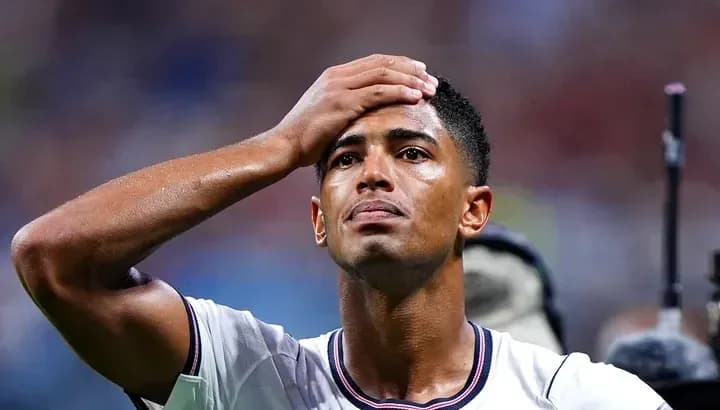
France vs England: Battle for World Cup Bronze
No one grows up dreaming of winning the World Cup’s third-place playoff. Yet on Saturday, in the Dallas heat, France and England must drag themselves off the canvas and fight for a medal that suddenly feels like a test of character as much as quality.
For France, the favourites’ mask was ripped away by Spain in a clinical 2-0 semi-final defeat. For England, Argentina did what Argentina do: absorbed the blows, then let Lionel Messi pick them apart in Atlanta.
Two giants. One consolation prize. And a lot of questions.
Deschamps’ Last Stand
At full-time against Spain, Didier Deschamps stood on the touchline knowing one of two things would be true: he was either right about La Roja being favourites, or he was heading to another World Cup final.
He was right. Brutally so.
Deschamps had talked up Spain’s status before the semi-final, and Luis de la Fuente’s side justified every word. Channelling the conviction of their Euro 2024 and Nations League wins over France, they walked into Dallas and took control of the occasion France thought they owned.
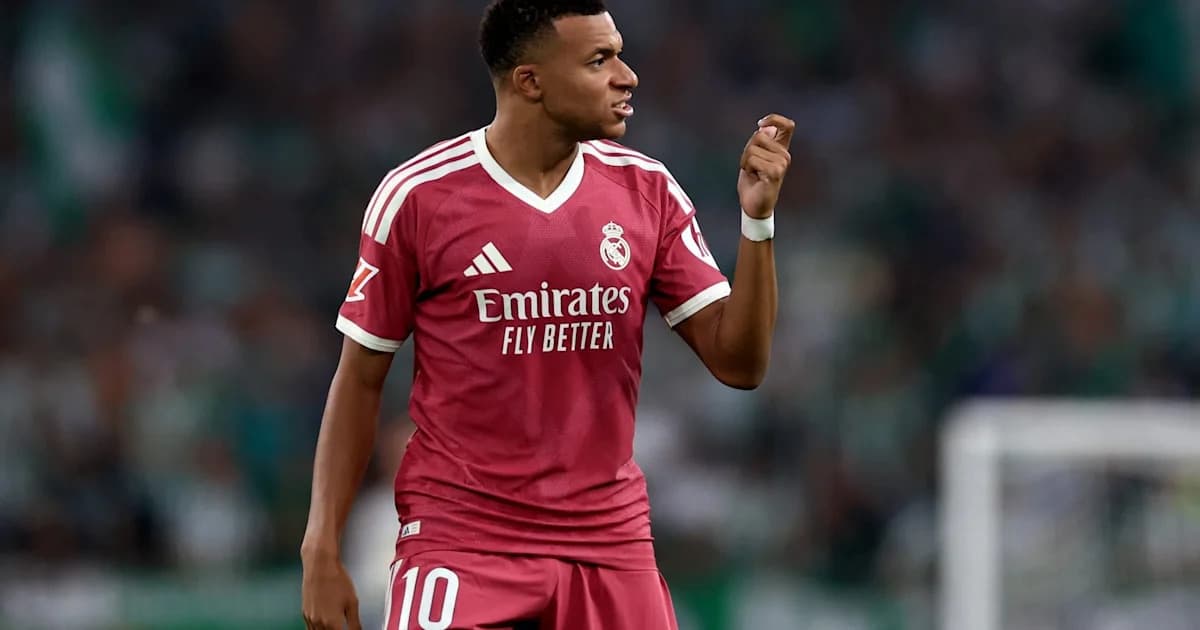
Mikel Oyarzabal’s penalty was as precise as his nerve. Pedro Porro’s strike, worthy of a player-of-the-tournament contender, sealed it. Behind them, Spain’s defence smothered Kylian Mbappe and a blunt French attack, restricting them to a miserable 0.31 Expected Goals. For a side built on devastating transitions, it was a sobering, static night.
This was Deschamps’ record-breaking World Cup match as a manager. It will not define his legacy, but it did expose him. Inside the camp and out, the verdict was harsh: he got it wrong. Even Mbappe, usually so carefully managed, criticised France’s tactical approach in the immediate aftermath.
Now comes the farewell he never wanted. Deschamps, departing at 57, must finish a distinguished reign in the game’s most unloved fixture, chasing a third World Cup bronze for Les Bleus. They have form in this game: a 4-2 win over Belgium in 1986, a wild 6-3 against West Germany in 1958 when Just Fontaine scored four. Only in 1982, when they slipped to fourth behind Poland, did they fall short.
There is pride to salvage. There is also pain to manage.
England’s Familiar Agony
Across the bracket, England’s semi-final had a different rhythm but the same ending: hope, then the hard ceiling of elite opposition.
The build-up against Argentina carried that familiar swell of English optimism. This time, it seemed, the draw had opened, the squad had matured, the scars of previous tournaments had hardened into experience.
For a while, the script held. Thomas Tuchel’s side refused to be dragged into the chaos Argentina so often thrive on. They stayed calm, used the flanks, and found joy where the champions were weakest. Anthony Gordon’s opener, exploiting those wide gaps, felt like a breakthrough moment.
Then England tried to sit on it. Try to break us down, they said.
Messi accepted the challenge with a smile. He threaded the passes, dictated the tempo and carved England open. Enzo Fernandez and Lautaro Martinez finished the job, turning a controlled English performance into another post-mortem.
The numbers are damning. England have now lost all seven of their World Cup knockout ties against teams ranked in the world’s top 10. They are also responsible for the only two instances this century of a men’s World Cup semi-finalist taking the lead and still going out – Croatia in 2018, Argentina now.
No wonder the FA’s decision to extend Tuchel’s contract is being picked apart already.
There is a minor carrot on Saturday. Bronze would mark England’s second-best finish at a World Cup, with their previous third-place attempts ending in defeat – 2-0 to Belgium in 2018, 2-1 to Italy in 1990. But for a squad that spoke of titles, a podium finish feels like a souvenir, not a statement.
It does not help that they have beaten France only once in their last nine meetings. The last time they met at a World Cup, in 2022, Deschamps’s holders ended England’s run in the quarter-finals. That scar has not healed.
France: Bruised and Shuffled
If France needed another headache, it arrived in the form of William Saliba’s back.
“My back is gone, my back is gone.” Eight words, caught and shared, that chilled both France and Arsenal supporters. The centre-back’s long-standing issue flared again in the first half against Spain, forcing him off and almost certainly ruling him out of Saturday’s match.
Crystal Palace defender Maxence Lacroix, who came on in Arlington, is in line to start. Deschamps had initially preferred him to Ibrahima Konate, citing the Liverpool man’s lack of sharpness and discomfort on the left side of a central pairing. With Saliba out, those calculations change. Konate could yet return, perhaps at Dayot Upamecano’s expense, as Deschamps tweaks his final XI one last time.
There was another scare when backup goalkeeper Brice Samba picked up a knock in the first post-semi training session, but Mike Maignan’s place was never under threat.
France’s likely shape still leans on its young core. Warren Zaire-Emery and Manu Kone in midfield, Rayan Cherki and Michael Olise offering invention behind Mbappe, with Désiré Doué adding energy and unpredictability. The system misfired against Spain. Against England, it has a chance to breathe.
England: Strong XI, Sore Bodies
Tuchel’s problems are different but no less awkward.
Reece James, so often snakebitten by injury, limped out of the Argentina defeat with another muscular issue, barely a week after returning from a hamstring problem. His World Cup ends in familiar frustration.
Jarell Quansah has completed a two-game ban and is available, but the reshuffle is more likely to involve Djed Spence. The full-back, England’s standout in the semi-final, is expected to switch flanks, with Nico O’Reilly returning on the left of the defence.
Jordan Henderson remains out with a wrist injury, limiting experience in midfield, though Tuchel otherwise has a full squad to choose from. He is expected to go strong, not sentimental, in what could be his last match in charge if the pressure back home hardens into action.
One cloud lingers over Jude Bellingham. Cameras caught him slapping the back of Valentin Barco’s head during Argentina’s post-match celebrations, and there are concerns that disciplinary action could follow. For now, he is available, and England need him – as a runner, as a connector, as a symbol that this team still has something to say.
The probable XI is familiar: Jordan Pickford in goal; Spence, Ezri Konsa, Marc Guehi and O’Reilly across the back; Declan Rice and Elliot Anderson anchoring midfield; Morgan Rogers, Bellingham and Gordon supporting Harry Kane.
On paper, that is a side capable of hurting anyone. The question is not talent. It is resilience.
The Edge
Spain showed the world how to suffocate France’s attack. England, though, have not kept a single clean sheet in the knockout rounds of this tournament. They do not control games with Spain’s icy precision, and they have a habit, under pressure, of retreating rather than strangling.
France also arrive with an extra day’s rest, physically and mentally. That matters at the end of a month-long tournament, especially in a game where motivation can waver.
Les Bleus have the scars, the anger and the tools to turn this into a statement of defiance. England, chasing a second-best finish that will feel strangely hollow, must prove they can finally beat an elite side when it really counts – even if the world is looking more at Sunday’s final than Saturday’s bronze.
Prediction: France 2-1 England.
Not the prize they came for. But for one of these heavyweights, it might just be the platform from which the next cycle begins.