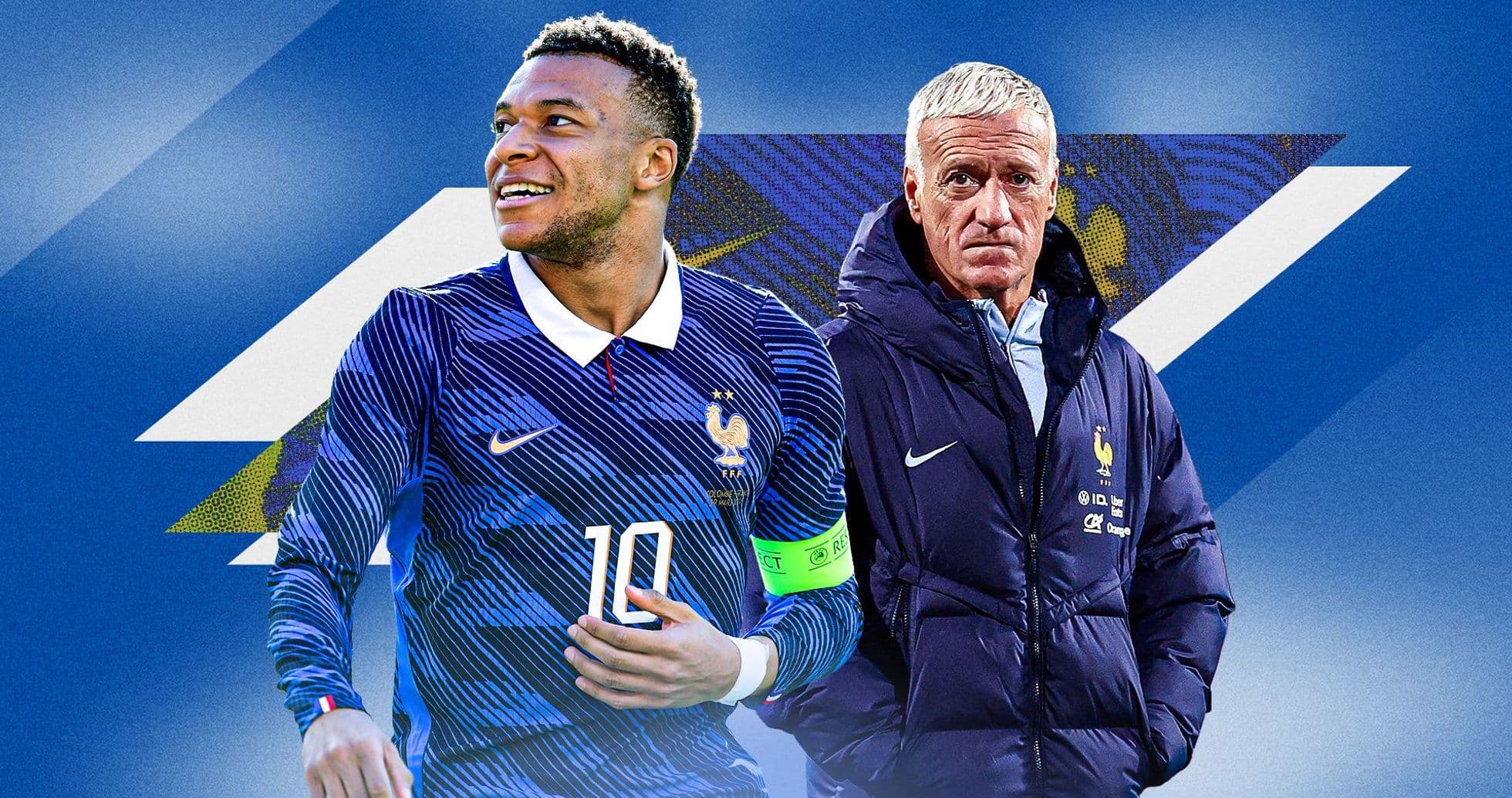
France's Golden Generation: A Last Dance in North America
France arrive in North America with the weight of an era on their shoulders. World champions in 2018, beaten finalists in 2022, they no longer come to tournaments as hopeful contenders. They come as a standard. A benchmark everyone else measures themselves against.
And this time, they travel with an attack that looks almost unfair.
Kylian Mbappe remains the headline act, the captain, the symbol, the number 10. Around him, though, a new generation has surged into the spotlight. Michael Olise has exploded at Bayern Munich. Desire Doue and Ousmane Dembele have become central pieces in Luis Enrique’s thrilling Paris Saint-Germain side. Four players, all in form, all capable of deciding games on their own. Few national teams can field one such weapon. France have an armoury.
On paper, no squad in the tournament can match their attacking depth. Mbappe’s relentlessness, Olise’s craft and end product, Dembele’s chaos, Doue’s incision between the lines – it is a barrage from every angle. The question is not whether they can score. It is whether anyone can stop them often enough to survive.
The doubts lie at the other end of the pitch. France’s defence has wobbled too often in recent months, and the fitness of William Saliba hangs over the build-up like a cloud. Without him, the back line loses not just a defender, but a sense of calm. In a tournament where one mistake can tilt a campaign, that matters.
There is another fault line to watch. Harmony. This is a dressing room that has never been simple, a group rich in ego, status and expectation. Keeping that room aligned, keeping everyone pulling in the same direction, may prove as decisive as any tactical tweak. If the unity holds, if the stars stay on the same page, France will be a terrifying proposition all the way to the final in New Jersey.
At the centre of it all stands Didier Deschamps, a coach who has lived this entire cycle from the inside. He has been criticised for his pragmatism, for his style, for what some perceive as conservatism with such attacking riches at his disposal. Yet the record is unarguable.
Since taking charge in 2012, Deschamps has dragged a fractured national team out of its post-Laurent Blanc malaise and turned it into a machine built for the biggest stages. The 2018 World Cup in Russia, won against Croatia. The UEFA Nations League in 2021, sealed in Milan against Spain. Two more finals reached: Euro 2016, lost in Paris to Portugal in extra time, and the epic 2022 World Cup final in Qatar, where Argentina prevailed on penalties after one of the greatest matches the sport has ever seen.
This, though, is the epilogue. Deschamps’ contract expires in July and will not be renewed. Nearly 15 years at the helm come down to one last tournament, one last attempt to squeeze everything from a golden generation before handing the keys to someone else. Whatever happens, this is his last dance with Les Bleus.
If Mbappe is the icon of this team, Olise might be its rising heartbeat.
The Bayern Munich winger has just put together another devastating Bundesliga campaign, hitting double figures for both goals and assists for the second season running. In Europe, his numbers in the Champions League have matched that domestic form, underlining that this is not a flat-track bully but a player built for the sharp end of the game.
One night in Bergamo summed up his trajectory. Bayern shredded Atalanta 6-1, and Olise orchestrated the demolition: two goals, one assist, and a performance that radiated authority. He drifted between the lines, attacked space, and finished with the cold certainty of a player who knows he belongs at the top.
The momentum has carried into the national team. In France’s final warm-up match, he tore into Northern Ireland, scoring a hat-trick and turning a friendly into a personal statement. At 24, this summer offers him something different: the chance to step out from Mbappe’s shadow and shape an entire tournament. If he catches fire, he could easily become France’s true MVP – and one of the standout figures in North America.
Behind the headline names, another story is quietly forming.
Maghnes Akliouche is not yet a star, but he has the profile of a player who can tilt games from the bench. Deschamps brought him into the senior setup during qualifying, and the Monaco academy product wasted no time. A goal against Azerbaijan. An assist against Iceland. Immediate impact, delivered with the composure of someone who has waited a long time for the door to open.
Last season, Akliouche truly arrived. Seven goals and twelve assists across Ligue 1 and the Champions League confirmed that Monaco had produced yet another top-level talent. He operates mainly as a right-sided attacking midfielder in a 4-2-3-1, but he can also slide into a central playmaking role, drifting into pockets where defenders hate to follow.
What sets him apart is his blend of physique and technique. He is not the slight, featherweight winger of cliché. He carries a presence, rides challenges, and still has the touch and vision to unpick defences. In the modern game, where space is tight and duels are relentless, that combination has become gold dust.
He is unlikely to start often. Deschamps will lean first on his established stars. But tournaments are rarely won by the starting XI alone. They are decided by the players who come on with 20 minutes left, when legs are heavy and nerves fray. In those moments, Akliouche could become one of France’s most dangerous weapons, a fresh burst of invention when the game turns cagey and inspiration runs low.
France know what it is to dominate a decade of international football. They also know how thin the margins are at this level. With Deschamps on his farewell tour, Mbappe at his peak, and a new wave led by Olise and Akliouche pushing from behind, this campaign feels like a crossroads.
Is this the crowning chapter of an extraordinary era, or the first sign that the cycle is finally turning?