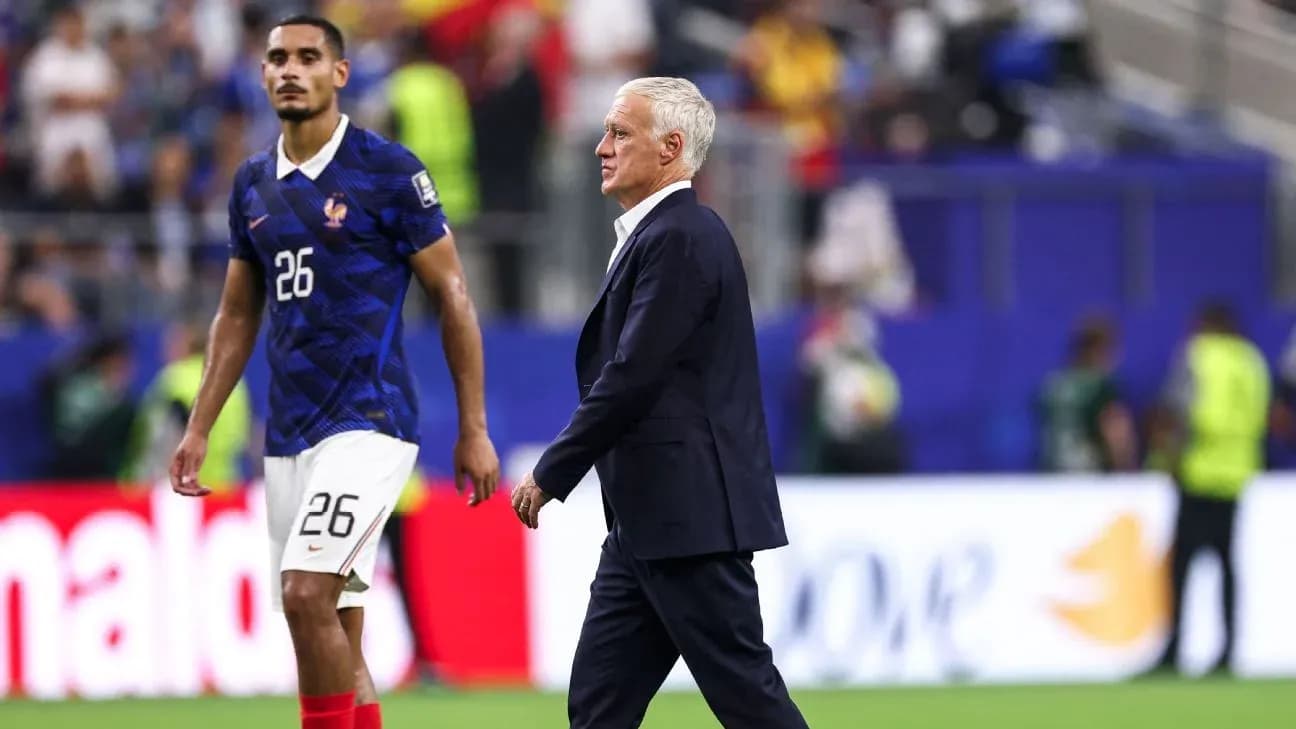
France's World Cup Exit: The End of Deschamps' Era
ARLINGTON, Texas — The end came quietly for France, and then all at once.
They arrived in the United States as World Cup favorites. They carried that label with the casual confidence of a team that had lived on this stage for a decade. They had not trailed once in the tournament. Then, on a flat Texas afternoon inside Jerry Jones’ vast stadium, Spain struck first, and France never found a way back. A 2-0 defeat in the semifinal felt heavier than the scoreline. It felt like the closing of an era.
Because it’s not just the World Cup that’s over for France. It’s Didier Deschamps, too.
Fourteen years. One hundred eighty-four games. Three major finals — two World Cups, one European Championship — plus a UEFA Nations League title. A World Cup as coach to go with the one he lifted as captain in 1998. A body of work most international managers can only dream of.
And yet it ends with a whimper.
Deschamps’ last stand
The irony is brutal. Deschamps came within a Randal Kolo Muani finish — one chance, one stretch of a boot — of becoming only the second coach in history to win two World Cups. Instead, his final act on this stage is a semifinal in which his team mustered 0.04 xG in the first 64 minutes, his star-studded front four reduced to shadows.
For many France supporters, the emotion is no longer gratitude. It’s relief. Relief that this version of Les Bleus, so rich in talent and so poor in ideas, has run its course. Relief that the Zinedine Zidane era is finally about to begin.
Going out to Spain is no disgrace. This Spain, under Luis de la Fuente, is packed with technique and intelligence. But it’s the manner of the exit that stings. France were supposed to be the most complete squad at this World Cup, the deepest pool of talent from back to front. Instead they were outplayed everywhere: on the ball, off the ball, in the duels, in the dugout.
This wasn’t a one-off. De la Fuente has now beaten Deschamps three years running: Euro 2024 semifinal, the wild 5-4 Nations League game in 2025 when Spain once led 5-1, and now this World Cup semifinal. The pattern is no longer coincidence. It’s a blueprint.
Either De la Fuente is Deschamps’ bald, bespectacled kryptonite, or the French coach has simply refused to learn. Because every time these teams have met, France have looked more confused, not less.
A plan that never changed
Everyone knew what Spain would do. They would keep the ball, stretch the pitch, pull France from side to side and wait for the gaps to open. The tactical question was on the other side: how would France respond?
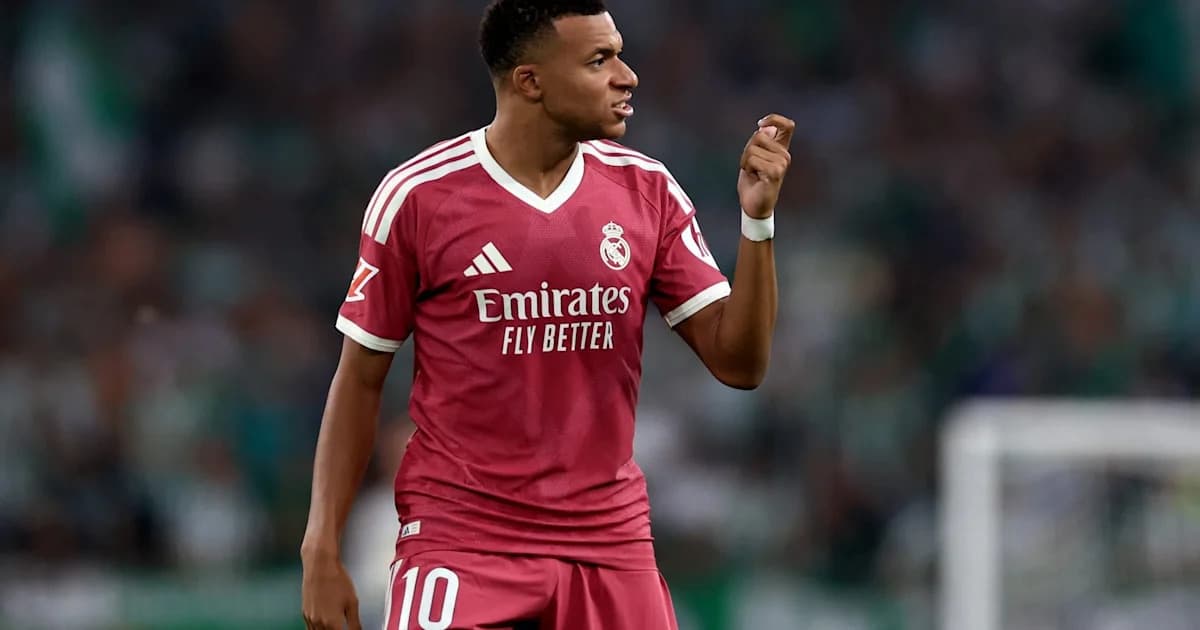
Would they adjust their structure, add a midfielder to avoid the two-vs.-three in the center that Kylian Mbappé himself pointed out? Would they press higher, disrupt the build-up, turn it into a more chaotic, physical game? Or would they trust their talent, keep the usual shape and dare Spain to cope?
Deschamps chose trust. Trust in his stars. Trust in the formula that had taken him this far. He kept his system, kept his hierarchy, kept his faith.
And he paid for it.
The logic is understandable. When you have the better players, you usually force the opponent to adapt to you. In most team sports, that’s the golden rule. Deschamps has lived by it for more than a decade. Keep the group happy, keep the tactics simple, let the talent decide. It worked with Zidane, Patrick Vieira and Thierry Henry in 1998. It worked with Mbappé, Antoine Griezmann and company in 2018 and 2022.
His worldview is rooted in the nature of football itself: a low-scoring game in which too much tactical tinkering can choke creativity. Don’t overcomplicate. Don’t overcoach. Don’t get in the way.
But that approach only works if your best players get the two things they need most: the ball and space. Spain denied France both. They monopolized possession and suffocated the pitch. No room to run. No rhythm. No freedom.
Without those conditions, individual brilliance shrinks. Michael Olise, so gifted on the ball, became only marginally more threatening than Michael Scott. France’s front line looked like a collection of names, not a unit.
That’s when a manager has to change something. Shape. Personnel. Pressing triggers. Anything.
Deschamps didn’t. Or at least, not in a way that shifted the game. Manu Koné for Adrien Rabiot. Désiré Doué for Bradley Barcola. Logical changes, predictable changes — the footballing equivalent of your phone’s predictive text. On a good night, they help you keep structure and control. On this night, they simply stretched out the suffering.
His loyalty to certain players — Rabiot above all, but also Olise despite his nightmare performance — has always been a double-edged sword. It built trust, stability and a powerful dressing-room culture. It also locked him into patterns he struggled to break when the game demanded something different.
The same qualities that made Deschamps the most successful coach in French history ultimately undid him at the moment he had his most gifted squad.
Enter Zidane
So what now? France turn to Zidane, the icon, the quiet giant in the background of this entire cycle.
On paper, his résumé is glittering: three UEFA Champions League titles and two LaLiga crowns with Real Madrid. He managed egos, managed pressure, and found a way to keep serial winners hungry. He did it all in the harshest spotlight in club football.
But that was five years ago. His last trophy came in 2020. Since then, nothing. No club. No national team. No touchline.
There’s another wrinkle. The only place he has ever coached is Real Madrid — a club that operates on a different planet to almost every other job in the sport. At Madrid, you see your players every day. You can drill patterns, build automatisms, shape the squad over time. If someone doesn’t fit, you ask for another superstar and, more often than not, you get him.
International football is the opposite. You work in short bursts. You inherit what the country gives you. You can’t just replace a problem; you have to manage it.
Zidane’s Madrid sides were not tactically baroque. He, too, preferred clarity over complexity. That, plus his long history as Deschamps’ teammate with France and Juventus, makes it tempting to assume he will simply be a sleeker version of the same model.
That might not be a bad thing. Deschamps’ era delivered a World Cup, another World Cup final, a Euro final and a Nations League title. Replicating that is not easy.
But Zidane has a chance — and perhaps an obligation — to move faster along the learning curve than his predecessor. To recognize that there are nights, like this one against Spain, when you cannot just send out your best eleven, pump them full of motivation and assume talent will tilt the game your way.
Sometimes balance matters more than brilliance. Sometimes you have to accept that the other side is trying to suffocate your strengths and that the solution is not more stars, but more structure. Zidane knows this better than most. He won a World Cup with Stéphane Guivarc’h leading the line, after all. So did Deschamps.
The lesson from Arlington is stark: when the technical gap between two teams is small, the collective can overpower the individual. Spain were a team. France were a list.
Zidane has had years to watch this generation grow. He knows the personalities, the profiles, the possibilities. He will inherit one of the deepest attacking pools in world football and a country that expects to be in the final four of every tournament it enters.
Match Deschamps’ achievements and he will be hailed as a success.
Surpass them — by marrying France’s talent with the kind of tactical edge that deserted them here — and he might redefine what success for this golden generation really looks like.