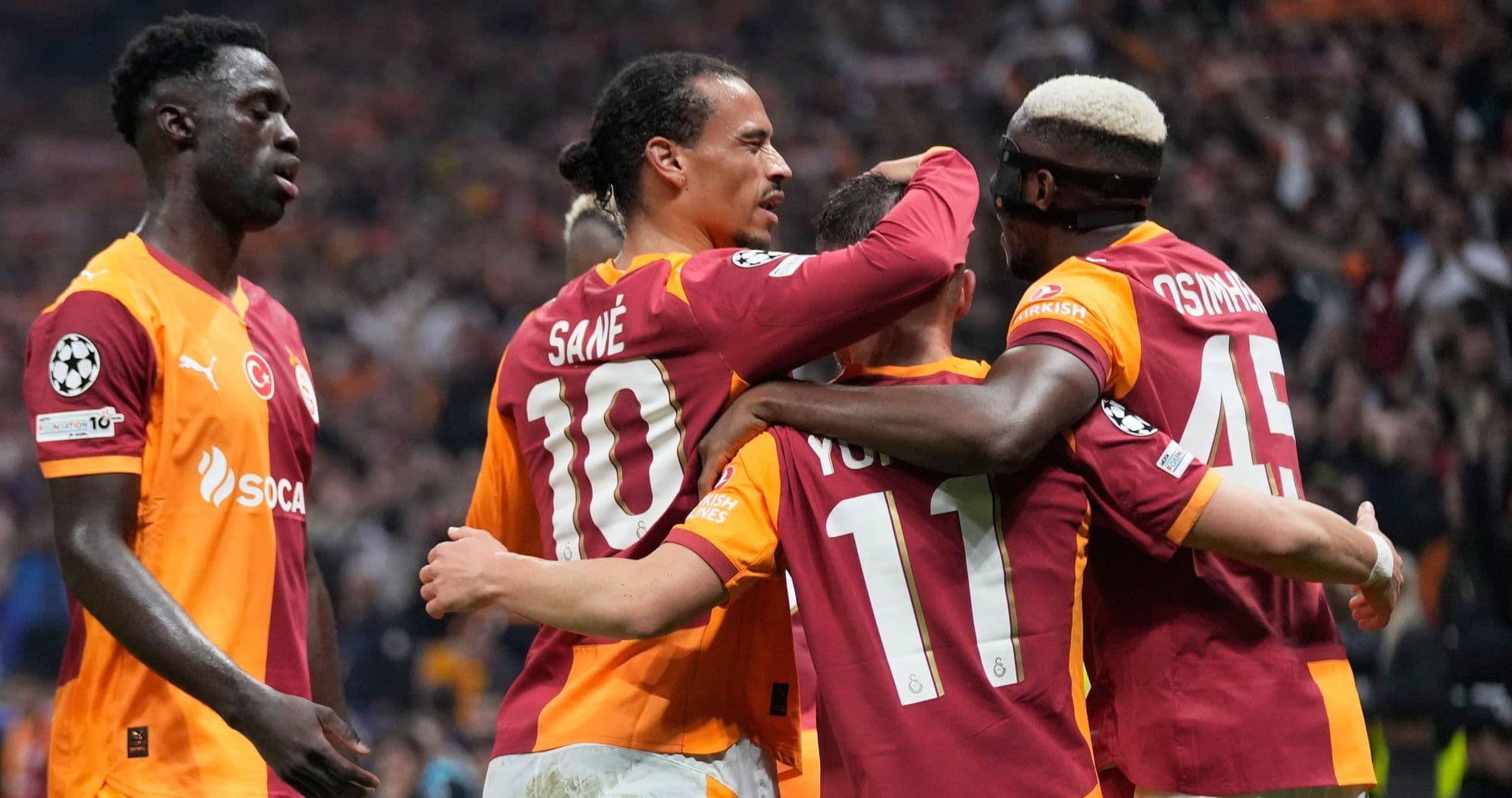
Galatasaray vs Juventus: Champions League Showdown at Rams Park
The Champions League returns to Istanbul with a sense of déjà vu and unfinished business. Galatasaray welcome Juventus to Rams Park in a Round of 32 showdown that feels bigger than its billing: two continental giants, both through to the knockouts, but separated by fine margins in form and firepower. Juventus arrive higher in the overall standings with 13 points and a +4 goal difference, while Galatasaray sit on 10 points and a slightly negative goal difference. Yet in this stadium, European nights have a habit of ignoring the script.
The mood could hardly be more contrasting. Galatasaray’s recent continental form reads LDLLW – stuttering and streaky – whereas Juventus are unbeaten in five Champions League outings (DWWWD), building quiet momentum. Under the lights, with D. Makkelie in charge and the noise of Istanbul at full volume, this has all the ingredients of a tense, high-stakes first act in a two-legged story where every away goal, every duel, and every moment of composure could define a season.
Form guide and season trends
Galatasaray’s campaign has been a study in extremes. Their overall record of three wins, one draw and four defeats underlines how volatile they have been, but Rams Park has largely been a source of strength. Two wins, one draw and just one loss at home, with five goals scored and only three conceded, suggest that in front of their own fans they become a different proposition. Defensively, they are far more secure here than on their travels: they concede just 0.8 goals per home game compared to 2.0 away.
Going forward, Galatasaray average 1.1 goals per match in the competition, with a surprisingly even spread across the 90 minutes. They strike early and often: four of their nine goals have come in the opening 45 minutes, and they remain a threat straight after half-time. The concern is at the other end in the latter stages: 36% of their goals conceded arrive between minutes 61 and 75, a period where concentration and legs can fade. Against a side as ruthless as Juventus in those very phases, that is a tactical red flag.
Juventus, by contrast, have built their campaign on control and timing. With three wins, four draws and just one defeat, they have proved extremely hard to beat. Their away record – one win, two draws and one loss, with five scored and five conceded – is solid if not spectacular, but it underlines a team comfortable in tight, tactical battles on foreign soil.
Statistically, the Italians carry the more consistent attacking threat: 14 goals in eight games at an average of 1.8 per match. They tend to explode after the interval. A staggering 71% of their goals arrive between minutes 46 and 75, with five in the 46–60 window and another five in the 61–75 period. If they can weather the early storm in Istanbul, Juventus will fancy their chances of taking control as the game opens up. Defensively, they concede 1.3 goals per game – similar to Galatasaray overall – but are more stable across home and away, with five shipped in each.
In short, this is a clash between a home side that leans heavily on its stadium’s aura and an away side that trusts its structure, patience and second-half surges.
Head-to-head history
There is history here, and it belongs to Galatasaray. The last time these two met in the Champions League, back in the 2013 group stage, the Turkish side emerged unbeaten. A dramatic 2-2 draw in Torino was followed by a famous 1-0 win in Istanbul, a night etched into Galatasaray folklore as they sent Juventus home empty-handed in the snow and chaos of a classic European evening.
Those two games set a tone: Galatasaray showed they could stand toe-to-toe with the Italian giants, and Rams Park (then under a different name) became a graveyard of sorts for Juventus’ ambitions. While a decade has passed and squads have been transformed, the memory lingers – in the stands if not in the dressing rooms.
The head-to-head record also hints at entertainment. Three goals in Torino and a late winner in Istanbul made for a combined five goals across two meetings, with momentum swinging wildly. For neutrals, it suggests this encounter could again be decided by fine margins and late drama rather than a cagey stalemate.
Team news and key men
Galatasaray’s biggest boost is that their talismanic forward Victor Osimhen is available and in frightening form. With six goals in six Champions League appearances, he has been one of the competition’s standout performers. He averages nearly a goal a game, has converted all three of his penalties, and carries a constant threat with 18 shots on target from 22 attempts. His physicality, movement and willingness to duel – winning more than half of his 64 contests – make him the obvious focal point of the hosts’ game plan.
The Turkish champions do have selection issues, but they are largely on the fringes. M. Baltaci is suspended, while C. Guner, G. Gurpuz and R. Nhaga are all listed as inactive and will not feature. There are also question marks over L. Sane and A. Unyay, one inactive and one injured, but none of these names are central to their Champions League story so far. The spine that has carried them to the knockouts remains intact.
Juventus, however, are dealing with more significant absences in attack. Arkadiusz Milik is out injured, and perhaps more crucially, Dusan Vlahovic is sidelined with a groin problem. Add to that Khephren Thuram’s knock, and the Italians are deprived of both a major goal threat and an important midfield presence. For a side that leans on efficiency rather than volume of chances, the loss of Vlahovic in particular could reshape their approach, forcing greater emphasis on collective patterns and late runners from midfield rather than a classic penalty-box finisher.
Still, Juventus have shown they can spread the goals around, with no reliance on penalties and a strong record of scoring in the decisive middle third of games. Their 3-4-2-1 base shape, used in seven of eight matches, should again provide solidity and numbers in central areas to try to contain Osimhen and limit Galatasaray’s transition opportunities.
The verdict
This promises to be a compelling clash of styles and narratives rather than a straightforward heavyweight mismatch. Galatasaray will look to harness the energy of Rams Park, start fast and feed Victor Osimhen early, knowing Juventus can be vulnerable if forced onto the back foot. The Italians, for their part, will likely be patient, content to absorb pressure and grow into the game after half-time, where their statistical edge is most pronounced.
With Juventus missing key forwards, the tie feels more balanced than the standings suggest. Expect a tight, hard-fought contest, with Galatasaray’s home advantage and Osimhen’s form perhaps just enough to earn them a narrow first-leg edge – but Juventus’ away goal threat and second-half punch ensure this encounter will remain wide open heading into the return.