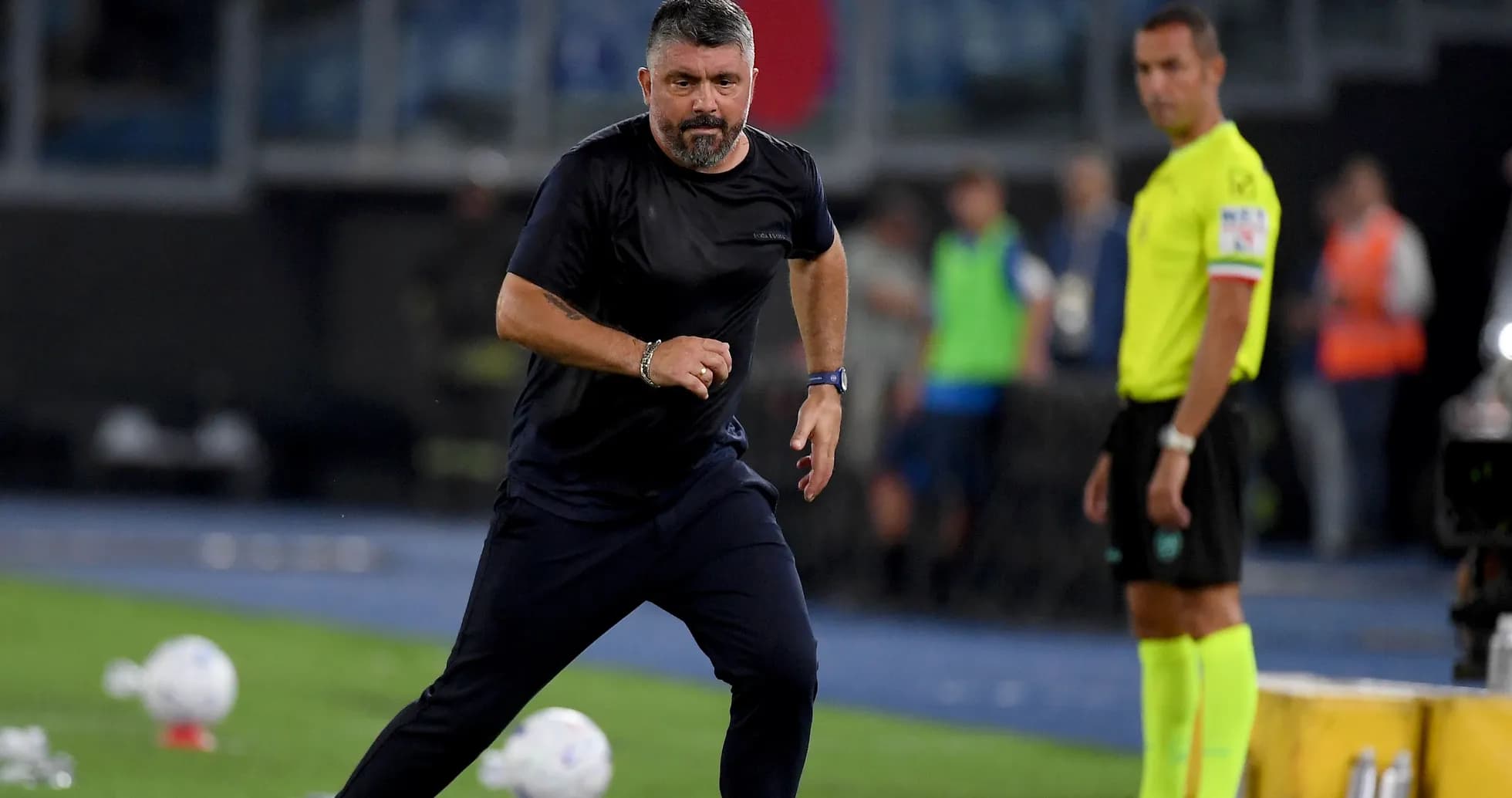
Gattuso Reflects on World Cup Heartbreak and Lazio's New Journey
Gennaro Gattuso does not hide from his scars. He wears them.
Days after steering Lazio to a gritty 1-0 win at Bologna in their Serie A opener, the former Italy coach laid bare the weight of failure that still sits on his shoulders: missing the 2026 World Cup.
“It’s a wound that will remain for as long as I live, because it was a deep wound,” he admitted, speaking with the same blunt honesty that defined him as a player.
Ten months in charge of the Azzurri, gone in an instant after a playoff defeat to Bosnia-Herzegovina that condemned Italy to a third straight absence from the men’s World Cup. For a country that once measured itself by how long it stayed in tournaments, not whether it reached them, the blow cut deep.
“I had 10 wonderful months,” Gattuso said. “The lads I coached gave me their all.”
The result still buried him.
A scarred past, a familiar face
Gattuso resigned in April, unable to escape the shadow of that Bosnia-Herzegovina loss. The Italian Football Federation moved in a different, yet very familiar direction. In July, Roberto Mancini walked back through the door.
Mancini’s return is no nostalgic gesture. His first spell from 2018 to 2023 brought Italy one of its brightest modern nights with the Euro 2020 triumph at Wembley, then one of its darkest with failure to reach the 2022 World Cup. He knows both the glory and the backlash. He knows what awaits him if this rebuild falters again.
Gattuso, though, refused to show even a hint of bitterness.
“I’d say he is a great coach with a wealth of experience,” he said. “He’s a great manager; he’s someone who has already won with the national team, and I obviously wish him all the best from the bottom of my heart.”
No edge. No dig. Just a World Cup winner backing another man stepping into a furnace.
A carousel of candidates
Mancini was not the first name on the list when the federation began plotting life after Gattuso.
Andrea Pirlo initially emerged as the leading candidate, a romantic choice and a high-profile one. Before that, the FIGC had tested the water with two of the game’s giants, Carlo Ancelotti and Pep Guardiola. Both approaches went nowhere.
Pirlo, for a moment, looked like the solution. Then the deal unraveled. Complications linked to an existing sponsorship agreement with a betting firm torpedoed the move, leaving the federation scrambling for a different route.
Behind the scenes, the debate raged. Lega Serie A president Ezio Maria Simonelli revealed that the league hierarchy strongly pushed for Antonio Conte to return for a second spell. The federation, though, turned back to Mancini, the man who had already taken Italy to the top of Europe and then to the brink of another exile.
The choice says everything about the moment: Italy wanted familiarity, a coach who understands the pressure, the politics, and the expectation that comes with the Azzurri bench.
Gattuso moves on, Italy cannot
While the national team wrestled with its identity, Gattuso moved quickly. In June, he signed on with Lazio, diving straight back into the rhythm of club football, where the next game always arrives fast enough to blur the last disappointment.
His start in Rome has been pragmatic rather than spectacular. A 1-0 win away at Bologna is not a statement of style, but it is a statement of control and resilience. Exactly the kind of platform a coach with something to prove can build on.
Italian football, though, does not enjoy that same luxury of simply moving on. A third consecutive missed World Cup is not a bad season; it is a generational crisis. The scars do not belong only to Gattuso. They belong to an entire football culture that once defined itself by its dominance on the biggest stage.
Simonelli has been clear: the time for internal division has passed. He has urged clubs, fans, and institutions to rally behind Mancini as the Azzurri attempt to claw their way back to the top.
Mancini’s next test
There is no gentle easing-in period. The calendar offers no sympathy.
Attention now swings toward the UEFA Nations League, where Italy will face Belgium on September 25. It is not a World Cup, but it is a measuring stick. A chance to see whether Mancini can stitch together a new identity from the wreckage of repeated failure.
The task is immense: restore national pride, rebuild confidence, and drag Italy back toward the summit of the international game. The margin for error has shrunk to almost nothing. The patience of a football-obsessed country is wearing thin.
Gattuso has already accepted that his World Cup failure will mark him forever. Mancini now steps back into a job where every decision, every squad list, every tactical tweak will be judged against that same unforgiving standard.
Italy used to arrive at tournaments expecting to compete for trophies. Now the first question is more basic, more brutal.
Can they even get there?