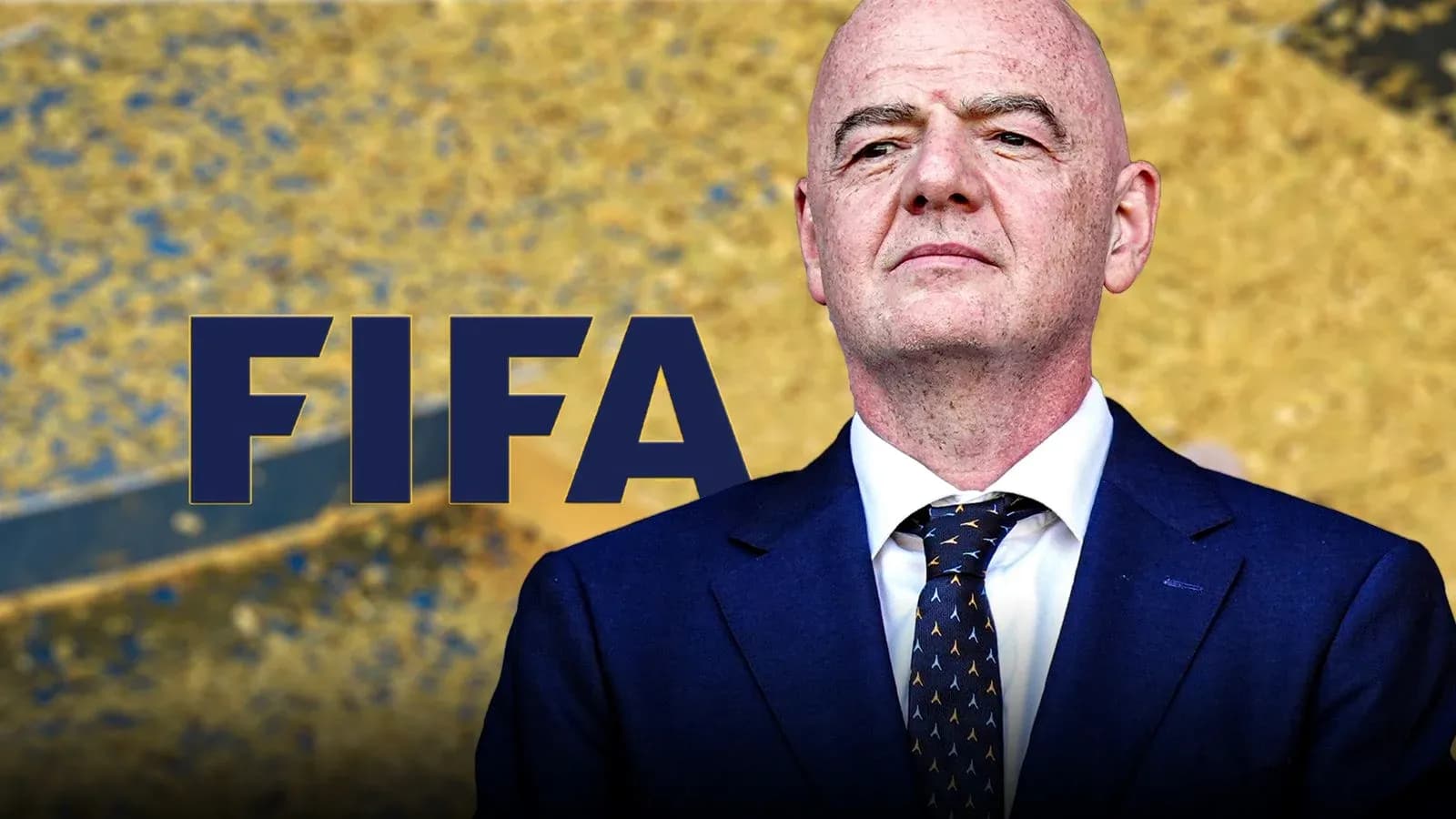
Gianni Infantino Abandons Controversial FIFA World Cup Proposal
Gianni Infantino has scrapped his most contentious project yet – a plan to sell a slice of future World Cup profits to private equity – after a furious backlash from across the football world and open revolt inside FIFA.
The proposal, wrapped in corporate branding as FIFA Forward Enterprise (FFE), was supposed to be the president’s next big play. Instead, it has triggered the most serious crisis of his tenure.
A late-night climbdown
In the early hours of Saturday morning, FIFA released a short, tightly worded statement attributed explicitly to “the FIFA president”. No grand video, no fanfare. Just Infantino, rowing back.
He insisted the FFE project was designed to “strengthen our FIFA Member Associations and our sport worldwide, especially in those countries where support is most needed”, and stressed it would only have gone ahead with majority backing from member associations after consultation with the FIFA Council, confederations and other stakeholders.
Then came the key line: “Having listened carefully to all the views, it has become clear that the project has created divisions of a nature that, regardless of the level of support, are no longer in the interest of the objective set out in the first place… As a result, this proposal will not proceed.”
No apology. No admission of misjudgment. Just a blunt acknowledgement that the plan had blown the game apart rather than bringing it together.
Infantino added that he now wants to “bring all interested parties back together in the coming days and weeks” with the aim of “growing football everywhere, particularly in those countries that mostly need our support.”
The pressure had finally told.
A deal too far
On paper, the numbers looked huge. Under the FFE proposal, FIFA aimed to raise up to $4.2bn (£3.1bn) from external investors by selling minority, non-controlling stakes in a new commercial vehicle that would bundle together World Cup broadcasting, sponsorship, ticketing and licensing rights with tournament operations. The whole enterprise, FIFA said, could be valued at around $20bn (£15bn).
The governing body claimed the plan could generate more than $10bn in “football development funding” over the next four years. To sweeten the deal, Infantino gave national associations until September 19 to back the scheme, dangling a £30.1m incentive for those who signed on.
But the reaction was swift and hostile.
UEFA, CONCACAF and the Asian Football Confederation (AFC) lined up against it. The English FA voiced “deep concern”. On social media, Prime Minister Andy Burnham cut through the corporate language with a simple message: “football belongs to fans”, while calling for “an urgent review” of FIFA’s governance.
Inside the confederations, the mood hardened. Writing on the AFC website, its president Sheikh Salman bin Ibrahim Al Khalifa welcomed FIFA’s decision to retreat.
“Any initiative that has the potential to impact global football will be presented and discussed with the Confederations, the FIFA Council, Member Associations and other stakeholders in a timely, transparent and meaningful manner,” he said, adding that the game’s future “must always be shaped through proper consultation, collective dialogue and respect for the established governance structures of our game.”
The message was clear: this was not Infantino’s World Cup to sell.
Revolt inside FIFA
The external criticism was damaging. What followed from within FIFA was devastating.
Carlos Cordeiro, one of Infantino’s senior advisors, resigned in protest, calling the project a “bad deal for football” and “for the long-term future of the game”.
“As a senior advisor to the FIFA president, a former banker, and a lifelong football fan, I cannot stand by while FIFA considers selling a stake in the World Cup,” he said in an exclusive statement to Sky News. “Let me be clear: I had no involvement in this proposal, and I oppose it unequivocally.”
Then came another blow. FIFA chief operating officer Kevin Lamour accused the leadership of deceiving staff over the nature and scale of the plans. He told the Associated Press that staff “deserve better than contempt and intimidation” and branded the World Cup sell-off “the project of one person”.
From the inside, the picture was of a president running a multi‑billion‑dollar organisation on a need‑to‑know basis – and not many people needed to know.
FIFA had tried to steady the ship with a statement in the early hours of Friday insisting “nobody is selling football”. Within 24 hours, the project was dead.
Infantino’s grip on power
The collapse of FFE is not just a policy defeat. It is a direct threat to Infantino’s authority.
According to Sky Sports News chief correspondent Kaveh Solhekol, the decision to pull the plug is a “desperate attempt” to save his job as FIFA president. The timing and tone of the late-night statement, branded clearly as coming from “the FIFA president”, underlined how isolated he has become inside his own organisation.
For years, Infantino has appeared almost untouchable. He had secured the backing of more than 200 of FIFA’s 211 member associations, including the English FA, and looked certain to stand unopposed in the presidential election scheduled for March. Until this week, the question was not whether he would win, but by how much.
That is no longer guaranteed.
Many federations are now rethinking their position. Leaders across the game are quietly sounding out whether a credible challenger can be found before the November 18 deadline for candidates to declare.
Unseating a FIFA president is notoriously difficult. Infantino has shown before that he is willing to cling on to power for as long as the statutes allow. But his reputation, already battered in some quarters, has taken another heavy hit. As Solhekol put it, many in football would argue there is “not much of a reputation left to damage”.
And there is another powerful figure to explain this failure to: Donald Trump. Infantino had made promises around the World Cup that he could not deliver. Trump, famously, “doesn’t like losers”. How long before even he decides Infantino is yesterday’s man?
Who steps forward?
The search for a potential successor has already moved from whispers to names.
Nasser Al-Khelaifi, the Paris Saint-Germain president and one of the most influential powerbrokers in the modern game, sits on the UEFA executive committee and is often mentioned whenever big jobs are discussed. But the word from his camp is consistent: he is not interested in replacing Infantino.
Sheikh Salman bin Ibrahim Al Khalifa, the AFC president who finished runner-up in the FIFA presidential election a decade ago, is an obvious contender. He has already positioned himself against the sell-off plan and commands support across Asia.
Victor Montagliani, the CONCACAF president, is another serious name. The last World Cup was staged in three CONCACAF countries and the confederation has historically been close to Infantino. Yet even they publicly rejected the FFE proposal on Thursday, a significant political shift.
Then there is Aleksander Ceferin, the UEFA president. Inside European football, he would be a hugely popular choice. He offers a very different vision of how the game should be run – no hydration breaks for TV, no FIFA Peace Prizes, no Qatari-owned private jets for the president, no $1m (£742,000) World Cup tickets. But there is a catch: Ceferin has never publicly expressed any desire to move to FIFA.
For now, that may be the story of the race to replace Infantino – plenty of potential, very little declared intent.
A presidency on the brink
Perhaps it is still too early to write Infantino’s political obituary. He remains in office, he still controls the machinery of FIFA, and no rival has yet stepped formally into the ring.
But this week has changed the landscape.
He tried to turn the World Cup – the sport’s crown jewel – into an asset class for private equity. He did it with limited transparency, alienated confederations, infuriated national associations and provoked open revolt from within his own senior staff.
Now the project is gone. The divisions remain. The election clock is ticking.
The next move will not be made in a boardroom in Zurich, but in the corridors and side rooms of confederation meetings around the world. There, away from the cameras, football’s power brokers must decide: is Gianni Infantino still the man to lead the global game, or has the World Cup sell-off saga finally exposed a president they can no longer afford to protect?