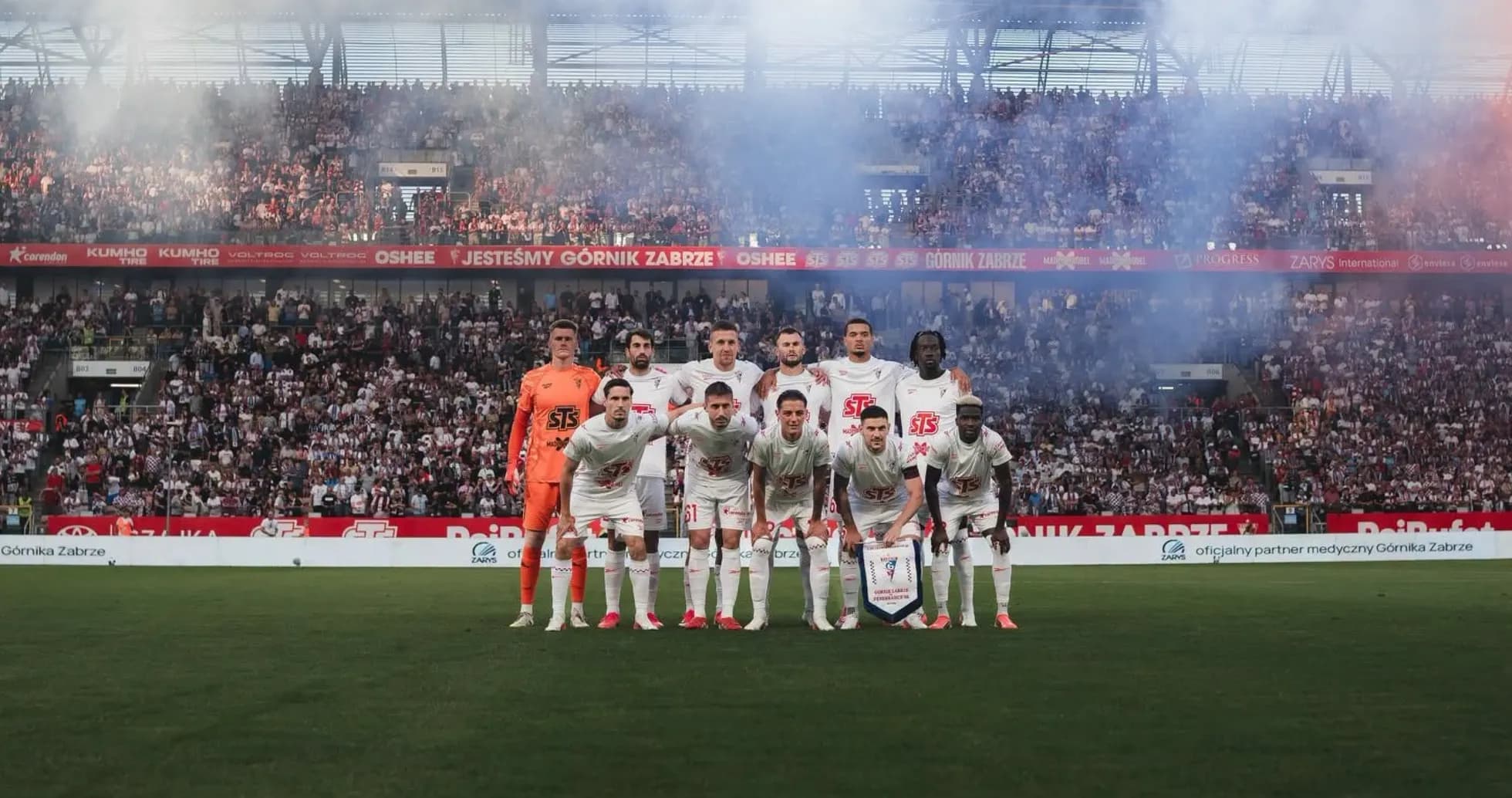
Gornik Zabrze vs Fenerbahçe: Tactical Analysis of UEFA Champions League Draw
The 1-1 draw at Stadion im. Ernesta Pohla was a tactically rich, finely balanced first leg in the UEFA Champions League 2nd Qualifying Round, with Gornik Zabrze’s 4-1-4-1 structure standing up impressively to Fenerbahçe’s more star‑studded 4-2-3-1. The numbers underline that equilibrium: Fenerbahçe edged possession 52% to 48% and attempted 14 shots to Gornik’s 15, but the hosts produced more shots on goal (6 to 2) and forced 5 saves from Mert Günok (Fenerbahçe), while Philipp Schulze (Gornik Zabrze) was tested only once. The game’s key tactical themes revolved around Gornik’s compact mid-block, their aggressive full-back usage, and Fenerbahçe’s attempts to overload between the lines through Marco Asensio and Talisca before a more pragmatic second-half adjustment.
Gornik’s 4-1-4-1 was built on a clear defensive spine. Maximilian Dietz operated as the single pivot in front of a back four of Erik Janža, Josema, Rafał Janicki and Michal Sáček. Out of possession, the shape often flattened into a 4-5-1, with wide midfielders Taofeek Ismaheel and Yvan Ikia Dimi dropping alongside Lukáš Sadílek and Kacper Urbański. This gave Gornik strong central density, reflected in Fenerbahçe being limited to just 2 shots on goal despite 10 attempts from inside the box. Schulze (Gornik Zabrze) making only 1 save is a direct indicator of how well the defensive line protected the danger zone, forcing many of Fenerbahçe’s efforts into blocked or off‑target territory (5 blocked shots, 7 shots off goal).
On the ball, Gornik were more direct and vertical than their pass count suggests. They completed 297 of 379 passes at 78%, a solid figure but clearly lower than Fenerbahçe’s 86% accuracy. The hosts compensated with territory and set‑piece pressure: 9 corner kicks to Fenerbahçe’s 7, and 15 total shots despite having slightly less of the ball. The pattern hints at a strategy of quickly progressing play into wide areas, then using crosses and second balls to sustain attacks. Sáček’s advanced role from right-back was pivotal; his goal just before half-time underlined how often he was encouraged to step into the final third, supported by Ismaheel on that flank. Janža on the left also played aggressively, which is consistent with Gornik winning more corners and generating 5 shots inside the box from relatively modest possession.
Discipline-wise, Gornik’s 8 fouls and 4 yellow cards tell a story of controlled, tactical aggression rather than chaos. The bookings for Sadílek, Janža, Janicki and Josema came in different contexts but collectively show a willingness to break up Fenerbahçe transitions early. That was structurally important because the single-pivot 4-1-4-1 can be vulnerable if the first line is bypassed; the back four were clearly instructed to step in and stop counters, even at the cost of cards. Crucially, Gornik avoided a red card, maintaining their numerical integrity while still contesting duels with intensity.
Fenerbahçe’s 4-2-3-1, on paper, was designed to dominate the ball and the half-spaces. Fred and Mattéo Guendouzi formed the double pivot behind a line of three: Kerem Aktürkoğlu wide, Asensio as the nominal No.10, and İrfan Can Kahveci on the opposite side, with Talisca as the centre-forward. Their 432 total passes, with 372 accurate (86%), and the 52% possession reflect a side comfortable circulating in midfield. However, the shot profile and save count reveal an inefficiency in turning control into clear chances. Ten of their 14 shots came from inside the box, but only 2 were on goal, indicating that while they reached good zones, Gornik’s last-ditch defending and blocking were effective.
The first half saw Fenerbahçe’s structure tilted towards right-sided combinations, with Nélson Semedo and Kahveci supporting Asensio between the lines. Talisca’s penalty goal came from that pressure phase, but beyond the spot kick, they struggled to create clean looks. Gornik’s compact central block forced Fenerbahçe to either shoot under pressure or recycle. That explains the relatively high number of blocked shots (5) and why Schulze (Gornik Zabrze) remained largely untroubled.
Ismail Kartal’s in-game adjustments acknowledged this attacking stagnation. The double substitution at 46' — İsmail Yüksek (IN) came on for Asensio (OUT), and Mason Greenwood (IN) came on for Kahveci (OUT) — subtly rebalanced the side. Removing Asensio reduced the pure playmaking presence between the lines but added more energy and vertical running, with Greenwood attacking depth and Yüksek reinforcing central stability. Later changes, including Anthony Musaba replacing Aktürkoğlu and Oğuz Aydın for Talisca, further shifted Fenerbahçe towards a more transition-oriented, wing-driven approach in the final 20 minutes. Yet the statistical output barely improved in terms of shots on goal, suggesting that Gornik’s defensive structure adapted well to the new threats.
Defensively, Fenerbahçe were more stretched than their reputation might suggest. They conceded 15 shots and 6 on goal, forcing Günok (Fenerbahçe) into 5 saves. That workload, compared to Schulze’s single save, highlights how often Gornik were able to play through or around Fenerbahçe’s first press. The double pivot of Fred and Guendouzi, while technically secure, was occasionally exposed when both stepped forward, leaving space behind them for Gornik’s interior midfielders — especially Urbański and Sadílek — to receive and turn. The 15 fouls and 5 yellow cards, including late bookings for Greenwood, Fred and Guendouzi, underline that Fenerbahçe increasingly resorted to stopping transitions with tactical infringements as the match wore on.
Statistically, the match reads as a classic clash between a possession-oriented favourite and a disciplined, vertically-minded underdog — but the underlying numbers show Gornik matching, and in some aspects surpassing, their visitors. Despite Fenerbahçe’s 52% possession and superior passing accuracy (86% vs 78%), Gornik generated more shots on goal (6 vs 2), more total shots (15 vs 14), and more corners (9 vs 7). The foul and card counts — Gornik 8 fouls and 4 yellows, Fenerbahçe 15 fouls and 5 yellows — further emphasize that it was the away side who had to foul more often to disrupt play. With expected goals and goals prevented not provided, we cannot quantify chance quality precisely, but the on-target and save data strongly suggest that Gornik created the more dangerous open-play opportunities, while Fenerbahçe relied heavily on their penalty and territorial control without translating that into sustained threat.