Graeme Hick Responds to Usman Khawaja's Sandpaper Claims
The aftershocks of Cape Town 2018 are still rattling Australian cricket, and this time Graeme Hick has stepped into the storm.
The former Australia batting coach has flatly rejected Usman Khawaja’s claim that “all of us” in the touring party knew about the plan to use sandpaper on the ball during that notorious series in South Africa. Hick’s intervention has not only sharpened the divide over what really happened eight years ago, it has also lured David Warner back into the public fray, swinging again at Cricket Australia.
Hick hits back
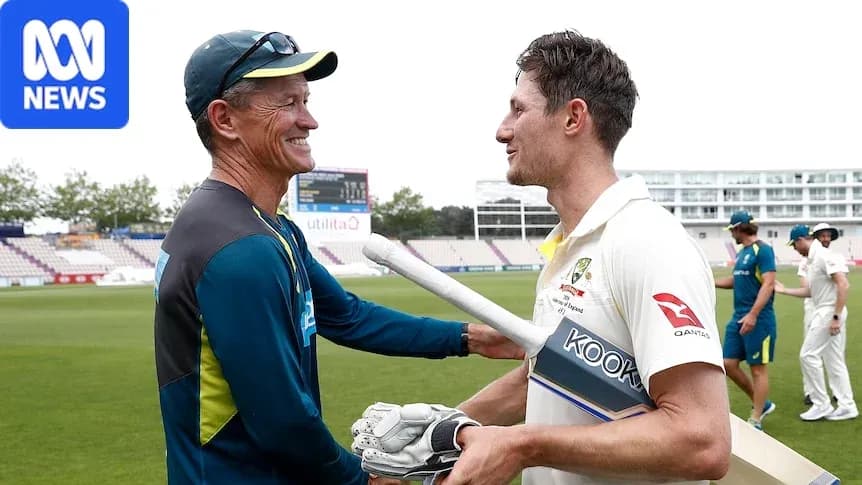
Hick, who served on Australia’s coaching staff from 2016 to 2020, did not dance around his point. Speaking to the Sydney Morning Herald, he said he was “very disappointed” by the breadth of Khawaja’s accusations and the way they appeared to paint the entire dressing room and staff with the same brush.
Khawaja, in his new book, had written bluntly: “It was all of us. Not the batters, not the bowlers, not the staff. All of us.” Hick bristled at that.
“To me, what Khawaja is implying here is absolutely false,” he said.
He went further, stating that he had no prior knowledge of any plan to tamper with the ball in Port Elizabeth or Cape Town.
“In regard to any discussions around the ball-tampering in Port Elizabeth or Cape Town, I will say in true honesty that I did not hear or know anything,” Hick insisted, adding that his first awareness of the scandal was the same as millions of viewers: when the images flashed up on the big screen at Newlands.
He remembers where he was at that moment too — sitting on the outside balcony as the saga erupted in front of him.
With that, Hick joined Mitchell Starc and former head coach Darren Lehmann among those who have publicly pushed back at Khawaja’s version of events.
Warner doubles down
If Hick hoped his comments might cool the debate, the opposite happened. Warner, one of the three men officially sanctioned over “sandpapergate” alongside then-captain Steve Smith and Cameron Bancroft, seized on them to reignite his long-running feud with Cricket Australia.
Warner has already endorsed Khawaja’s account, thanking his former opening partner and declaring: “It’s 100 per cent accurate what you’ve said. Now everyone knows the truth.”
So when Hick’s denial surfaced, Warner jumped straight back onto social media. This time, he did not go after Khawaja’s critics on the details of Cape Town. He went after the system that hired Hick.
“Let’s get the facts straight,” Warner wrote.
He claimed Hick’s appointment came only after Cricket Australia refused to meet the salary demands of the widely respected Michael Di Venuto, who had been the batting coach before him.
“Graeme Hick was only appointed because Cricket Australia was unwilling to pay Michael Di Venuto what he deserved,” Warner said.
The post then peeled back the dressing-room view of Di Venuto’s standing within the squad. According to Warner, the players rated him so highly they were prepared to dip into their own pockets.
“As players, we valued Michael so highly that we even offered to contribute from our own salaries to retain him.
“These discussions were taking place during the New Zealand tour. That alone speaks volumes about how highly we regarded him and how determined we were to keep him involved. Adds to why Graeme has spoken!!”
The barb was clear: Warner was implying Hick was not central to the team’s inner circle and hinting at an ulterior motive behind his decision to challenge Khawaja so publicly.
A wound that refuses to close
Khawaja’s book has torn open a scar that Australian cricket has never quite allowed to heal. Every fresh recollection, every denial, every pointed social media post only underlines how divided key figures remain over who knew what and when.
On one side stand Khawaja and Warner, insisting the truth has finally been laid bare. On the other, former coaches and senior players who reject the idea of a collective conspiracy and refuse to accept that “all of us” were complicit.
The bans have long been served. Careers have moved on. But as long as central figures from that South African tour keep offering such starkly different versions of history, the question lingers: will Australian cricket ever agree on what really happened in Cape Town?