Graham Potter's Journey: From Chelsea Chaos to World Cup with Sweden
Graham Potter leans back, thinks about Chelsea, thinks about West Ham, and does what he says every manager eventually has to do: he looks failure straight in the eye.
“You’ve got to face the bad stuff,” he says. “The more you face it, the more chance your life is better. Then you get these beautiful moments.”
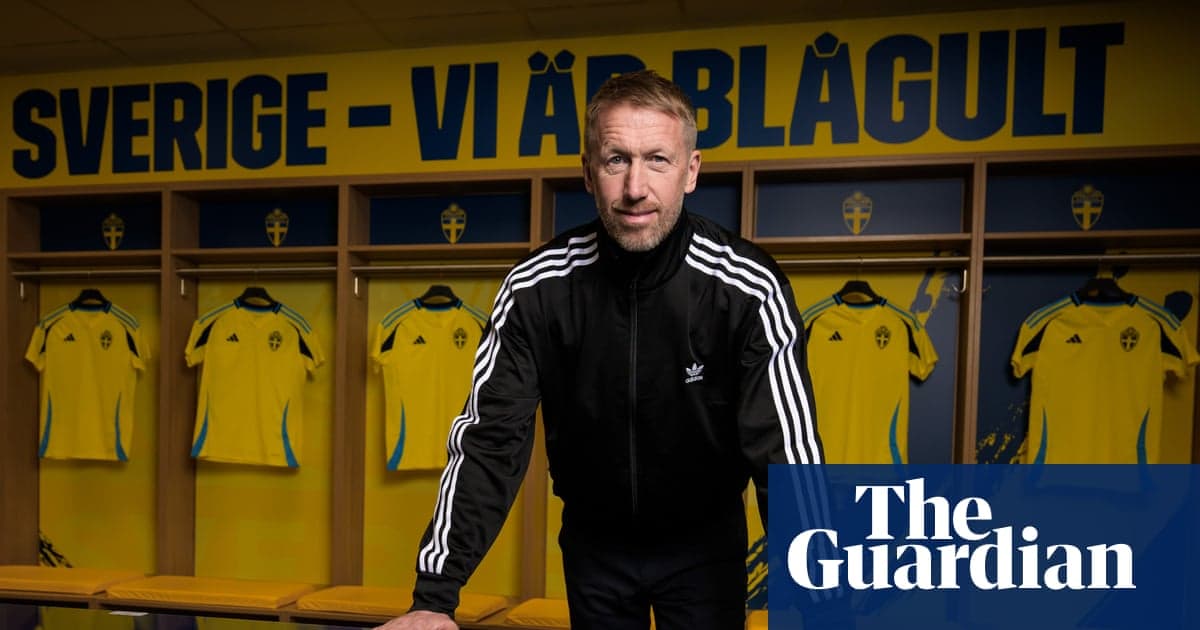
For Potter, that beautiful moment came with a yellow shirt on his back and a World Cup ticket in his hand.
This is the story of how a man chewed up by the Premier League has been rebuilt by Sweden – and why, as he heads to the United States, he feels more Swedish than ever.
From Chelsea’s chaos to West Ham’s dead end
Potter knows his reputation. For many, he is still the coach who lasted just seven months at Chelsea after walking away from the calm of Brighton in September 2022. He is also the man who took the West Ham job, stepped into a club drowning in dysfunction, and never found the surface.
Six wins in 25 games. A miserable start to his first full season. Sacked last September. A career that once seemed destined for the top suddenly looked like it might slip quietly into the background.
“What next?” was not a rhetorical question. It was his life.
“I have had enough life experience to be able to put all these things into perspective,” he says. “I’m grateful for all the experiences I have had, pluses and minuses. In the end, you have to deal with what life throws at you.
“After West Ham, I could have done two things. I could have sat around and done media. Or you can go and work.”
He chose work. But before he could say yes to anything, he had to deal with the bruises.
“You have to deal with the failure,” he says. “But I think you become a better person for it. And then sometimes in football you just can’t rationalise it. You just go: ‘Maybe it wasn’t meant to be.’ Then you try to move on with your life.
“The learnings you take from these experiences, they’re painful. I won’t share my learnings with you because it’s hurt me to get them. I think it should because that’s how you improve.”
He shut out the noise. “If I worry about what people think about me that’s a miserable life,” he says. The outside world could rage; he had other decisions to make.
Sweden call, a second chance – and a second life
The call came from Stockholm. Sweden were in trouble in their World Cup qualifying group, stuck, flat, drifting. Jon Dahl Tomasson had gone. They needed a new manager and a new energy.
Potter was not a stranger to the country. Far from it. He had already spent seven years at Östersund, dragging a small club from the Swedish fourth tier into the Europa League. His coaching reputation was forged there. His family roots were laid there too.
“I feel very Swedish when I’m working,” he says. “I look a bit Swedish. Two of my kids were born in Sweden.”
He walked into a national team in crisis. Sweden had failed to get out of their qualifying group but clung to a lifeline: a playoff spot, earned via their Nations League performances. One more chance. One more pressure cooker. One more shot for a manager whose reputation could not take another dent.
He took the job on a short-term deal in October. He knew the stakes.
Everything changed in March.
Sweden were cold-blooded in the playoffs. Viktor Gyökeres tore into Ukraine in the semi-final, scoring a hat-trick in a 3-1 win. Then came Poland in Stockholm. Tense. Frantic. On a knife edge.
And then, in the 88th minute, Gyökeres again. A 3-2 winner. An entire nation lifting off.
“You go on to YouTube and go into the Swedish commentary of the game; I looked at it a couple of months afterwards and it’s the emotion in the voice,” Potter says. “Viktor scores and it’s like an out-of-body experience. All our subs are just running on the pitch. There’s 15 players on the pitch and I’m thinking: ‘That’s yellow cards, that’s problems.’ But it’s a World Cup, so all the rules are out the door.”
That goal didn’t just send Sweden to the World Cup. It anchored Potter back at the top table. He has since extended his contract until 2030. The Englishman has found a home that feels like more than a job.
“With the national team you’re doing something for more than you,” he says. “It’s a bigger thing. You can feel the intensity. That’s what’s beautiful about it.”
Club-builder turned tournament manager
Potter’s reputation was built on long-term projects, detailed work on the training ground, and a slow, steady build. International football laughs at that kind of time.
“You haven’t got the time to develop ideas,” he says. “The mistake you could make is that you could form all these ideas from the camp in November ahead of the camp in March, forming tactical plans to beat Ukraine, and the reality is that you have two days to prepare for a game. You don’t want to make it too complex.”
He had to strip his football down. Keep the ideas, lose the clutter. Clarity over complexity.
The euphoria of qualification quickly gave way to another, more delicate part of the job: telling players they would not be going to the World Cup.
The conversations were tough. They always are.
“Even if you play 11 v 11 in a training game, four players are standing on the outside,” he says. “That’s not easy. You want the group to be on the same path.”
Harmony, he knows, will decide whether Sweden can punch their weight this summer.
Chasing the ghosts of USA 94
Sweden are in camp in Stockholm, preparing to fly to their base in Texas. The country knows what a World Cup in the United States can look like; they finished third at USA 94, a golden summer that still glows in the national memory.
Potter walks into that history with eyes open. Japan, the Netherlands and Tunisia wait in Group F. There is nothing gentle about that draw. Reaching the last 32 will be a serious test.
There is also the climate. Sweden open against Tunisia in Monterrey on 14 June, a fixture that will be played as much against the heat as the opposition.
Potter expects the rhythm of the tournament to change.
He anticipates slower games, more control, fewer transitions. And he knows one area will loom large.
“You can see the way the game has gone,” he says of set pieces. “Tournament football, you know the knife is at your throat so it’s less easy to be expansive. Games become tight. It’s a way to create chances so I think teams will focus on it a lot.”
Sweden will be one of them.
Gyökeres, Isak and the missing Kulusevski
There is no Dejan Kulusevski. Injury has taken away one of Sweden’s most inventive players. Yet Potter still has a frontline that can frighten anyone.
A front two of Alexander Isak and Gyökeres offers power, movement and goals. Different profiles, same threat.
Gyökeres has had critics in his first season at Arsenal, but Potter sees a forward whose work is misunderstood.
“It’s a great example of the modern world,” he says. “From our perspective, he got us to the World Cup, so his impact is incredible. From Arsenal’s perspective he’s played his role in the team, scored his goals, the team have won the Premier League and got to the Champions League final. You look at how much work he does. He’s had a brilliant season.”
Isak’s year has been more complicated. His move from Newcastle to Liverpool last summer was supposed to be a step into the elite. Instead, a disrupted pre-season and a broken leg left him fighting for rhythm and fitness.
“It hasn’t gone as well as he would have liked,” Potter admits of Isak’s first season at Anfield. “We sometimes make the assumption that when you sign a player it’s going to improve everything. I’ve lived that – it’s not always the case.
“Alex playing for Newcastle does this but how does he adapt to what Liverpool want him to do? The player doesn’t change. His quality doesn’t change. He’s still a top player. It’s just how they interact as a team together. It can take a bit of time. He’s a great lad.”
Potter has seen Isak’s talent up close for years. He still remembers the day a 16‑year‑old walked out for AIK against his Östersund side.
“We were quite happy before the game because the centre‑forward wasn’t playing and some 16‑year‑old kid was playing,” he says. “Then he scored, we got beat 2-0 and I learned my lesson.”
Isak offered another reminder of his ceiling with a stunning goal in Sweden’s 3-1 defeat by Norway on Monday. The result stung; the finish didn’t.
Potter wants both Isak and Gyökeres on the pitch.
“They’re different in their styles, which is good for us. We haven’t played with them together yet so that’s exciting to develop.”
Some managers would see a headache. Potter sees possibilities.
Zlatan’s messages, a manager reborn
The anticipation is building. The training sessions are sharper. The conversations are more intense. The margins are shrinking.
Potter has exchanged messages with Zlatan Ibrahimovic, the iconic former Sweden striker who knows what it means to carry a country into a tournament. He has also spoken to coaches who have lived both the club and international grind.
“I’ve spoken to people who’ve done both and people have said the tournaments are the best feeling in football,” he says. “In the national team you feel like you’re doing something with more soul.”
There is a quiet satisfaction in his voice. West Ham sacked him. They still went down. Potter went to work, went to Sweden, and is going to the World Cup.
“My first football memories are ’86, 11 years old, watching Diego Maradona rip football up,” he says. “As a kid, that’s where I started. To get the chance to work in that environment, it’s just a dream.”
The boy who watched Maradona is now the man leading Sweden into a World Cup summer, rebuilt by failure, fuelled by those “beautiful moments” he refused to stop chasing.