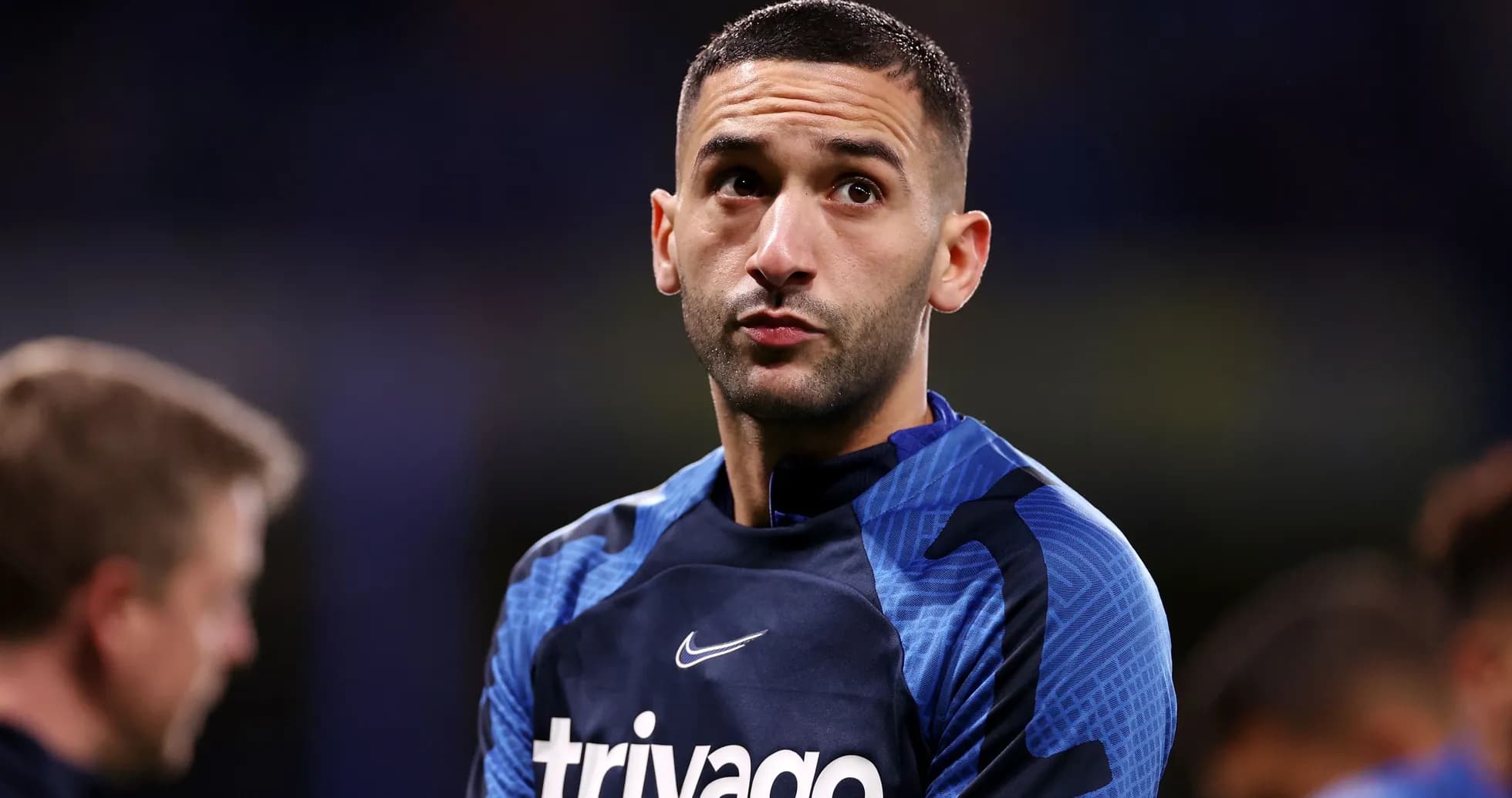
Hakim Ziyech vs Itamar Ben-Gvir: A Political Clash Beyond Football
Hakim Ziyech is used to tight spaces and heavy pressure. They usually come on a pitch, though, not on his Instagram feed.
This week, the Moroccan international and Wydad Casablanca star found himself at the centre of a political storm after publicly criticising Israel’s National Security Minister, Itamar Ben-Gvir, over policies affecting Palestinian prisoners. What began as a social media post has quickly escalated into a sharp, highly charged confrontation stretching far beyond football.
An Instagram post that lit the fuse
The flashpoint came when Ziyech shared a photo of Ben-Gvir on his official Instagram account. The timing was deliberate. Israel’s Knesset was debating legislation tied to the death penalty for those involved in armed attacks, a move that has drawn intense scrutiny.
Ziyech did not hide his stance. Alongside the minister’s image, he questioned the legal and moral foundations of such laws, writing: “Will [Ben-Gvir] claim this time that the passing of the new law is merely self-defence?”
No slogans. No long essay. Just a pointed question aimed directly at one of the most controversial figures in the Israeli government.
Ben-Gvir hits back
The response from Ben-Gvir was immediate and ferocious.
The right-wing minister dismissed the Moroccan playmaker with a personal attack, declaring: “An anti-Semitic player cannot lecture the State of Israel on morality.”
He then doubled down with a stark warning that went far beyond a war of words with a footballer: “From now on, Israel will no longer deal cautiously with its enemies… Since I took office, the prisons have changed, and God willing, we will apply the punishment to all militants.”
This was no attempt to cool tempers. Ben-Gvir used the moment to underline his hardline approach on security and incarceration, tying Ziyech’s criticism to a broader narrative about Israel’s enemies and the treatment of Palestinian detainees.
The law at the heart of the dispute
Behind the exchange lies a piece of legislation that has already sent shockwaves through legal and human rights circles.
In late March, the Knesset approved a bill enabling the death penalty for perpetrators of armed attacks. Sixty-two MPs backed the measure, a clear majority for a law that cuts to the core of Israel’s security doctrine and its handling of the conflict.
The bill has triggered strong reactions from international and Palestinian human rights organisations. They have voiced deep concern over what this could mean for thousands of detainees in Israeli prisons, against a backdrop of mounting reports about deteriorating living and health conditions inside detention centres.
For Ziyech, a player with a vast following and a long-standing emotional connection to the Palestinian cause shared by many in Morocco, the new law was a line he chose not to ignore.
Rabat steps into the frame
The fallout did not remain confined to social media or foreign headlines. It crossed into Morocco’s domestic political arena.
The Justice and Development Party, one of the country’s prominent political forces, publicly backed Ziyech. In an official statement, the party expressed its solidarity with the player, hailing his position as “humane and courageous.”
For them, Ziyech’s words were not a personal outburst but an echo of a wider public sentiment. The party argued that his stance on Palestinian prisoners reflects how many Moroccans feel, and aligns with the Kingdom’s long-standing positions on the Palestinian cause.
A footballer’s Instagram story had become a vehicle for national political expression.
More than a game
This clash between a government minister and a footballer underlines how modern players no longer live in a sealed sporting bubble. A single post can pull them into the heart of geopolitical disputes, especially when they speak on issues as sensitive and polarising as Israel, Palestine, and the use of the death penalty.
Ziyech now stands not just as Wydad’s star or a national team icon, but as a public figure whose words carry political weight. Ben-Gvir, for his part, has shown he is willing to turn that weight into a new battleground.
The question is no longer whether athletes should speak out. It is how far their voices will carry the next time they do.