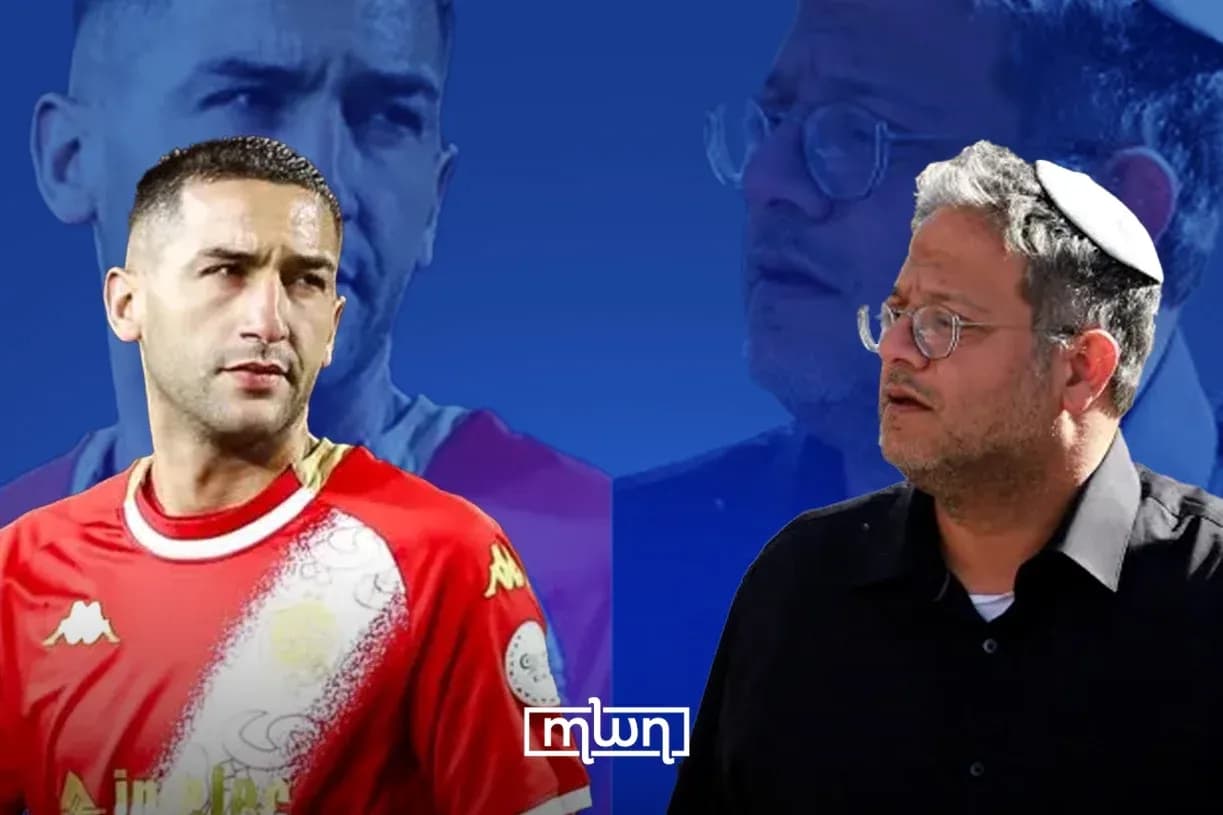
Hakim Ziyech has never been a quiet figure off the pitch. This week, his stance on Palestine pulled him into the heart of a political storm that now stretches far beyond football.
The Moroccan international, currently with Wydad after high-profile spells at Ajax, Chelsea, Galatasaray, and Al‑Duhail, reacted sharply to Israel’s newly approved death penalty law targeting Palestinian prisoners. On his Instagram story, Ziyech shared an image of Israeli National Security Minister Itamar Ben-Gvir celebrating the law’s passage in the Knesset and pointedly questioned whether the move would once again be sold to the world as “self-defense.”
That single post drew an immediate and incendiary reply.
Ben-Gvir fired back, branding Ziyech “antisemitic” and dismissing any criticism of the law. In comments carried by Israeli and regional media, he escalated the rhetoric further, warning that “Ziyech and all other antisemites will not escape.” The language underlined just how far this exchange has travelled from the usual realm of footballers’ social media activity.
At the centre of the row lies a law that has already triggered alarm well beyond Israel’s borders. On March 30, the Knesset passed the measure by 62 votes to 48, setting death by hanging as the default sentence for Palestinians convicted in military courts. Human rights groups and the UN human rights office have condemned the legislation as discriminatory and a direct threat to due process.
For Ziyech, the outrage is part of a pattern, not a sudden outburst.
The 32‑year‑old has been one of the more outspoken figures in elite football on Palestine, using his platforms consistently since Israel’s campaign on Gaza intensified on October 7, 2023. Early that month, he posted one of his first public messages of support, tying a pro‑Palestine stance to a broader reflection on oppression and the power of media narratives.
He did not stop there. As footage from the occupied West Bank circulated in the months that followed, Ziyech reacted again, condemning Israeli actions and urging people to maintain pressure. He widened his criticism to include governments he believes have enabled the situation, making clear he sees the conflict as a test of political courage as much as humanitarian concern.
The latest clash has also shone a harsher light back on Ben-Gvir himself. His comments about Ziyech have drawn scrutiny in part because of his own record: a past conviction for incitement against Arabs and links to an extremist movement that Israel eventually banned. Those details have resurfaced as his attack on the Moroccan playmaker ricochets around global media.
Ziyech, long known for his left foot and creative vision, now finds his name pulled into one of the most charged political debates of the era. The question is no longer whether footballers should speak, but how far their voices will carry when they do.