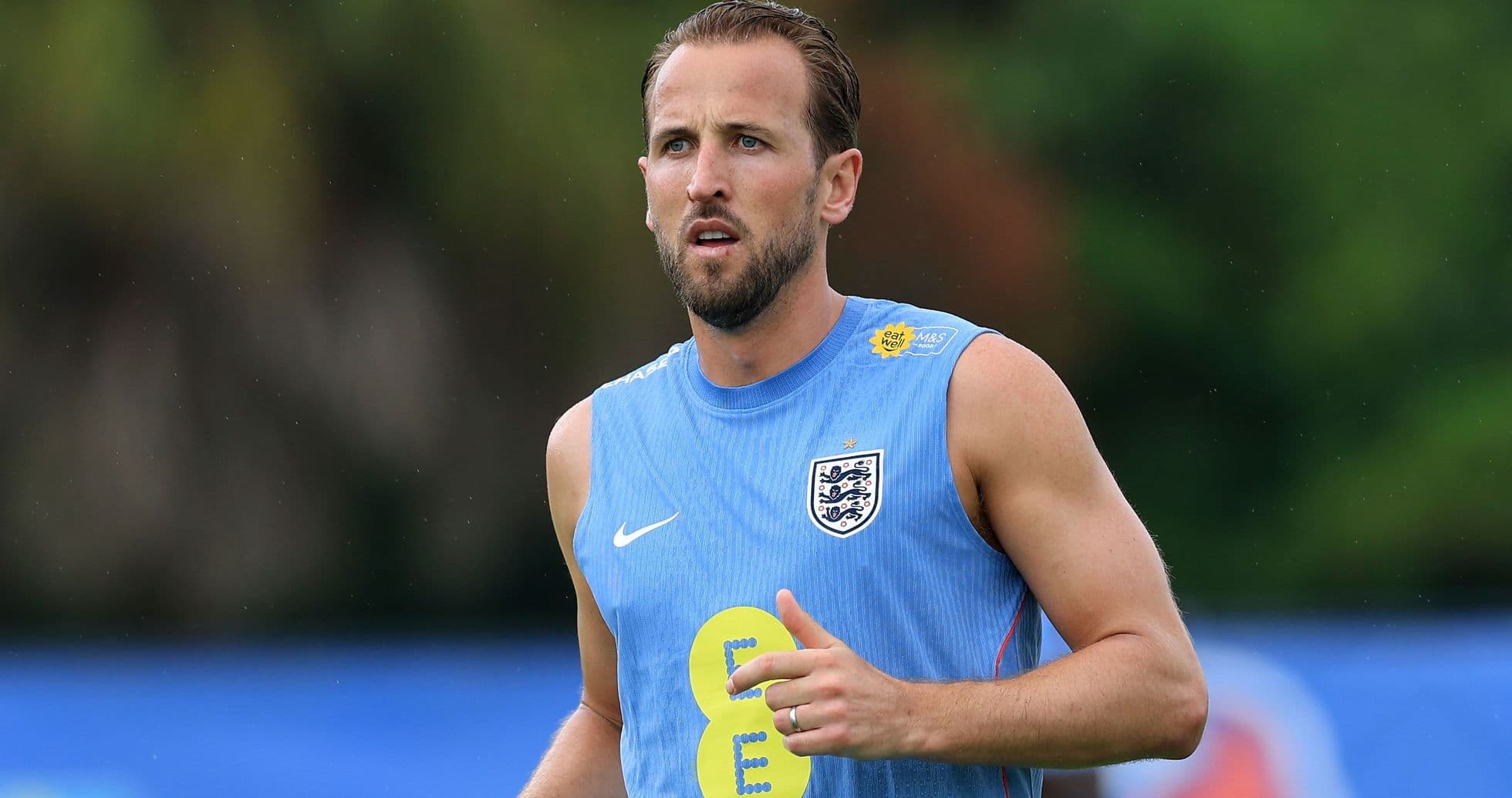
Harry Kane's Dominance in International Duty
Harry Kane has reported for international duty looking every inch the centrepiece of his country’s plans – and his manager is treating him exactly like that.
After the first intense sessions of camp, the national team boss made it clear there is no lingering doubt, no fitness caveat, no gentle easing-in period for his star striker. Kane, he insisted, is ready to carry the load again.
“He’s in top shape. He is ready to go. We don’t have to be worried about him at all, even if it is hot in June,” Tuchel said, underlining just how emphatic this week’s training displays have been from his No 9. “He has showed me the whole week that he is ready. He is our key player.”
This isn’t the usual early-camp politeness. The description is specific. Kane looks lean. He looks sharp. In a defensive-focused session, it was the forward who drove the tempo, snapping into the press, dictating the standard. The habits from Bayern Munich’s relentless high pressing have travelled with him, and his manager is leaning on that.
“He trains at the highest level. We had a defensive training session today and he was leading the intensity,” Tuchel explained. “He is so used to the high press from Bayern Munich and the intensive game that they play in the opponents’ half. He is leading by example. I think he is in the best shape.”
That level of conditioning gives Tuchel a luxury most international coaches crave: a fully primed, match-hardened Kane at the heart of his attack. The challenge now is to use him as often as possible without burning him out.
Upcoming Friendly
For the upcoming friendly, the plan is carefully measured. Kane will play 45 minutes this weekend as part of a broader rotation, with the coaching staff determined to spread the load across the squad.
“Everyone will be 45 minutes so that gives us the continuation of the week,” Tuchel said. The intention is obvious: build rhythm, protect legs. “We will try to keep Harry fit and play him as much as possible, but hopefully we will have the chance to not need to play him every match for 90 or 120 minutes.”
Then came the honest admission every manager faces when his best finisher is involved. Rest is the theory. Reality can look very different.
“But if the matches are close, do we really do this? Do we take our main goals threat off? Maybe not.”
That single line captures the tension at the heart of the plan. Kane is too important, too decisive. The temptation to keep him on the pitch, minute after minute, will always be there.
Behind him, though, the hierarchy is clear. Ollie Watkins has been earmarked as the primary understudy, with Ivan Toney positioned as the specialist option off the bench.
“I think Oli is more the guy we need to start for Harry, if we think Harry should not start a match,” Tuchel said, outlining the roles with unusual clarity. Watkins’ task is to mirror the intensity, not the name. “He can keep the intensity up, to keep the press going, that is the strength of Oli.”
Toney’s brief is different. He is the closer, the man for the box, the penalty spot, the chaotic final 20 minutes when a game needs a ruthless touch.
“And Ivan is kind of a finisher for us,” Tuchel continued. “Maybe it’s a special task to take the attention off Harry. Then we have a second striker who’s very, very good in the box. He’s a good penalty taker. He trains on a high level. I’m very happy with him. He just showed that it was right to take him. He has a brilliant attitude.”
Three strikers, three distinct jobs. Yet the message never really strays from the central truth.
“We have some options,” Tuchel said, before landing on the line everyone already knew was coming, “but Harry is, of course, the main guy in front.”
The rotation plans, the tactical tweaks, the different profiles off the bench – all of it is built around one constant. As long as Kane keeps looking this sharp, this lean, this relentless in training, the question for the rest of the camp is simple: who can keep up with him?