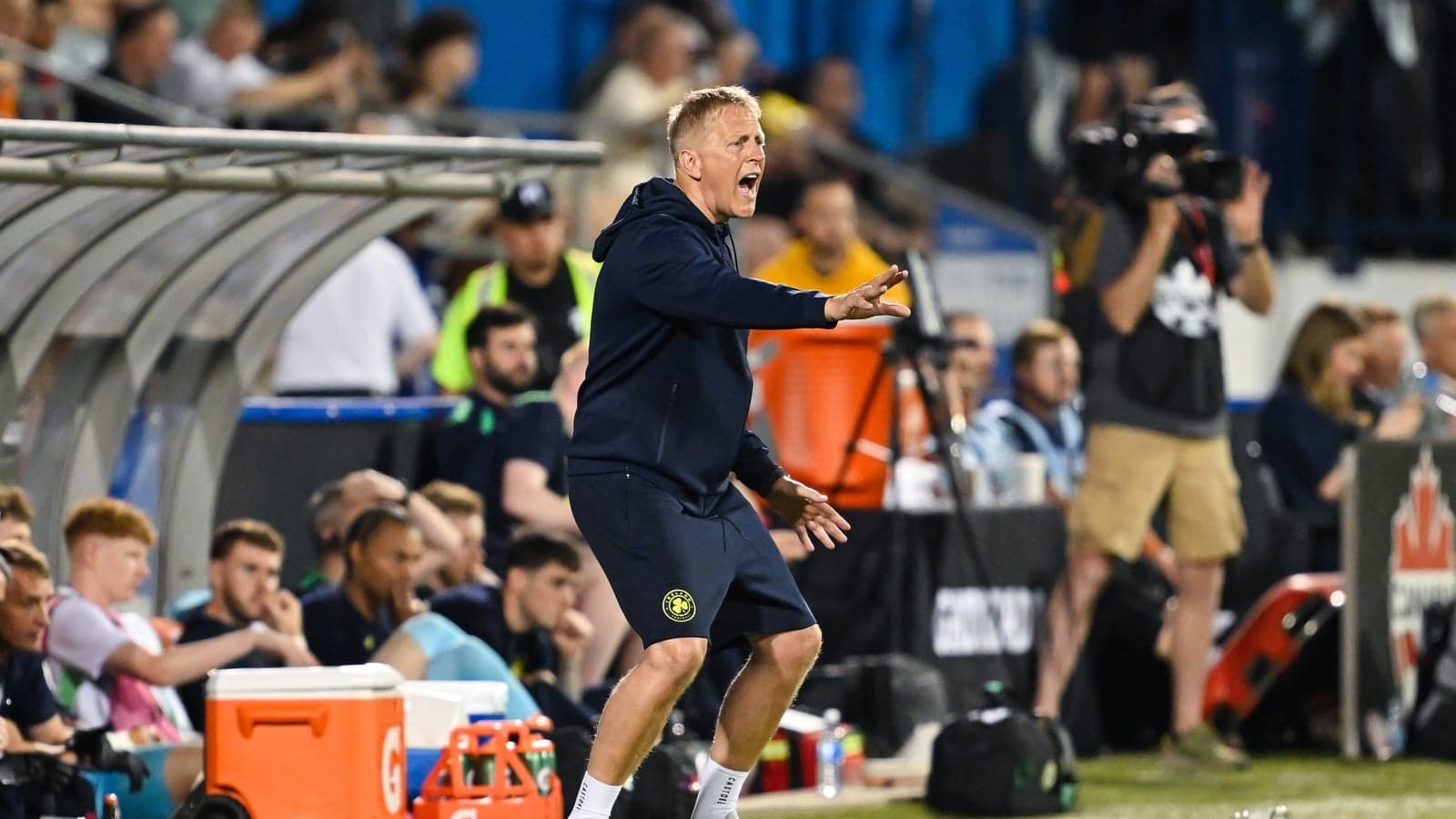
Heimir Hallgrimsson's Ireland: A Tale of Two Halves Against Canada
Heimir Hallgrimsson has worn a calm, almost serene expression for most of his Republic of Ireland tenure. Montreal cracked that veneer.
For the first time since he took the job, there was real edge in his voice as he dissected a first half that veered sharply away from everything he has tried to build. An experimental Ireland side, heavy on new faces and light on cohesion, trailed Canada 1-0 at the break after Jake O'Brien turned into his own net. The scoreline flattered them.
Ireland weren’t just second best. They were passive.
A Flat First Half
Hallgrimsson didn’t sugar-coat it.
"Everything was flat," he said afterwards, speaking to RTÉ Sport. No decision-making, no front-foot intent, just a team waiting for Canada to move and then reacting half a beat too late. For a coach who has spent months preaching bravery and aggression without the ball, it was a jarring regression.
The warning signs came early. He spoke of players looking "sluggish in the warm-up," and the conditions in Montreal did little to help. Humidity, heat, and the weight of a long season clung to the squad. Maybe training had been too demanding, he mused. Whatever the cause, Canada seized on it.
They pressed with more conviction, moved the ball with more purpose, and fully merited the lead when O'Brien’s misfortune handed them the advantage. Hallgrimsson admitted Ireland were "lucky" to be only 1-0 down at the interval. That was not a throwaway line. It was a manager drawing a line in the sand.
Half-Time Reset
Something had to change. Quickly.
In the dressing room, Hallgrimsson went to work. The message was simple: be braver, be quicker, press higher. Stop waiting. Start acting.
The response came.
Liam Scales and Jamie McGrath stepped in and immediately gave Ireland a more balanced feel. The team pushed up, squeezed the pitch, and suddenly Canada were the ones reacting. The shift wasn’t subtle; it was stark. Where the first half had drifted, the second half snapped into focus.
Hallgrimsson later called the contrast "black and white." He had been "really disappointed" with the opening 45 minutes. By the end, he was "really happy" with what he had seen after the break. The performance still wasn’t perfect, but the personality he wants from this side began to reappear.
Ogbene on the Spot
The equaliser arrived with a hint of chaos and a lot of opportunism.
Troy Parrott stepped up to take a penalty, the kind of moment that usually defines a friendly. He missed. But Chiedozie Ogbene had already made up his mind to live on the rebound.
"I had confidence that Troy was going to score," Ogbene admitted. Yet he still mirrored Parrott’s run-up from outside the box, ready for any loose ball. When the penalty was saved, it dropped where he had gambled it might. One touch. Tap-in. 1-1.
He called it "a bit of luck," but there was calculation in it too. Ireland were chasing the game; he knew something had to fall their way eventually. He made sure he was there when it did.
From that moment, Ireland carried the greater threat. Dawson Devoy and Mason Melia both went close, two of the clearest chances of the night. A late winner would have rewritten the narrative entirely.
Hallgrimsson, though, refused to dress it up.
"We could have stolen it," he said, before quickly adding that it "would have been a theft." A draw felt right. Canada had their own openings. The game, like Ireland’s performance, was split in two.
A Camp About Tomorrow
Beneath the frustration of that first half, this camp has always been about something bigger than one result in June.
Devoy’s inclusion from the start underlined that. The Bohemians midfielder became the first League of Ireland player to be capped at senior level since Jack Byrne in November 2020. He was not alone in carrying the domestic game’s banner.
As the match wore on, Hallgrimsson turned to more fresh faces. Joe Hodge, now based in Portugal, came on. So did St Pat's attacker Kian Leavy and Shamrock Rovers teenager Adam Brennan. Jaden Umeh and Corrie Ndaba, recent debutants, were handed their first starts.
This was not a token gesture at the end of a long season. Hallgrimsson has stretched the player pool on purpose. Twenty-one players were involved in Spain, 27 across these camps. He spoke of a 24-day block, used not as a wind-down but as a foundation.
"It would have been easy for us to make it a joke camp," he said, referencing tired legs and the sting of defeat in Czechia. Instead, he chose to deepen the squad, to force competition, to look squarely towards the Nations League in the autumn.
He believes the benefits will be felt not just now, but in the months and years ahead.
Goosebumps for the Future
Inside the camp, that sense of forward motion is clearly resonating.
Ogbene, fresh from his equaliser and a season on loan at Sheffield United, spoke with genuine excitement about the newcomers. They had impressed in training. They had brought energy to a group that could easily have limped through the end of the campaign.
"All these guys deserve to be here," he said. The feeling around the squad, he insisted, was good. Then he offered a line that cut through all the tactical talk.
"I have goose bumps in my stomach for the future of Ireland. I'm just so excited."
On a humid night in Montreal, Ireland showed both sides of where they are: still fragile enough to switch off for 45 minutes, but deep enough, and hungry enough, to fight their way back. Hallgrimsson won’t forget that first-half no-show any time soon.
Nor will he ignore what followed it.
The Nations League looms. The experiments are over. The question now is whether this expanded, energised group can turn those goosebumps into something more tangible when the real games return.