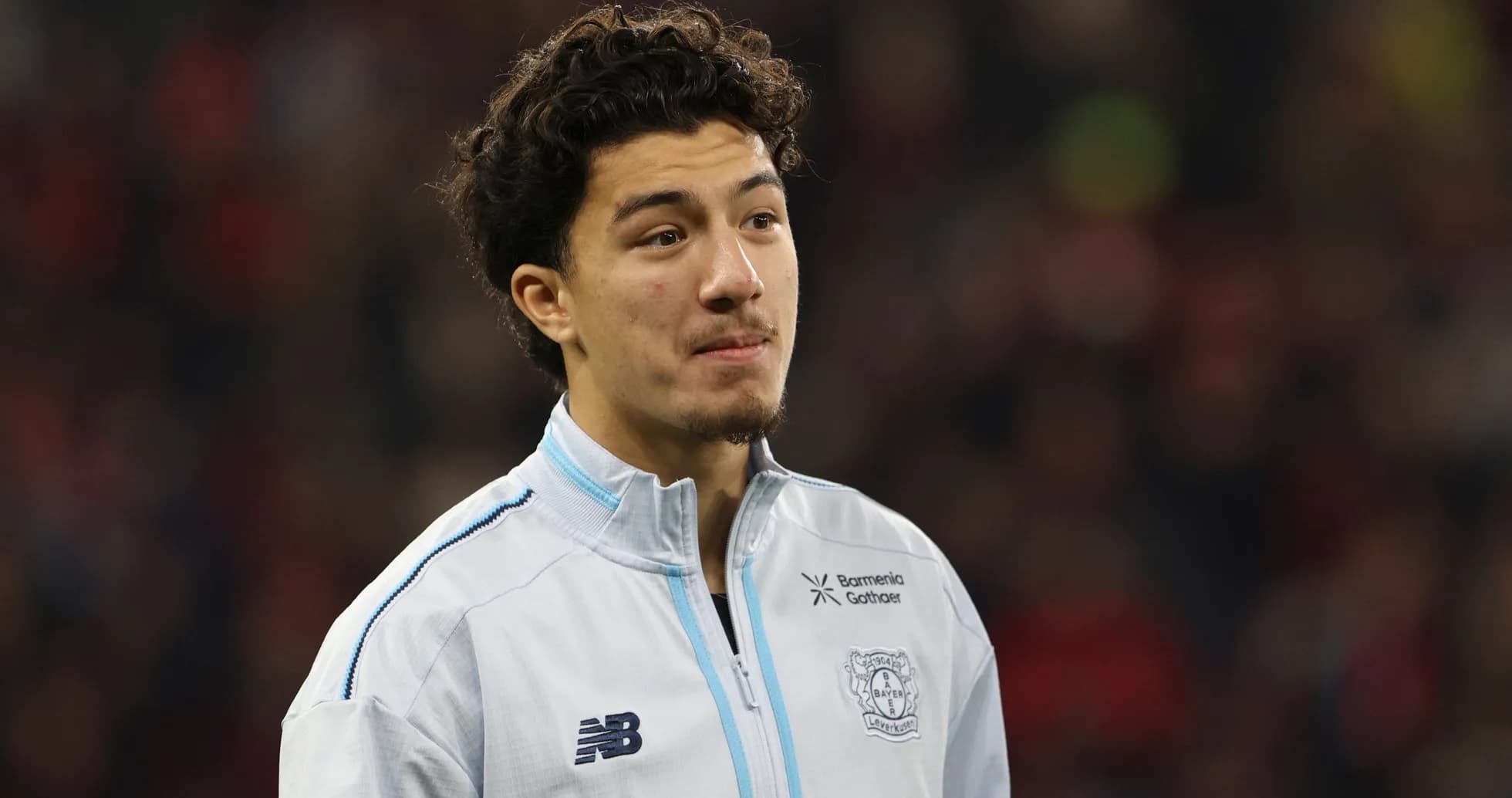
Ibrahim Maza: The Rising Star of Bundesliga Football
Ibrahim Maza doesn’t just control a football. He treats it like a lifelong companion.
“I feel good with the ball; we're good friends,” he told RTL recently. “I try to be at one with the ball.” Watch him for five minutes and the words make perfect sense.
On Halloween against VfB Stuttgart, the Bayer Leverkusen playmaker seemed to take on half the opposition on his own in a 4-2 Bundesliga win. In the tightest pockets of space, he twisted, feinted and escaped, forcing DAZN commentator Jan Platte into a line that will follow Maza for years: “If Ronaldinho had been in the stadium, he would have come down and given him his crown. That was unbelievable.”
From Berlin’s cages to the Champions League spotlight, that same street-born audacity has survived untouched. It’s one reason Paris Saint-Germain, Champions League winners and serial talent collectors, reportedly want the 20-year-old “at all costs.” But the flair is only half the story.
The artist who hates laziness
Maza calls himself an artist, but he does it with a warning label.
“An artist who doesn't work isn't worth that much on the pitch,” he says. That line could have been written by Pal Dardai.
The Hertha BSC icon coached Maza in the under-16s and saw both the gift and the danger. Dardai’s message was brutal and simple: you have a talent from God – and you’re wasting it.
“‘If you carry on being this lazy, you won't achieve anything at all,’” the Hungarian later recalled telling him. At that point, Maza was not the jewel of the academy. He had joined Hertha at ten, but he did not carry the “untouchable prospect” tag through the youth teams.
“He didn't come into the under-17s as the sought-after top talent,” remembered Oliver Reiß, now Manchester City’s under-21 coach and Maza’s U17 coach at Hertha, on the Denkfabrik Nachwuchsfußball podcast.
Early in that U17 season, Reiß and assistant Oliver Schröder noticed something different. Not numbers. Not hype. Just touches.
“We noticed that he somehow did different things with the ball,” Reiß said. Maza was not one of the automatic picks for the biggest matches, “but it was clear relatively early on that he had something special.”
For a while, “special” still meant “substitute.”
Resilience in the shadows
In the first half of that U17 year, Maza watched more than he played. Bence Dardai, now at VfL Wolfsburg, and Noel Aseko, now at Eintracht Frankfurt, were the names that drew attention. Maza only became a regular in the second half of the season.
What changed his path wasn’t a viral clip or a sudden growth spurt. It was how he reacted when things went wrong.
“What we really liked about him was that he managed to combine being a good footballer with having that resilience,” Reiß explained. “I had dozens of players who were incredibly good and, when they were in their flow, you thought: ‘If he doesn't make it ...’ But when things weren't going well, they just let the game happen to them.”
Maza refused to drift. “Even against the greatest adversity,” Reiß said, he was “a long way from letting the game happen to him.”
The player himself knows how pivotal that period was. “I made my biggest step forward under him,” Maza said in 2024 on Hertha’s website, crediting Reiß for his development. The coach moved up with him to the under-19s, where Maza immediately became a starter and, suddenly, the academy’s much-hyped name after all.
Just 18 months after fighting for a place in the U17s, he made his Bundesliga debut at 17, coming off the bench in a 2-0 defeat to Bayern Munich in April 2023. Hertha’s relegation soon after might have accelerated his breakthrough in the second division, but a meniscus injury cut that route short and kept him out for a long spell.
He came back, fought his way into the senior side and stayed there. A year and a half as an established first-team player in Berlin later, the next call came.
Leverkusen, Wirtz’s shadow and a teenager’s answer
In 2025, Bayer Leverkusen paid €12 million to bring Maza back to the Bundesliga. He was 19 and walking straight into a void left by Florian Wirtz’s move to Liverpool FC.
Replacing a fan favourite and creative hub at that age would crush plenty of young players. Maza treated it as a responsibility, not a burden.
“I try never to let outside pressure get to me. Whether people say I have to do this now or should have done this or that,” he told RTL. “I'm very aware myself of what I have to do on the pitch, and I already put a certain amount of pressure on myself, but it's still within healthy limits.”
Leverkusen quickly discovered they had signed more than a dribbler. After a short adjustment spell, Maza settled into the rhythm of the team and the league, then into the Champions League. By the end of his first season, he was no longer a prospect. He was a pillar.
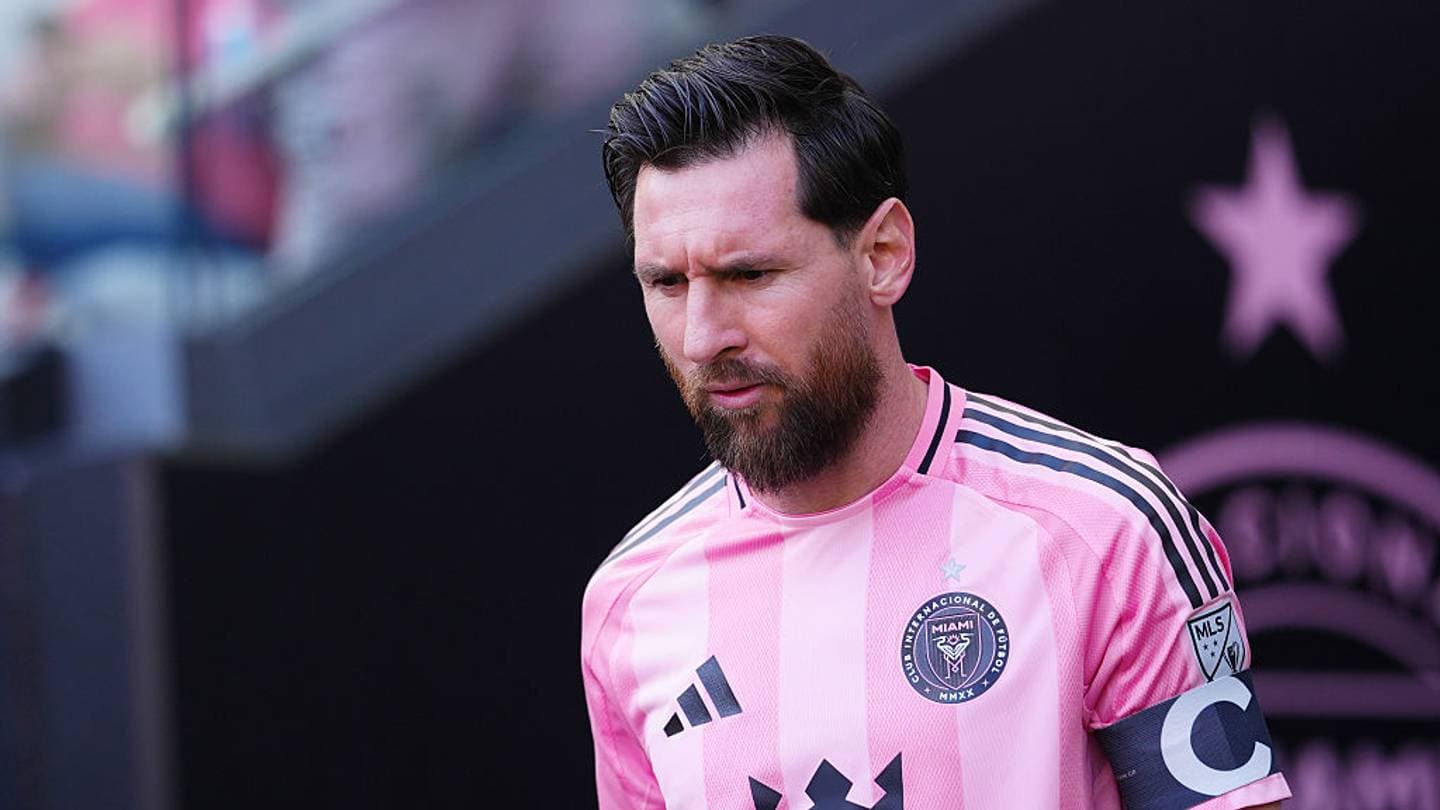
His performances in 2025/26 earned him a Kopa Trophy nomination, the award for the world’s best under-21 player, presented at the Ballon d’Or ceremony. The detail that cut through all the noise: Lionel Messi, one of the Kopa jurors, named Maza in his top three alongside Barcelona’s Lamine Yamal and Pau Cubarsi.
“To be chosen by Lionel Messi is, of course, a great honour,” Maza admitted. “It gives you an extra dose of motivation when someone like Messi says you've got something.” Asked about the Ballon d’Or itself, he didn’t hide. “That has always been a dream of mine.”
Now in his second season with Leverkusen, he has become the heartbeat of their midfield. Four goals, four assists in 14 appearances so far underline the numbers, but the eye test says more: he dictates tempo, finds space where there is none, and drags defenders into places they don’t want to go.
If he really wants that Ballon d’Or one day, staying at Leverkusen forever is unlikely.
“Go to Paris, mate”
His contract runs until 2030, but the transfer noise around him grows louder by the week. Reports have placed PSG at the front of the queue, with the French giants said to rate him as highly as Messi does.
Deniz Undav certainly wouldn’t argue.
“Go to Paris, mate, I don't want to play against you any more!” the VfB Stuttgart and Germany striker reportedly shouted to Maza after their clash at the end of October, according to Bild. Later, on Sky, Undav was more measured but just as impressed: “In Maza, Leverkusen have an outstanding player. He opens up space and wins duels.”
You sense Undav would happily swap shirts for a shared dressing room. That won’t happen with Germany. Even if Jürgen Klopp continues to call up the Stuttgart forward, Maza has taken a different path.
He wore the DFB shirt from under-18 to under-20 level, but just over two years ago he chose Algeria.
Three cultures, one decision
Born in Berlin to an Algerian father and a Vietnamese mother, Maza grew up with three different cultures and three possible national teams. Germany, Algeria, Vietnam: three flags, one choice.
“I love all three countries and, in the end, made my decision for various reasons, those are private,” he said earlier this year.
The emotional pull of summer trips and family visits to Algeria clearly mattered. So did the footballing reality. Germany’s depth in his position is brutal: Florian Wirtz and Jamal Musiala are only two years older and already central to the national side.
With Algeria, the path to early responsibility was far clearer. “I wanted to be able to play for a senior national team as early as possible and make as many appearances as possible for the national side as a professional,” Maza told Bild.
The plan has worked to the letter.
He made his Algeria debut in October 2024, six weeks before his 19th birthday. Since then he has collected 24 caps, exactly the sort of early international mileage he had in mind. His first major statement in green came at the Africa Cup of Nations in Morocco across the turn of 2025 to 2026, where he ranked among Algeria’s standout performers. One Algerian outlet even dubbed him “Mazadona” – a playful nod to Diego Maradona that said plenty about how quickly he had been embraced.
Last summer, he was a regular again at the World Cup. Algeria reached the round of 32 before Switzerland ended their run with a 2-0 win. In the group stage, Maza stood across from Messi’s Argentina in a 3-0 defeat, the eight-time Ballon d’Or winner hitting a hat-trick.
The scoreline was harsh. The impression Maza left clearly was not. Messi later placed him among the best young players on the planet with that Kopa Trophy vote.
From Dardai’s blunt warning in a Hertha youth dressing room to Messi’s quiet nod on a global ballot, Ibrahim Maza has already travelled a long way. The ball is still his closest friend. The question now is which city – Leverkusen, Paris, or somewhere else entirely – will stage the next act of his rise.