India Outclassed by Tajikistan in 3-1 Defeat
The scoreline said 3-1. It felt wider.
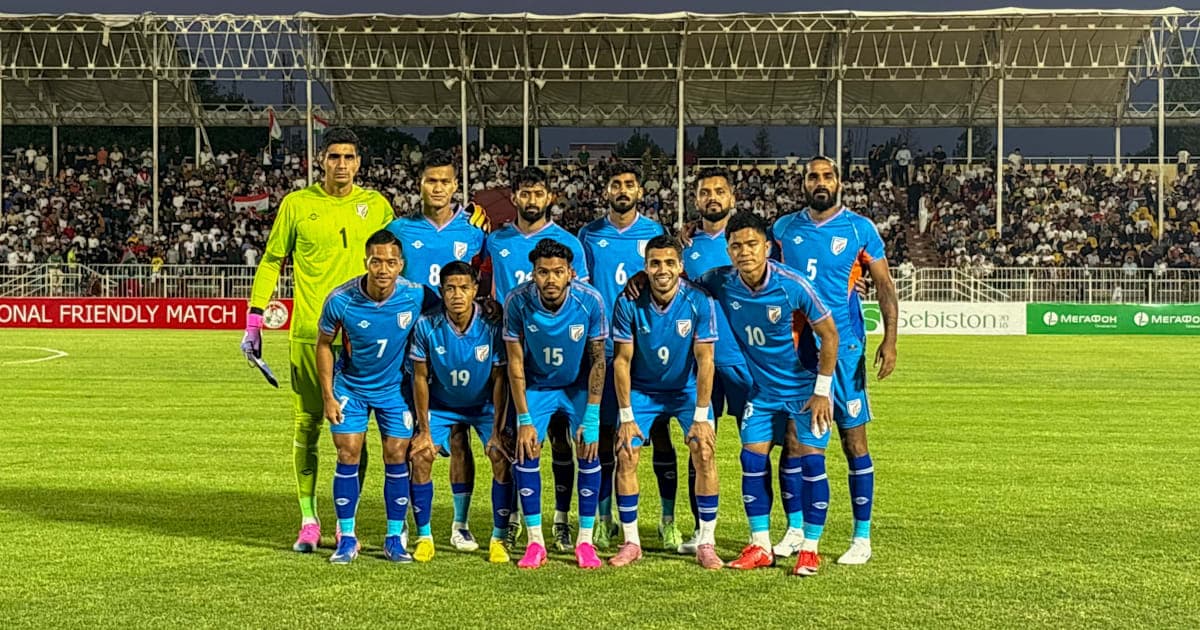
On a cool evening in Tursunzoda, India were picked apart by a sharper, more aggressive Tajikistan side in the first of two international friendlies in the June FIFA window. For Khalid Jamil’s team, fresh off a draining Unity Cup campaign in London, this was another sobering reminder of the gap that still exists at this level.
Early blow, early warning
India actually tried to start on the front foot. Ranked 137th in the world, they pushed high, looked to press, and tried to test a Tajikistan side playing its first match under new head coach Igor Angelovski. The hosts, though, never looked like a team in transition.
Tajikistan, 103rd in the FIFA rankings, settled quickly into their rhythm, circulating the ball with ease and dragging India into uncomfortable areas. The high press that India struggled to execute, Tajikistan executed with conviction.
The breakthrough came inside nine minutes, and it was self-inflicted. Louis Nickson mistimed a challenge in the box, the referee pointed to the spot, and Sheriddin Boboev stepped up. Gurpreet Singh Sandhu guessed, dived, stretched, but Boboev’s penalty beat him and buried India in an early deficit.
The goal settled the hosts. It rattled the visitors.
India’s big chance goes begging
Once behind, India chased. They pressed in bursts, tried to play through the wings, and for a brief spell before half-time, the game opened up.
The moment they will replay on the flight to Hisor came in the 41st minute. Akash Mishra, one of the few Indian players willing to take risks on the ball, drove forward and swung in a teasing cross. Lallianzuala Chhangte had peeled into space inside the Tajikistan box, perfectly placed, perfectly timed.
The header lacked everything the move had promised. Straight at the goalkeeper. A golden chance, gone.
Without the injured Ryan Williams, India leaned heavily on Chhangte and Vikram Pratam Singh to carry the threat. Both ran tirelessly, stretching the flanks, but too often the final ball broke down or possession was surrendered cheaply. The half ended with Tajikistan one up, India still alive, but hanging on to that missed opportunity.
Tajikistan turn the screw
Any hope of a second-half response never really materialised.
Tajikistan emerged from the break with purpose, tightening their grip on the game. India, by contrast, looked heavy-legged, the travel from London and the recent defeats to Jamaica and Zimbabwe in the Unity Cup weighing on their movement as much as on their mood.
The pressure told around the hour mark. A set-piece, a lapse in concentration, and the match tilted decisively. A free-kick was swung into a crowded box, and Mekhrubon Karimov rose above static Indian defenders to guide his header past Gurpreet. Two-nil, and the air went out of India’s resistance.
Six minutes later, the contest was effectively over. This time Tajikistan sliced through from open play. Ehsoni Panshanbe arrived to finish off a flowing move and stretch the lead to 3-0, a scoreline that accurately reflected the control Angelovski’s side had exerted.
From there, Tajikistan managed the game with the calm of a team that knew it had done enough. India chased shadows, their attacks reduced to hopeful surges rather than structured moves.
A late strike, but only pride at stake
India did find the net, but far too late to change anything beyond the aesthetics of the scoreboard.
In the 89th minute, Farukh Choudhary stood over a free-kick and chose precision over power. He drove it low, skidding into the bottom left corner, finally beating the Tajikistan keeper and clawing back a sliver of respect. A clean strike, a small consolation.
It remained just that. A consolation.
The 3-1 result marked India’s third straight defeat, following the losses to Jamaica and Zimbabwe in London. It was also Tajikistan’s fourth win over India in six meetings, another cold statistic that underlined the pattern on the pitch.
A quick chance to respond
There is no long runway to dwell on this. The same opponents await next Tuesday at Hisor Central Stadium, and they will walk out with the confidence of a side that dominated possession, dictated tempo, and exposed their visitors repeatedly.
For Jamil and his players, the question is simple and urgent: can they turn a bruising night in Tursunzoda into fuel, or does this slide stretch into something more worrying as the World Cup cycle edges closer?