India's Under-19s Win Asia Cup Final in Controversial Fashion
India’s Under-19s pulled off a heist for the ages in Muscat, yet walked away from the Asia Cup final with their reputation under as much scrutiny as Pakistan’s bowling figures.
A one-wicket win, sealed off the very last ball, should have lived forever as a story of nerve and skill. Instead, it will also be remembered for flailing arms, pointed boots and a missing handshake.
A classic India–Pakistan finish
At the Oman Academy Cricket Ground in Al Amerat, the script veered wildly. Pakistan’s 337-9 from 50 overs looked heavy, then gettable, then mountainous again.
Usman Khan’s 107 from 111 balls set the tone at the top. Abdul Qadir carved out 80, captain Farhan Yousaf added 63. It was the kind of platform that usually crushes teenagers on the other side of the contest.
India refused to be crushed.
Captain Lakshya Raichandani played the adult in the room, anchoring the chase with 80 off 101 deliveries. At the other end, the surname on the scoreboard carried its own history. Aaryavir Sehwag, son of Virender, cracked 58 from 61 balls, lacing nine fours and finishing the tournament as its leading run-scorer with 361 runs in five innings. He walked away with the player-of-the-tournament award, a familiar Sehwag grin attached to a new generation.
The foundation was there. The chase looked on track.
Then it wasn’t.
From 252-6 to 252-8 in the 42nd over, India’s reply suddenly tottered. Pakistan’s fielders found their voices. The target – 338 – loomed larger with every dot ball. In the dugout, wicketkeeper Anvay Dravid, son of Rahul, had already chipped in 19 but could now only watch.
Chauhan and Ulva flip the script
This is where youth cricket usually breaks. It didn’t.
Manal Chauhan walked in with India staring at defeat and played like a man who hadn’t checked the scoreboard. His 47 off 32 balls changed the air around the ground. He hit, ran, and kept the asking rate honest. Pakistan’s bowlers, so close to the finish line, were dragged back into a dogfight.
At the other end, Mohit Ulva began to write his own story.
Ulva finished unbeaten on 49 from just 26 deliveries, and every run felt heavier than the last. The pair stitched together a 57-run stand for the ninth wicket, the kind of partnership that usually belongs in folklore, not in youth scorebooks.
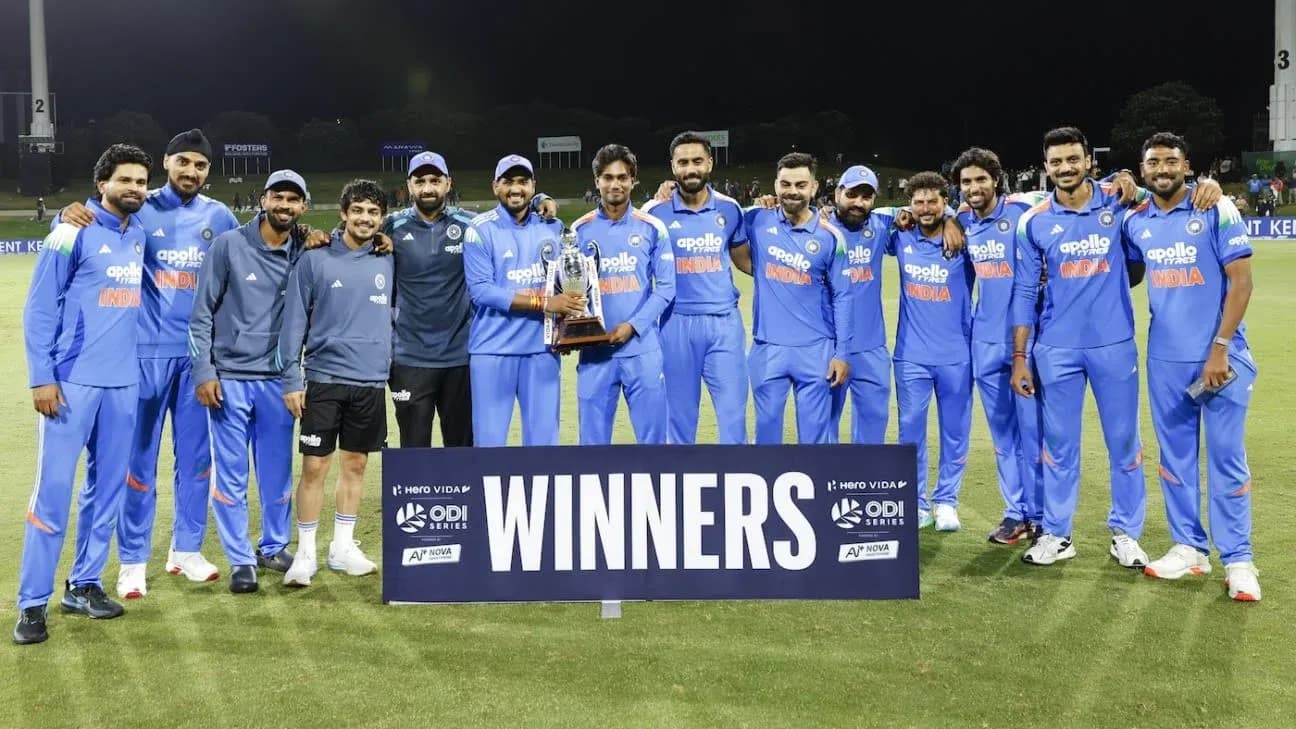
The pressure finally told. With three runs needed off the final ball, Ulva held his nerve and lashed the boundary that delivered India a record-extending ninth Under-19 Asia Cup title and their first since 2021.
“This tournament had not gone well for me, but I had belief that I would be able to deliver today,” Ulva said afterwards. He spoke of needing Chauhan’s support, of feeling it was his day, of the curious luck of batting at number 10. On a flat pitch, he said, India’s batters always believed that if Pakistan could get there, they could too.
Belief proved enough. On the field, the scoreboard told a story of resilience and skill that any cricket nation would be proud to own.
What followed told another story altogether.
Victory turns sour
As the winning runs raced away, jubilation spilled into something darker.
One Indian player was seen screaming in the face of Pakistan wicketkeeper Hamza Zahoor, gesturing aggressively as Zahoor stood still and refused to react. Other Indian players kicked their legs in the direction of the Pakistan dressing room. Members of the team management rushed in, trying to pull their youngsters away before the moment became a full-blown incident.
The trophy was India’s. The mood was anything but unanimous celebration.
Social media filled the gap left by the missing handshake. Clips of the confrontations spread quickly, and alongside the praise for India’s fight came a wave of criticism for what many called an ugly, unsportsmanlike display.
Former Pakistan captain Mohammad Yousuf chose his words carefully but firmly. Posting on X, he reminded the teenagers – and those guiding them – of what they carry when they pull on a national shirt.
“You are not just representing your country. In fact, you are representing your upbringing, the values and the ethics your parents taught you as a child,” he wrote. Respect and composure, he argued, should hold in victory as much as in defeat. True sportsmanship, he said, lies in conduct, not in the scoreline.
From the Indian side, former players and political leaders lined up to applaud the comeback and the title. Their silence on the behaviour jarred with a different chorus at home. Many Indian fans on X condemned what they saw.
“India and Pakistan may be adversaries, and cricket may be fiercely competitive, but that is no excuse for such uncouth, crass and downright disgusting behaviour,” one supporter wrote, linking what happened in Muscat to a broader “culture of leadership” that, in their view, has normalised hostility.
“A country’s sporting culture is reflected not just in how its players win, but also in how they treat those who lose,” another fan posted. For them, this was never just about one overzealous celebration. It was about what young players are being taught is acceptable.
A handshake that never came
There was one more detail that framed the night.
The teams did not line up for the customary post-match handshake. The omission felt pointed, but it was not new. In recent India–Pakistan clashes, the simple ritual of a handshake has repeatedly fallen victim to the politics that swirl around the rivalry.
Last year, then-India captain Suryakumar Yadav and his side declined to shake hands with Pakistan’s players after an Asia Cup match in September. They also chose not to receive the trophy from Asian Cricket Council President Mohsin Naqvi, who doubles as Pakistan’s interior minister.
The pattern has stretched across formats and genders. At the ICC Women’s World Cup 2025 in Sri Lanka, India and Pakistan again kept their distance after the final ball. The same happened at the ICC Women’s T20 World Cup in England and during their Women’s Asia Cup meeting. In September, the India women’s team refused to accept the trophy from Naqvi after winning the Asia Cup final in Dubai.
Saturday’s missing handshake in Muscat did not arrive out of nowhere. It sat on top of a year in which cricket’s oldest rivalry has become a stage for political frost.
A title, a warning
Strip away the noise, and India’s Under-19s produced a chase that will stand up in any era. Raichandani’s composure, Aaryavir Sehwag’s dominance across the tournament, the nerve of Chauhan and Ulva under extreme pressure – these are the markers of a system that keeps churning out players ready for the big stage.
But the images that linger are not just of Ulva punching the air after that final-ball boundary. They are of a teenager yelling into an opponent’s face, of boots flicked towards a dressing room, of two teams walking off without the simplest gesture of respect.
The scoreboard says India are champions of Asia again. The bigger question is what, exactly, their young champions are learning about how to carry that crown.