Inside El Clásico: La Liga's Referee Bodycam Experience
For years, the debate has rumbled on: do referee bodycams really add anything to elite football? La Liga has just delivered its most compelling answer yet.
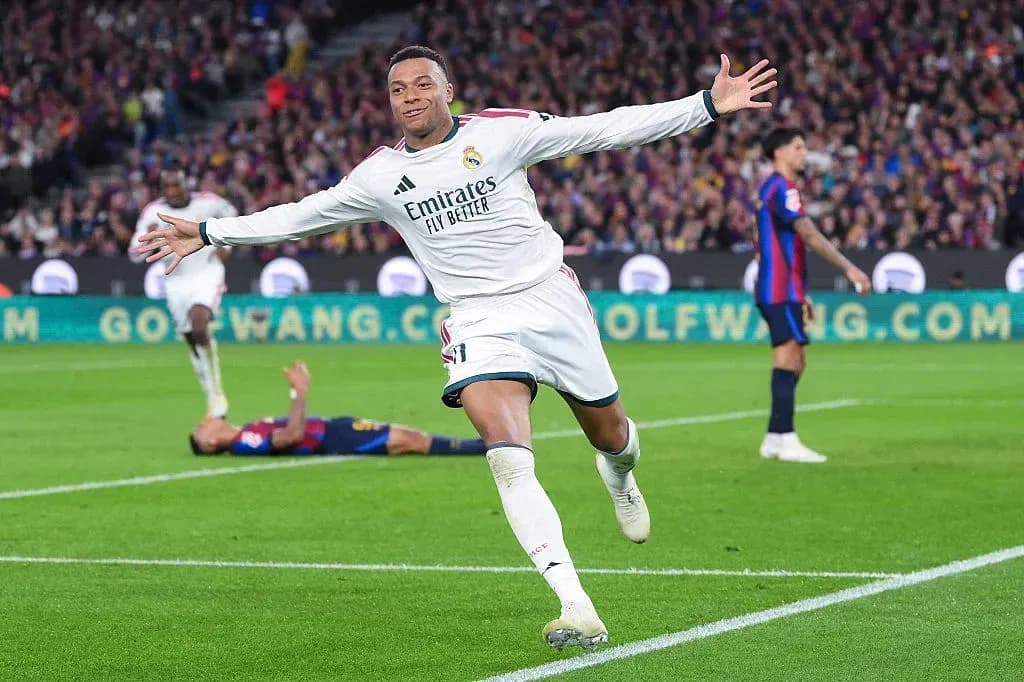
Footage from last weekend’s Clásico between FC Barcelona and Real Madrid, a 2–1 win for the visitors, has been released, captured directly from the chest of referee Juan Martínez Munuera. It is as close as a fan can get to the white-hot centre of one of the sport’s most volatile fixtures without lacing up a pair of boots.
No high, detached TV gantry. No slow-motion replays. Instead, the lens sits at eye level with the man in the middle, dragged into every sprint, every collision, every protest. One moment you’re tracking a counterattack, the next you’re surrounded by world stars like Kylian Mbappé and Rodri, their voices, gestures and frustration filling the frame.
The effect is jarring. And revealing.
From this angle, the match looks faster, heavier, more chaotic than the polished broadcast product suggests. Challenges crash in at full speed. Passing lanes open and close in a heartbeat. The referee’s positioning, usually taken for granted, becomes a constant, urgent calculation: where to stand, where not to stand, how to keep the best possible line of sight without becoming part of the problem.
The noise completes the picture. The Clásico atmosphere, already notorious from the stands, feels suffocating at pitch level. Every decision triggers a wave — from players, benches, and tens of thousands in the seats. The bodycam doesn’t romanticise it. It exposes it. The shouts, the appeals, the pressure: all of it lands directly on the official.
In that context, the job looks less like calm authority and more like controlled survival. You see how quickly Martínez Munuera has to process contact, intent, advantage, and dissent. There is no pause button, no committee, no replay screen strapped to his chest. Just judgment, made in real time, with both clubs and a global audience demanding perfection.
For anyone who has ever dismissed refereeing as “just running around with a whistle,” this footage is a sharp correction. The physical strain is obvious, but so is the mental toll — the constant need to communicate, defuse, and decide, all while staying one step ahead of 22 elite athletes.
Bodycams will not end arguments about referees. They will not silence controversy around big calls in games of this magnitude. What they do, as La Liga’s latest release shows, is strip away the distance. They turn abstraction into reality.
You don’t just watch El Clásico from the referee’s point of view. For 90 frantic minutes, you feel the weight of it.