Interceptions in Football: The Art and Science Behind the Play
An interception is over almost before it begins. A defender reads the picture, steps into a passing lane and clips the ball away a heartbeat before it reaches its target. Less than a second, usually. Yet inside that instant, the brain has judged speed, distance, angle and timing while the body accelerates, cuts, braces and somehow stays upright.
This is where thought and movement fuse. And where fatigue — the kind you feel in your legs and the kind you feel in your head — can quietly prise them apart.
The art that lives between the lines
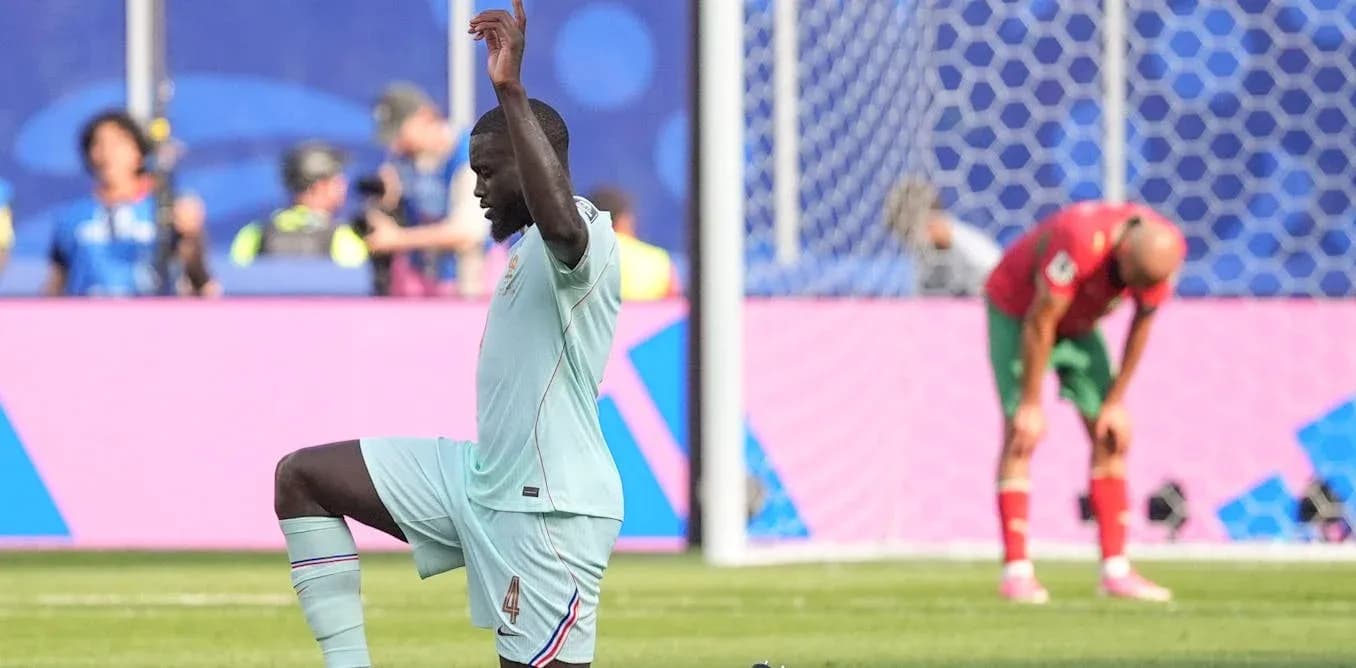
At the start of the 2026 World Cup semi-final week, one number underlined just how often elite defenders live in that space. Dayot Upamecano led the tournament with 12 interceptions. Twelve moments where he not only guessed right, but moved right, quickly enough to change the play.
Cape Verde’s debut on the biggest stage told a different but related story. Thrown into Group H against Euro 2024 winners Spain, they finished their first World Cup match with 15 interceptions in a goalless draw. Across four games they averaged roughly 13 per match, fought their way out of the group, then finally bowed out 3-2 after extra time to defending champions Argentina in the round of 32.
Those numbers don’t prove interceptions “caused” Cape Verde’s run. A high tally can just as easily show a team camped in its own half, forced to defend for long stretches. Yet cutting out passes did two crucial things for them: it broke the rhythm of opponents who dominated the ball and it opened doors to counterattack before those opponents could reset.
In modern football, that half-step into the lane is both shield and sword.
What the brain sees, what the body can reach
To understand why fatigue bites so hard here, you have to look at what an interception actually demands.
First comes prediction. A player scans the field, weighs where the ball might go and whether they can arrive first. Research on anticipation in sport shows that skilled athletes blend their understanding of the situation with the visual cues in front of them. A defender reads the passer’s posture, the angle of the approach, the shape of the hips, and from that, starts to anticipate the direction of the pass.
Then the ball leaves the foot, and speed takes over. In an experimental study with well-trained amateur footballers, the faster the pass, the less likely players were even to try an interception — and when they did, their success rate dropped. At a certain velocity, the window simply slams shut.
Distance cuts into the equation as well. Work on senior male futsal players found that the defender’s starting distance from the ball heavily influenced whether an interception was possible at all. Yet that decision wasn’t fixed at the first step. Players kept adjusting their speed and line in relation to the ball’s path until the action was done. An interception is not a single yes-or-no choice. It is a moving calculation.
Experience sharpens those calculations. A football-specific study comparing expert and less-expert athletes showed that both groups initially overestimated what they could intercept. With practice, their estimates became more accurate, suggesting players can recalibrate when given clear feedback on what their bodies can actually do.
That recalibration becomes trickier when fatigue creeps in.
When the mind tires before the legs
Mental fatigue is the dulling of alertness that follows long periods of concentration. It does not show up on GPS data, but it shows up in choices.
In one study of 20 professional male footballers, players completed a demanding 30‑minute mental task before a training match. Their passing decisions deteriorated. They still saw options; they chose worse ones, more often.
Another study with well-trained male players found that mental fatigue slowed football-specific decisions and made them less accurate. The research did not track interceptions directly, but the overlap is obvious. To cut out a pass, a defender must select the right visual information, judge speed and distance, predict what comes next and commit — all under time pressure.
Blunt that edge, and the half-second that separates a clean steal from a desperate lunge starts to vanish.
Physical fatigue adds its own twist. A ball that looked comfortably reachable in the 15th minute may be a desperate stretch in the 85th. Research involving 24 trained male players showed that acute physical fatigue reduced how far and how intensely they moved. It also altered aspects of their positioning and how they interacted with team-mates.
A related study drew a sharper line. Players with stronger decision-making skills managed to hold their positioning and effectiveness under acute physical fatigue, in part by moving at a slightly slower pace. Those with weaker decision-making skills did the opposite: they kept up more of their physical output but their positioning and defensive impact declined.
The message is stark. The smartest defenders adapt their movement to what their bodies can still deliver. A tired centre-back has to estimate where the ball will travel and what lane to protect, while also accepting that their sprint range has shrunk. Overestimate yourself, and you step out and leave a hole. Underestimate yourself, and you sit, and the pass slices through untouched.
The game inside the disguise
Opponents do not stand still in this equation. They actively cloud the picture.
Research on deception in competitive sport describes how athletes hide their true intentions. A passer shapes their body towards one teammate, eyes fixed, shoulders turned, before sliding the ball somewhere else entirely. By the time the genuine direction reveals itself, the defender may already have shifted weight towards the wrong lane.
Wait longer and you see more. But you also give the ball more time to travel. Jump early and you might arrive first. You also become a target for disguise.
This is the tightrope every defender walks: commit soon enough to influence the play, but not so soon that you become a prop in someone else’s feint.
Training the split-second
All of this carries clear implications for how teams train and manage players.
Research on realistic practice design argues that training must preserve the key information and actions found in real matches. For interceptions, that means drills with moving opponents, varied pass speeds, realistic starting distances and deliberate use of disguise. Static cones and scripted patterns only scratch the surface.
Coaches also have to think about the state in which decisions are made. Fatigue can sap physical capacity and, in some situations, distort the decision itself. Monitoring only how far and how fast players run risks missing a hidden drop in their ability to make rapid, accurate judgments.
The goal is not to churn out defenders who chase every ball. The best learn which opportunities are truly reachable and keep adjusting as the pass unfolds. They read not just the game, but their own bodies, possession by possession.
By the time Upamecano stretches out a leg and takes the ball cleanly, the visible action is just the final frame. Behind it lies a chain of calculations — shaped by experience, bent by fatigue, challenged by deception — all compressed into that single, decisive step.