Interlagos: A Classic Circuit Faces New Challenges
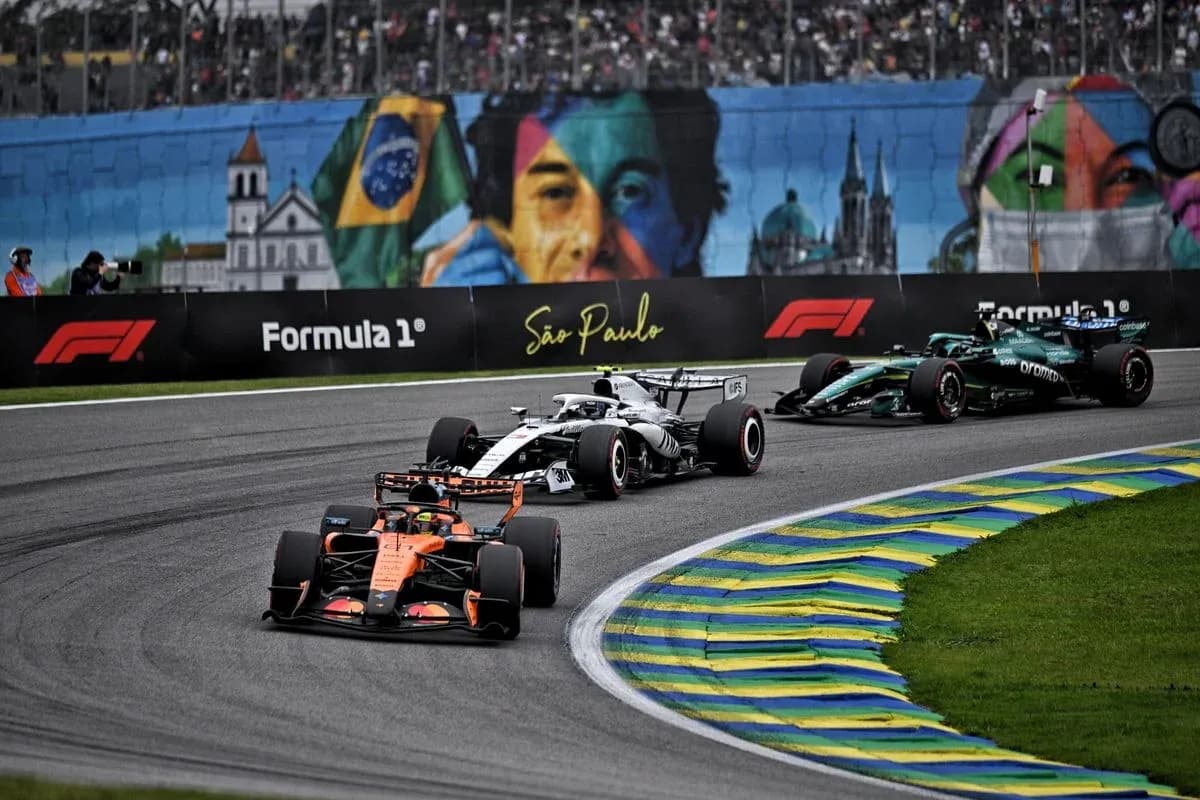
Interlagos has always loved a comeback. From the back of the grid to the top step, this place has built a reputation on chaos, slipstreams and late-braking heroics into Turn 1.
On Sunday, that tradition is under threat.
A Classic Turned Cautious
The Brazilian Grand Prix has long been one of the few circuits where overtaking felt almost guaranteed. The long drag from Juncão to the Senna S, the bumps, the elevation – it all invited risk. Drivers knew that even a bad Saturday could be salvaged with a ferocious Sunday.
Under the 2026 regulations, that safety net is shrinking fast.
The concern is not vague. It is specific, technical and, in the eyes of some of the sport’s biggest names, damaging. The new energy deployment rules, which aggressively ramp down power once cars pass a certain speed threshold, have already drawn public criticism.
Lewis Hamilton labelled them “stupid” after Mexico. Lando Norris said they “kind of ruin racing”. That wasn’t heat-of-the-moment frustration. It was a warning.
Hamilton and Verstappen: Comeback Kings, Now Handcuffed
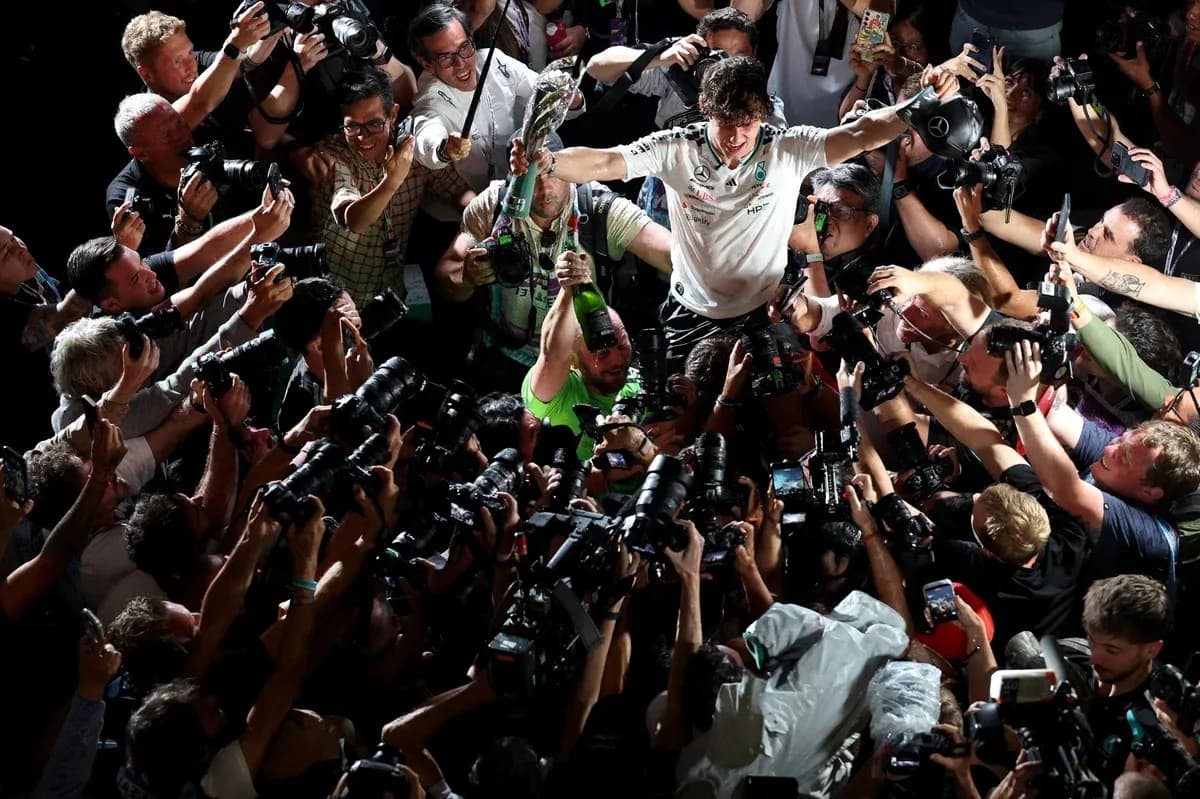
Few know the art of the Interlagos fightback better than Hamilton and Max Verstappen.
Hamilton’s 2021 charge from 10th on Sunday – having started the sprint from the very back with a fresh engine – is already part of modern F1 folklore. Verstappen’s win from 17th on the grid in 2024 only reinforced the idea that Brazil is the place where the impossible stays in play.
Those stories may not be repeatable under the current rules.
Hamilton starts 20th this time, hamstrung by a 10-place grid penalty. Normally, that would be an invitation to watch him slice through the field. This weekend, he sounded anything but optimistic.
He predicted “overtaking will be very, very, very hard” and doubted fans would see “the same sort of races that you’ve seen in the past”.
The key shift lies in how cars behave on the straights. Under the old DRS system, the attacking car could run less drag than the one ahead, creating a clear offset. Now, in straight mode, every car sheds drag. The playing field flattens. The slipstream shrinks. The chaser’s advantage, the lifeblood of those Interlagos charges, fades.
Verstappen, usually ruthless in traffic, shares that reading. The Dutchman, who turned 17th into victory here just last year, spelt out the problem bluntly.
Without DRS and with the new overtake mode heavily constrained, the long run to Turn 1 no longer guarantees a decisive speed difference. Around Interlagos, where the straight is long and the battery drain heavy, everyone empties their energy stores. Everyone hits the same wall.
The result? Less delta. Less jeopardy. Less racing.
Overtake Mode: A Dull Blade
On paper, overtake mode offers salvation. Any driver within one second of the car ahead can unlock an extra 0.5MJ of energy.
In practice, it looks underwhelming.
Williams driver Carlos Sainz estimated the gain at “one or two tenths”. That might help close a gap, but it is rarely enough to complete a move against a rival with similar grip and similar drag levels.
It’s the difference between getting alongside into Turn 1 and just sitting in the gearbox, waiting, overheating tyres and losing momentum. Over a full race distance, that small shortfall can turn a potentially thrilling scrap into a static procession.
Little wonder Sainz admitted he wasn’t expecting to move forward much, especially with the tangle of penalties already reshaping the grid.
So if the rules are boxing the racing in, what can break it open?
The Great Interlagos Variable
The answer hangs above the circuit.
Rain.
The forecast points towards a wet Sunday, and that single word changes almost every assumption about how this race will unfold.
In the dry, active aero and energy deployment rules define the battle. In the wet, they begin to loosen their grip. Active aero can be disabled, which means drag levels stay higher and the slipstream effect grows. Cars punch a bigger hole in the air. The tow becomes meaningful again.
McLaren team principal Andrea Stella has been watching the radar closely and doesn’t see a conventional dry race coming.
He said he “would be surprised if we have a dry race,” and with current predictions showing “quite a lot of rain”, F1 may be stepping into a scenario it has barely explored under this ruleset.
The recent wet races at the Bahrain GP in Malaysia and in Singapore offered only limited clues. Bahrain had almost dried out by the time the race began. Singapore, with its tight walls and narrow lines, is a circuit where overtaking is close to impossible regardless of the regulations.
Interlagos is different. If the rain comes and stays, this track can turn wild.
Walking the Line Between Spectacle and Safety
The challenge is not just grip, but visibility. Stella laid out the dilemma clearly: there is a level of water where nothing can be done. Tyres and cars lift so much spray that drivers simply cannot see. At that point, aquaplaning and blind corners force race control’s hand.
If the rain intensity stays below that critical point, the outlook shifts. Stella believes that in “lower level” rain, the current cars can race, as qualifying already proved. Drivers coped with spray, managed grip and found enough confidence to push.
That has left him “optimistic that we should be able to have a race,” but “not that optimistic that it will be in dry conditions.”
From Pirelli’s standpoint, at least, the tools are ready. Both wet compounds have shown they can cope, which gives teams genuine flexibility whatever the clouds decide to do.
Strategy in the Shadows
If the circuit stays dry, strategy becomes the main lever for teams trying to manufacture opportunity.
High degradation points towards a two-stop race. The most logical paths are soft/medium/soft or medium/hard/soft, with the hard compound only really attractive if track temperatures dip enough to bring its lower working range into play.
A one-stop is on the table in theory, but with an estimated 10-second disadvantage, it looks like a gamble too far unless chaos intervenes.
All of that, though, is a dry-race conversation. The real story hinges on what the sky is doing at 2pm local time.
Morning showers are expected. If they pass through and the track dries, the 2026 regulations will be laid bare over a full Grand Prix distance at one of F1’s best overtaking venues. If they linger, the rulebook loosens and the weather becomes the great equaliser.
Static procession or storm-fuelled drama? For once at Interlagos, the greatest threat to the show might not be the circuit, or the cars, but the very regulations designed to shape the future of Formula 1.