Iran's World Cup Journey Amid War and Uncertainty
Iran’s national team slipped into Turkey on Monday, not for a friendly or a brief tune‑up, but for a prolonged wait in footballing limbo.
This is their pre‑World Cup camp. It is also their holding pattern.
The squad will spend several weeks in Turkey before flying to a World Cup co‑hosted by the United States, a country that, alongside Israel, began bombing Iran on February 28, igniting a wider war across the Middle East. Against that backdrop, the usual questions about form, tactics and fitness feel almost secondary. The basic matter of getting into the host nation is still unresolved.
Visa issues hang over the entire delegation. Iranian officials have already admitted that neither players nor staff have US visas in hand. The plan now is to apply via the Canadian embassy in Turkey and hope the process moves in time.
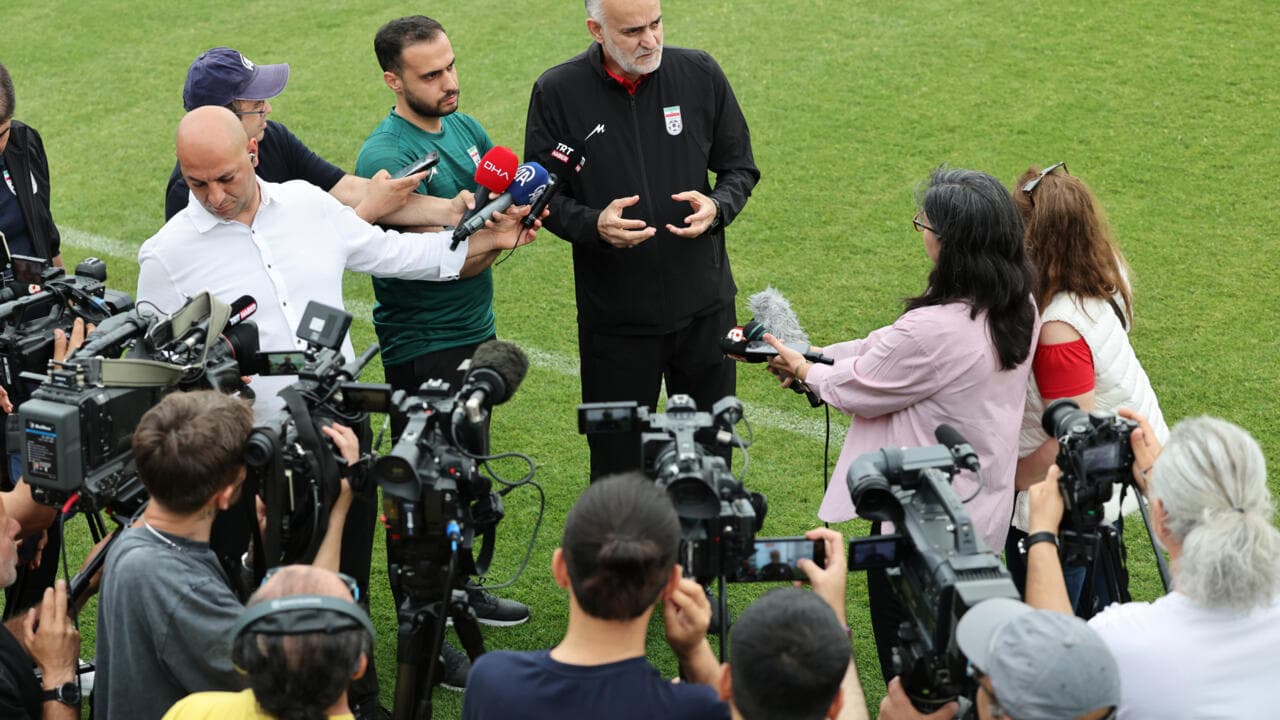
Mehdi Mohammad Nabi, the national team director and vice‑president of the federation, projected calm. He insisted that, off the pitch at least, the roadmap is clear.
“Everything will proceed properly according to the protocols and what FIFA has stipulated,” he said, underlining that the team is operating within the framework laid down by world football’s governing body.
He pointed to the security structures that surround every modern World Cup. Inside the United States, he noted, dedicated committees are already at work, including a security committee liaising directly with FIFA and charged with overseeing safety.
Iran, he stressed, are no strangers to these mechanisms. “In past years we've experienced all of this and we're fully informed about how these security committees operate at every World Cup we've participated in. In this regard, we're very confident and we have a clear plan.”
Confidence, though, does not equal certainty.
“We’re not certain yet that all the players and staff will receive US visas,” Mohammad Nabi admitted, cutting to the heart of the problem. For any team, losing staff or players to paperwork would be disruptive. For Iran, in the middle of an active conflict with a host nation, the stakes are far higher.
Here, FIFA’s regulations come sharply into focus. One of the core obligations on any host country is to guarantee access for all qualified teams. Mohammad Nabi leaned on that point.
“One of the rules that applies to the host country is that they must provide guarantees, according to FIFA's statutes and the regulations of the competition,” he said. “One of their commitments is the visas: they have to grant the necessary visa facilities to all the teams that have qualified for the World Cup. And FIFA has made arrangements so that the host country will provide the necessary cooperation to teams like Iran in this area.”
The pressure now lies on the intersection of sport, diplomacy and security. Iran’s camp in Turkey is not just about conditioning and tactical drills; it is about time. Time for negotiations, approvals, clearances. Time for FIFA and the hosts to demonstrate that their guarantees hold even when geopolitics boil over.
On the field, at least, the picture is straightforward. Iran will base themselves in Tucson, Arizona, during the tournament. The heat, the dry air, the relative isolation — it all promises a focused environment once they arrive.
Their Group G schedule is set. New Zealand await in Los Angeles on June 15 in the opener, a match that will carry far more than the usual first‑game tension given everything that precedes it. Belgium follow in the same city, a clash with one of Europe’s established powers that will test Iran’s resilience and ambition. The group stage closes against Egypt in Seattle, a fixture that could easily become a straight fight for qualification.
If the team makes it to US soil with a full squad and staff, the story will tilt back toward football: line‑ups, pressing schemes, set‑piece routines. Until then, every training session in Turkey takes place under a cloud of uncertainty.
Iran have navigated complicated World Cup build‑ups before, often with politics humming in the background. This time, the backdrop is not just political but military. The question now is stark: can the World Cup’s promise of neutrality and open competition withstand a war between a participant and a host?