Iran's World Cup Opener Against New Zealand: Tensions Run High
In Los Angeles tonight, Iran’s World Cup opener against New Zealand will be played under floodlights and under threat.
On the pitch, it is a group game. Around it, something far more volatile. For the first time in the tournament’s 96-year history, a host nation is at war with one of the participants, and Iran’s campaign has been dragged into that reality from the moment they arrived in North America.
Tension before a ball is kicked
Iran’s captain Mehdi Taremi did not bother to hide the strain. Their preparations have been shredded by geopolitics: a late relocation of their base to Mexico, visa complications for members of the delegation, and travelling supporters stripped of tickets.
“I have felt the tension from the first moment we arrived at this World Cup,” Taremi said. The joy has been drained, he argued, the core message of the tournament – that football can bring peace – undermined before Iran have even kicked a ball. “I feel like this World Cup could have provided a better atmosphere than it has.”
The backdrop is stark. Iran’s war with the United States, the host, sits over everything. Security is tight, logistics are fraught, and every decision around the team is laced with political calculation.
Protest, defiance and a threat to stop play
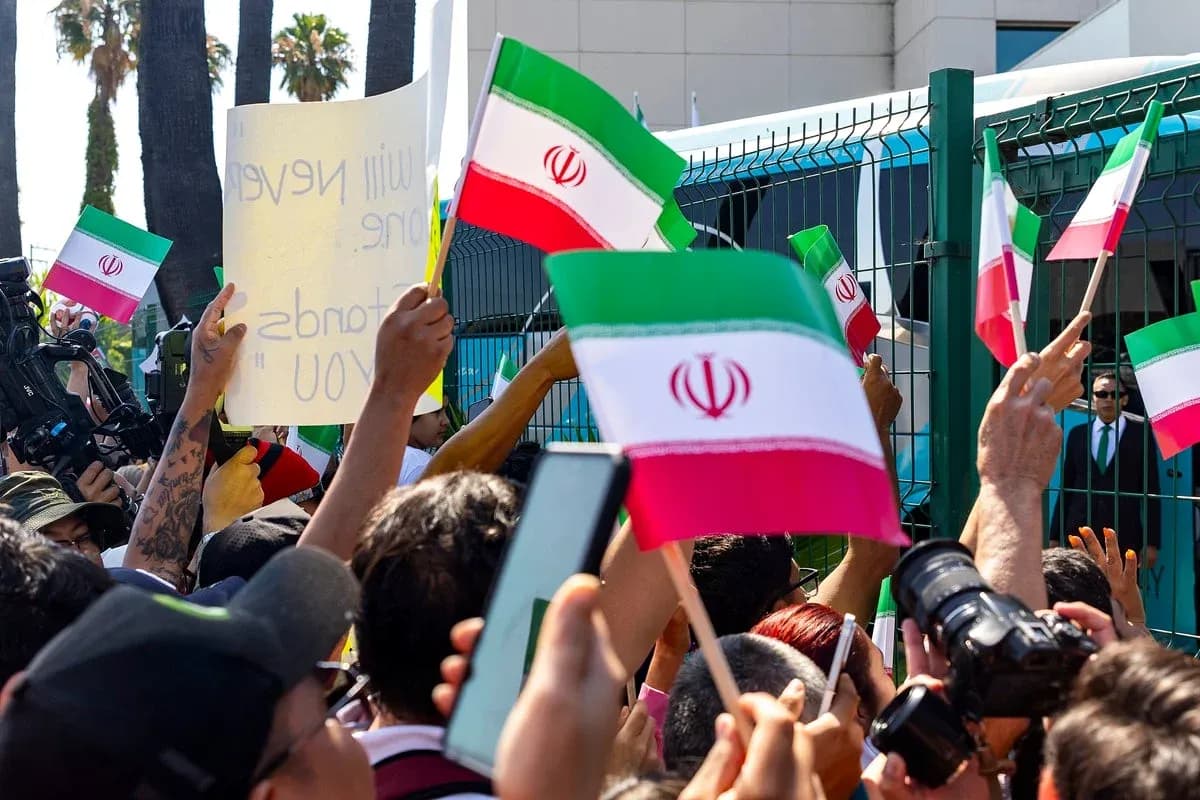
Outside SoFi Stadium, buses are due to roll in from San Diego, Orange County and across Los Angeles, packed with Iranian emigrants determined to make the night a reckoning. Inside, they plan to boo the anthem, turn their backs and raise pre-revolutionary flags – symbols banned by Fifa but cherished by those who reject the current regime.
“We’re going to make it hell,” one activist told the Daily Mail, describing a coordinated effort to turn the game into a visible act of defiance. The intention is clear: to confront the team, and by extension the state, with a wall of hostility.
The stakes are higher than a few jeers. Iran head coach Amir Ghalenoei has been given explicit instructions from the government: if pre-revolutionary flags are brandished or negative chanting against the regime is clearly audible, he is to stop the match.
That surreal possibility hangs over the evening. Imagine a World Cup game halted not for crowd trouble or a VAR malfunction, but because a coach, under orders from his government, walks his players off in protest at his own country’s fans.
Ghalenoei, publicly at least, tried to push all that noise to the edge of his vision.
“We don’t pay attention to any of the hype and anything that goes on around us,” he said on Friday. “We are here to represent the respectful people of Iran, be it the Iranians inside Iran or the Iranian diaspora. We are not political people... football is separate from politics.”
His words sit in jarring contrast to his brief from Tehran. On paper, he is a football man focused on New Zealand. In reality, he may be forced into a decision that would echo far beyond this tournament.
A World Cup unlike any other
This is the hard truth of Iran’s campaign: every routine detail of a normal World Cup – training bases, visas, tickets, anthem, flags – has been dragged into the conflict and into the power struggle between regime and diaspora.
Tonight’s match in Los Angeles could still be remembered for footballing reasons. It might just as easily be remembered as the night a World Cup fixture became a frontline in a very different battle.