Iran’s World Cup Preparations Amidst Political Turmoil
Iran’s World Cup preparations are gathering pace in the shadows. No fanfare, no big reveal yet. Just a drip-feed of images and videos from Team Melli’s official channels: new shirts, hard running, closed-door sessions, and a squad trying to shut out the noise of a world that refuses to leave them alone.
New Kit, Old Ambition
On Monday, Iran’s Instagram account offered the clearest sign yet that the campaign is moving into gear. Players posed under studio lights in what appears to be the new home kit for the World Cup – clean shots, tight framing, and a clear message: this team is getting ready.
First-choice goalkeeper Alireza Safar Beiranvand was among those pictured, along with winger Milad Mohammadi, both wearing a fresh design that has yet to be officially unveiled. It was the kind of controlled leak modern football thrives on: just enough to stir anticipation, not enough to give everything away.
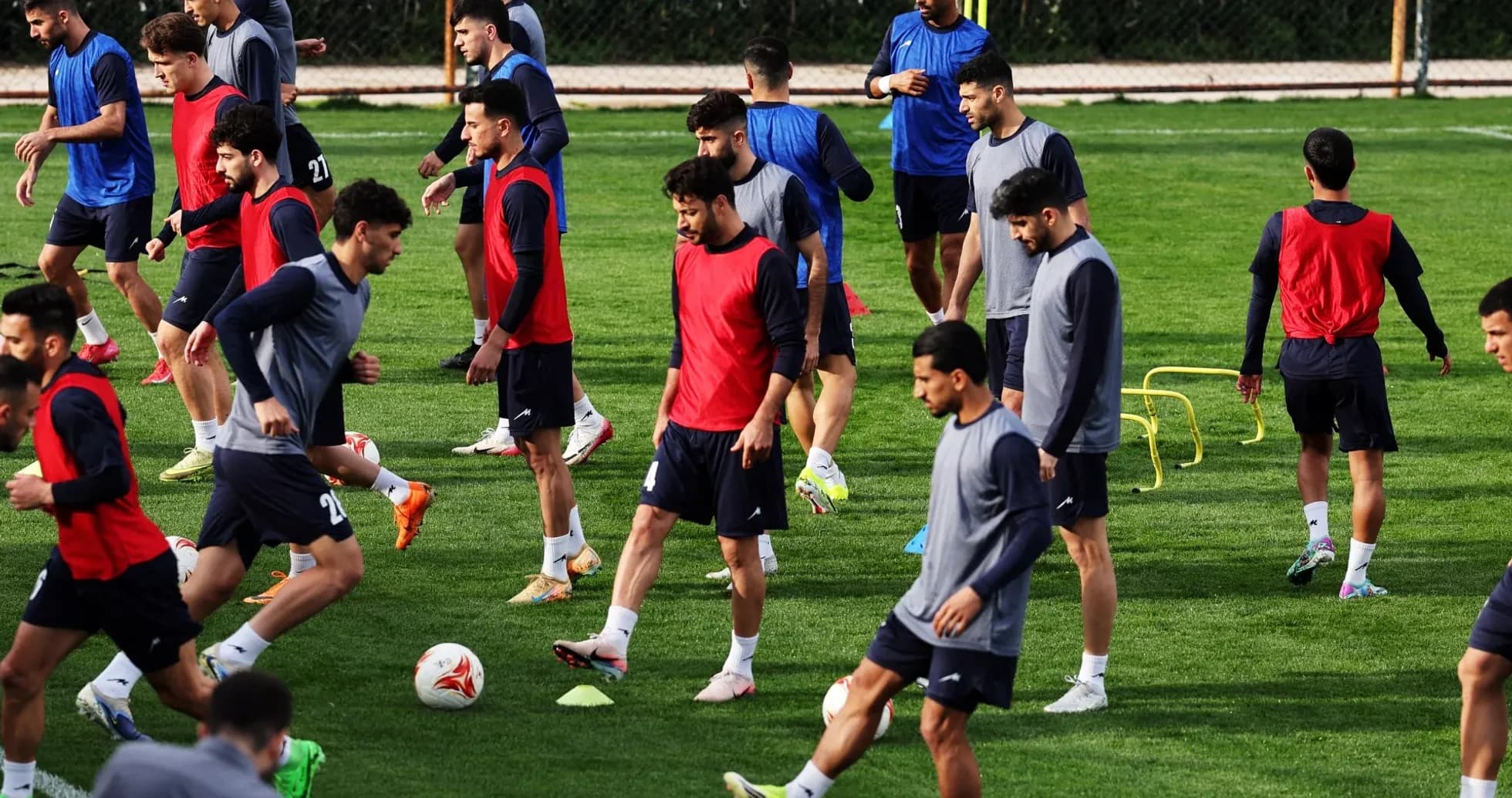
Alongside the photo shoot came images from training. Sessions are currently being held in Iran, away from prying eyes, before the squad heads to Turkiye for the final stretch of friendlies. The work looks serious. No smiles for the cameras, just players locked into drills, preparing for a tournament that, not long ago, looked like it might be slipping away from them.
War, Threats and a Tournament in Doubt
Iran’s very presence at this World Cup was thrown into doubt after the United States and Israel launched a war on Iran on February 28. The conflict detonated far beyond the pitch. Iranian officials openly questioned how a country at war with them could act as host. The political temperature spiked further when US President Donald Trump suggested that Team Melli’s players might not be safe if they travelled to his country for the championship.
For a moment, the football felt almost irrelevant. A World Cup group became a geopolitical flashpoint. Iran had been drawn in Group G, with all their matches scheduled on US soil, in a tournament cohosted by the United States, Canada and Mexico. The calendar said “World Cup.” The headlines screamed “crisis.”
The question hung in the air: would Iran actually play?
Infantino Draws a Line
The answer came from the very top of world football. At the FIFA Congress in Canada on Thursday, president Gianni Infantino cut through the speculation.
“Let me start at the outset. Of course, Iran will be participating at the FIFA World Cup 2026. And of course Iran will play in the United States of America,” he declared.
No caveats. No soft language. Iran, he said, is in.
Trump, who had raised the spectre of danger for the players, then eased off. Asked about Infantino’s comments, he replied: “If Gianni said it, I’m OK. You know what? Let them play.”
With that, the political fog lifted just enough for football to reclaim centre stage. Iran’s federation moved quickly to underline their plans: camps at home, a stint in neighbouring Turkiye, then on to the US in June.
Simulating the World Cup Before It Starts
Inside the camp, the focus has turned to detail. Assistant coach Saeed Alhoei outlined a preparation schedule designed to make the World Cup feel familiar long before the first whistle blows.
“The first phase of the preparation period will end with an intra-team game on Wednesday,” he told Iranian outlet Varzesh3.
This will not be a casual run-out. The match is set to be played in a stadium, with players in full official match kits. An international referee will take charge, and video assistant referee (VAR) technology will be used to mirror tournament conditions as closely as possible. Iran are trying to remove surprises before they ever land in Los Angeles.
On Monday, the squad is due to fly to Turkiye for the final leg of preparations. That camp will include three friendly matches. Two are expected to be against local club sides, played behind closed doors. The third will be against an African national team.
“It is a quality team that can be a good simulation for playing against African teams,” Alhoei said, pointing directly to the group-stage clash against Egypt waiting at the end of the month.
The Road Through America
The route is clear. Iran will open their World Cup campaign against New Zealand in Los Angeles on June 15. Six days later, on June 21, they stay in the same city and the same stadium to face Belgium, a side loaded with European pedigree and tournament experience.
Then comes the final group match: Egypt in Seattle on June 26. A clash of Asian and African giants, set against the backdrop of a tournament that has already been framed by politics and conflict.
The schedule is demanding but logical. Limited travel, consistent conditions, and a gradual rise in difficulty. Iran know that managing the mental and physical load in the US will be as important as any tactical tweak.
A Cruel Blow on the Right Wing
Amid the careful planning, one piece of news cut straight through the optimism.
On Monday, Iran suffered a major setback when it was confirmed that winger Ali Gholizadeh had sustained a season-ending knee injury while playing for Lech Poznan in Poland. He had been expected to start on the right wing at the World Cup, a key outlet in transition and a player trusted to carry the ball under pressure.
Gholizadeh was stretchered off in a match against Motor Lublin last Saturday. Tests later revealed the worst: a torn anterior cruciate ligament in his left knee.
“Gholizadeh will face surgery in the coming days, followed by several months of rehabilitation,” Lech Poznan said in a statement.
For the player, it is a brutal personal blow. For Iran, it forces a rethink in a position that had looked settled. Someone else will now have to step into that space, in a World Cup played on foreign soil, in a country whose leader publicly questioned their safety just weeks ago.
Football in the Eye of the Storm
So Iran press on. New kits teased on social media. Training sessions in the heat. A simulated World Cup match with VAR before the real thing. A camp in Turkiye. Three friendlies. Then Los Angeles, Belgium, and finally Egypt in Seattle.
The politics will not disappear. The war will not fade from the backdrop. But Team Melli will walk into the United States knowing that, after everything, FIFA has confirmed their place, their federation has laid out the path, and only the football now can decide how far they go.