Jamal Musiala's Absence Epilepsy Explained
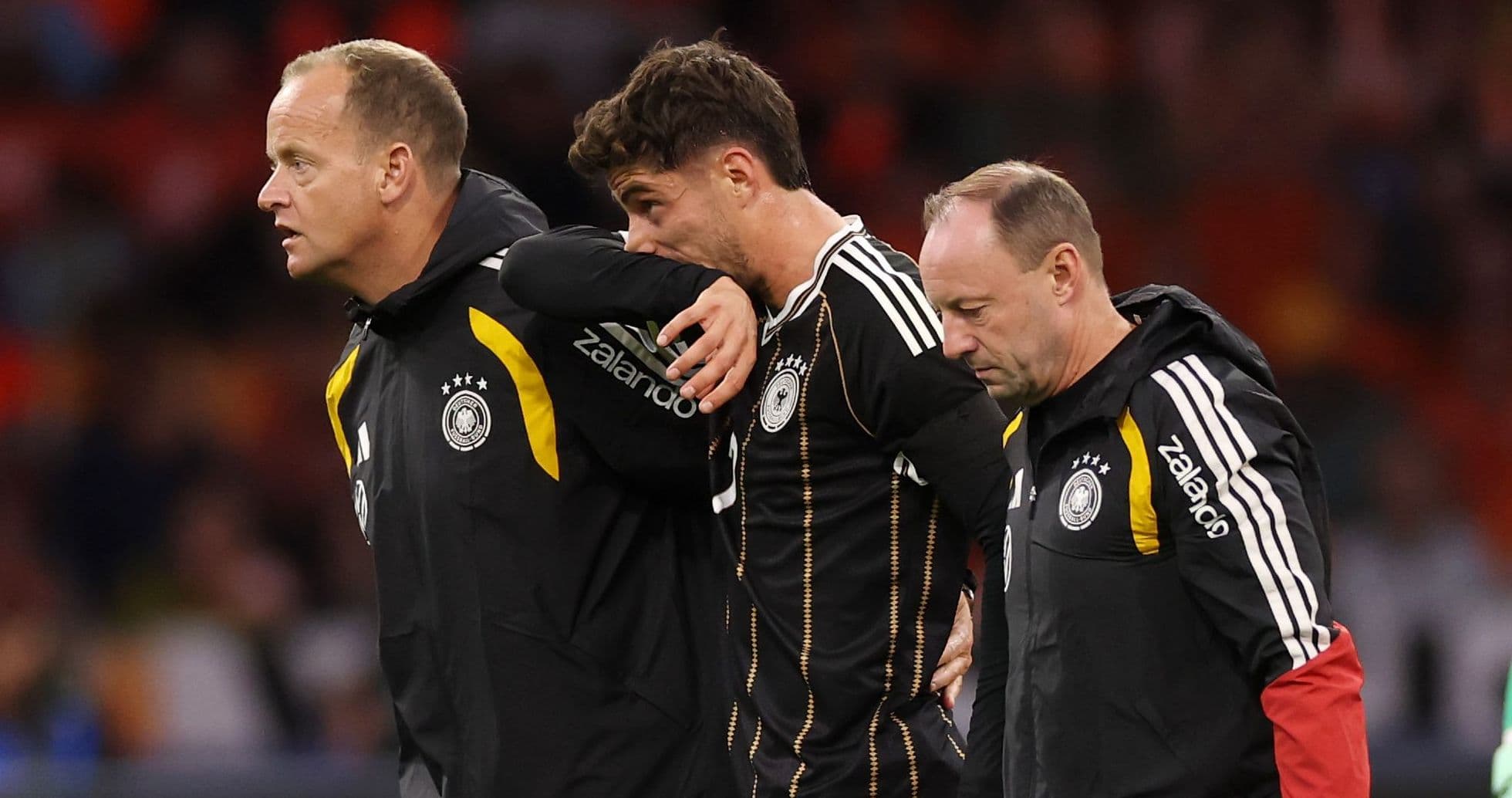
Jamal Musiala’s collapse against RB Leipzig looked, at first glance, like one of football’s familiar horrors: a young athlete suddenly crumpling to the turf, teammates waving frantically for help, a stadium holding its breath.
For neurologist Dr Regina Becker, the picture was different – and immediate.
“When it happened so suddenly and he then obviously recovered quickly, as a neurologist I immediately thought of an epileptic seizure,” she explains.
Musiala’s second collapse, days later against 1. FC Heidenheim, confirmed that suspicion. In his own statement, the 23-year-old spoke of “temporary brief absences caused by a neurological dysfunction.”
Behind that clinical phrase lies a very specific diagnosis: absence epilepsy.
What actually happens in Musiala’s brain
This form of epilepsy does not start in the heart or lungs. It begins deep in the brain.
“Absence epilepsy originates in the so-called thalamus, the diencephalon, which controls consciousness,” says Dr Becker.
When that system misfires, the consequences are abrupt. “Anyone who has a dysfunction there can suddenly become unresponsive. The brain enters an exceptional state, the neurons start firing uncontrollably, and communication between the thalamus and the cerebral cortex, where we consciously perceive things, is interrupted.”
The outside world sees a player freeze, stare into space, or, as with Musiala, simply fall over. Inside, the lights go out for a moment.
To those watching, it can look terrifying. To the person affected, it can be strangely empty.
“Most patients have no warning beforehand,” Becker explains. “It suddenly comes over them and they have no chance to react. Sometimes they do not even notice the seizure itself. Afterwards, they simply carry on as if nothing had happened.”
That is what makes the condition so insidious in elite sport. There is no build-up, no clear sign that something is about to go wrong.
Could it really strike at any moment? Even as he runs up to take a penalty?
“Yes, that is conceivable,” Becker says bluntly.
Why he had to come off – and why that will not change
In both games, Musiala was substituted immediately after collapsing. From a purely physical standpoint, he might have been able to play on. From a professional and medical standpoint, he could not.
“In itself, the patient has no problem with the cardiovascular system, the organs function normally,” says Becker.
“Even so, in professional sport, carrying on is not possible for reasons of liability and duty of care.”
Heat, stress, hyperventilation – all common in high-intensity football – can trigger further seizures. Even if Musiala feels fine minutes later, the risk profile has changed. Clubs, doctors, and insurers will not ignore that.
So the pattern is clear: if it happens, he comes off. Every time.
Why now – and why at 23?
Absence epilepsy is usually associated with children. It typically appears between the ages of four and ten. Musiala, at 23, sits far outside that usual window.
“Normally, this form of epilepsy occurs between the ages of four and 10,” Becker says. “However, there are also forms such as juvenile absence epilepsy, where the illness only appears later. In any case, 23 is late for a diagnosis.”
That does not mean the problem was born this summer.
“We do not know whether this had also happened to him earlier and has now simply become more frequent and happened in public for the first time,” she points out.
Genetics often open the door. Football’s brutal environment can push it wide.
“Provided there is a genetic predisposition, environmental factors such as high temperatures, dehydration or stress can contribute to the frequency of seizures increasing, or even to the first seizure occurring at all,” Becker explains.
One thing it is not: a consequence of his previous leg injury. Musiala suffered a broken fibula around a year ago, a serious trauma in its own right, but neurologically irrelevant.
“No, that has nothing to do with it,” Becker says.
The treatment: daily pills, long-term view
Musiala has called his condition “treatable.” Becker goes further.
“Yes, there are very promising medications for absence epilepsy. Most patients become completely seizure-free as a result.”
The strategy is clear: prevent the brain from slipping into that exceptional state.
“Patients are given what are known as seizure-suppressing medications, which prevent the uncontrolled firing of neurons and are intended to suppress epileptic seizures,” she explains. “They take the medication daily as a preventive measure, and it builds up the necessary level in the blood within two to three weeks.”
During that build-up, doctors monitor the levels closely and adjust the dose if needed. Once the right balance is reached, “there is normally sufficient protection against further seizures.”
The standard first choice is ethosuximide. “In principle, it is a very well-tolerated medication, but it can lead to headaches and tiredness,” says Becker. Another option, valproic acid, is highly effective but carries heavier baggage: “weight gain, hair loss or drowsiness.” The decision is tailored to the individual. “Most patients tolerate both medications well,” she adds.
How long will Musiala have to take them? That is the one question with no simple answer.
“Even if the medications make someone seizure-free after a short time, they are taken for several months or years,” Becker says. Children sometimes outgrow the condition and can later live without medication. When epilepsy appears later, the horizon changes. “If the illness occurs later, lifelong therapy may be necessary. So the question cannot be answered in general terms, it varies from person to person.”
Can he keep playing at the top?
This is where football’s cold realities collide with medical judgment. Can a player with absence epilepsy continue a career at the highest level?
Becker is clear.
“With this form of epilepsy I have no concerns about his future career,” she says. The key lies in the coming weeks. “In the adjustment phase of the medication, which is now presumably beginning, he will have to ease off a little so that the body has a chance to adapt.”
That means patience. Training loads may be trimmed. Match minutes may be managed. The priority is to stabilise the brain, then let the footballer re-emerge.
One detail from Musiala’s recent past now takes on a new light. He has repeatedly spoken about his enthusiasm for neuro-athletics training, a trend in elite sport that targets brain and nervous system performance.
Could that have been an early attempt to counteract problems he already knew about? The question hangs there, but Becker does not speculate in the interview, and there is no public evidence that Musiala linked his training to undiagnosed epilepsy.
What is clear is this: a 23-year-old star has been given a name for what is happening to him, and a plan to control it. The fear that gripped those watching him fall has given way to something else – a long, careful fight to ensure that those brief absences never again interrupt a career that still feels like it is only just beginning.