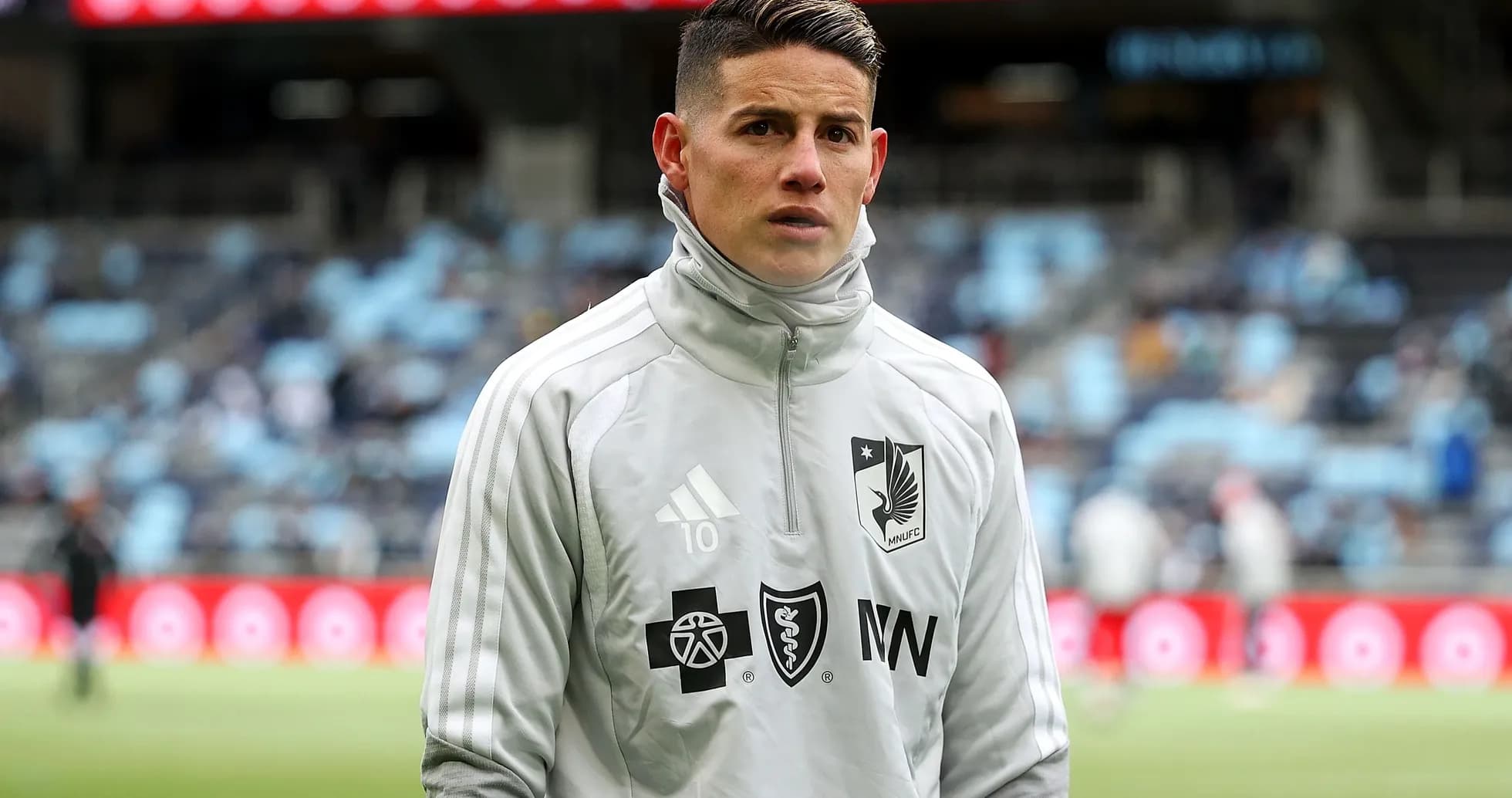
James Rodríguez Health Scare: Dehydration and Club's Response
For a few uneasy days, the football world held its breath over James Rodríguez.
The Colombian playmaker, now with Minnesota United, returned from international duty with more than just fatigue. He came back with a medical scare that briefly turned into a swirl of fear, rumour, and speculation.
From Paris to a hospital bed
The timeline is stark.
On 29 March, James stepped onto the pitch for Colombia in a glamour friendly against France. Les Bleus won 3–1, but the real story for Colombian fans began after the final whistle.
The 2014 World Cup top scorer started to show signs of extreme physical exhaustion. Not the usual post-match weariness. This was sharper, more alarming, and it escalated quickly over the following hours.
Doctors clinically diagnosed “severe dehydration”.
By the morning of 31 March, the situation demanded more than rest and rehydration at home. James was admitted to hospital, where he stayed three days under constant medical supervision. He received fluids and intravenous treatment, stabilising enough to be discharged and continue his recovery at home, still under the watch of a specialist medical team.
The images weren’t public. The silence, though, was loud enough.
Rumours of ‘rhabdomyolysis’ – and a firm club response
With no official medical bulletins during his hospital stay, the vacuum filled quickly.
US media reports began to circulate that James was suffering from rhabdomyolysis – a serious condition caused by the breakdown of muscle tissue, which can trigger kidney failure and, in extreme cases, be life-threatening.
The word alone was enough to set off alarm bells.
Minnesota United moved swiftly and forcefully to shut that down. In a strongly worded statement, the club insisted there was no basis for those claims, stressing that there was “no biological or clinical evidence” of rhabdomyolysis.
The club underlined its stance on player welfare and privacy, making it clear that speculation around James’ condition had gone too far and urging both public and media to wait for information through official channels.
The message was blunt: the rumours were wrong, and they were not helping.
A fragile season, a fragile body
This health scare has landed in a season that was already testing James’ resilience.
Since joining Minnesota United in February, the former Real Madrid star has played just 39 minutes. Not 39 per match. Total. A string of physical issues has stalled his start in MLS, turning what should have been a fresh chapter into a stop-start struggle.
Every time his name appears on an injury update, the questions grow louder. Can he still put a run of games together? Can his body match his vision?
This latest episode only sharpened those doubts.
Back on the grass – gently
Yet there is a sliver of optimism.
On Monday, Minnesota United confirmed that James had returned to training. Not a full session, not a dramatic comeback, but a step. An important one.
He took part in light, individual work, closely watched by the club’s medical staff. No risks. No shortcuts. Just a careful reintroduction for a player whose talent has never been in doubt, but whose body keeps demanding caution.
The plan is clear: a gradual integration into full group training over the coming days, following strict medical protocols. Only then will the conversation shift from recovery to minutes, from monitoring to matchday.
James Rodríguez has spent much of his career under a harsh spotlight, judged on touches, passes, and goals. Right now, the focus is simpler: can he stay healthy long enough to show Minnesota – and Colombia – that there is still another chapter left in those gifted feet?