José Mourinho vows to stay at Benfica despite title race loss
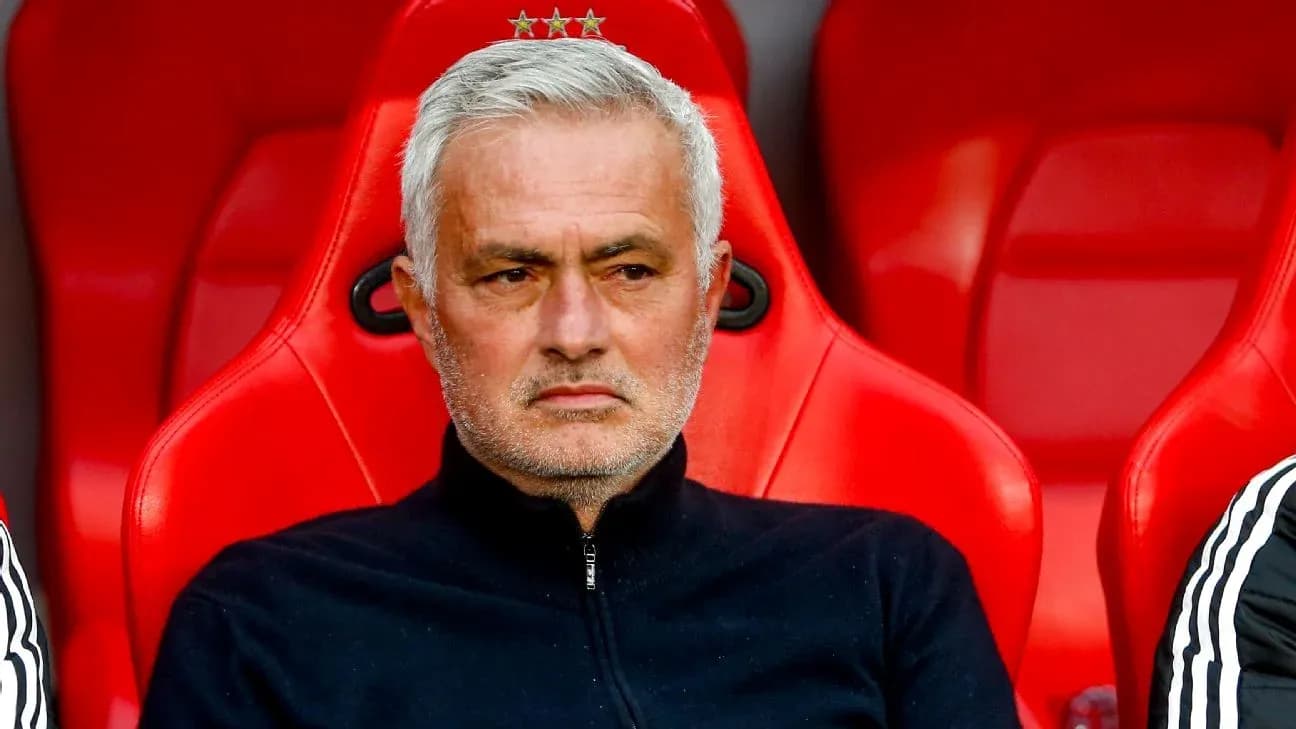
José Mourinho has never been afraid of hard truths. On Monday night, after a flat 1-1 draw with Casa Pia, he delivered two of them: Benfica’s title challenge is effectively dead, and he still wants to be the man in charge when the next one begins.
The Portuguese coach, back in his homeland after more than two decades abroad, holds a contract at Benfica until June 2027. Buried in that deal, though, is a clause that would allow him to walk away this summer. With rumours swirling that he could exercise that option, Mourinho cut through the noise.
“Jorge Mendes is my agent, but I am in charge of my own decision. My decision is that I would like to continue at Benfica,” he said.
It was a clear message to the board, the dressing room and the stands: he is not planning an escape route. Not even after a result he believes has taken the championship out of reach.
Unbeaten, but seven points too far
On paper, Benfica’s league record carries an odd contradiction. Mourinho’s side are the only unbeaten team in the Primeira Liga, yet they trail leaders FC Porto by seven points with just six games to play. Sporting CP sit second, two points ahead of Benfica and with a game in hand.
In that context, the draw with Casa Pia felt heavier than a single point dropped.
“You say we’ve dropped two points; I’d say we’ve lost our last chance to fight for the title,” Mourinho admitted.
The numbers back up his gloom. Even a perfect run-in might not be enough. Benfica could win every remaining match and still watch Porto and Sporting disappear over the horizon.
“We’re no longer in control of our own destiny when it comes to finishing second,” he said. “Even if we won every game — which would be extremely difficult, but possible, Sporting would also have to drop two points. But the aim is to fight for this.”
It is a harsh comedown for a team that has refused to lose, but too often failed to kill games. The Casa Pia stalemate felt like the breaking point.
Halftime anger and players “losing touch with football”
Mourinho’s frustration was not just mathematical. It was visceral. He did not spare his players when asked about the performance.
“I wasn’t happy with the first half,” he said. “At halftime, we talked about what we needed to change tactically, and I tried to make them understand, because there are some who seem to have lost touch with football and forget the realities; I did a bit of maths for them.
“If we didn’t win this game, the title race would be over.”
The message in the dressing room was blunt: win, or watch the season’s main objective vanish. Benfica did not respond with the urgency he demanded. The draw left Mourinho wrestling with a dilemma every coach at a big club knows too well.
He wants to be ruthless. He also knows the club has investments on the pitch.
“I have to think carefully, as a whole, because, at this moment, I wanted to stop playing some players, but there are higher values at stake,” he admitted. “They are assets, even if I didn’t want to continue with some of them.”
That line cuts deep. It hints at a squad reshaping he would happily accelerate, if it were purely a sporting decision. Instead, he must balance short-term results, long-term planning and the financial reality of modern football.
Second place as the new battleground
With Porto out of reach and Sporting holding the edge in the race for the runners-up spot, Benfica’s season has been reframed in a single night. The club that measures itself in titles is now scrambling for second, and even that depends on others slipping.
“At the sporting level, the achievable goal is to finish in second place, depending on other results,” Mourinho said.
It is a cold target for a coach who built his reputation on winning everything in sight. Yet his insistence on staying, despite the fading title dream and the tension around certain players, suggests he sees a longer project in Lisbon.
He has called time on this title race. He has not called time on Benfica.