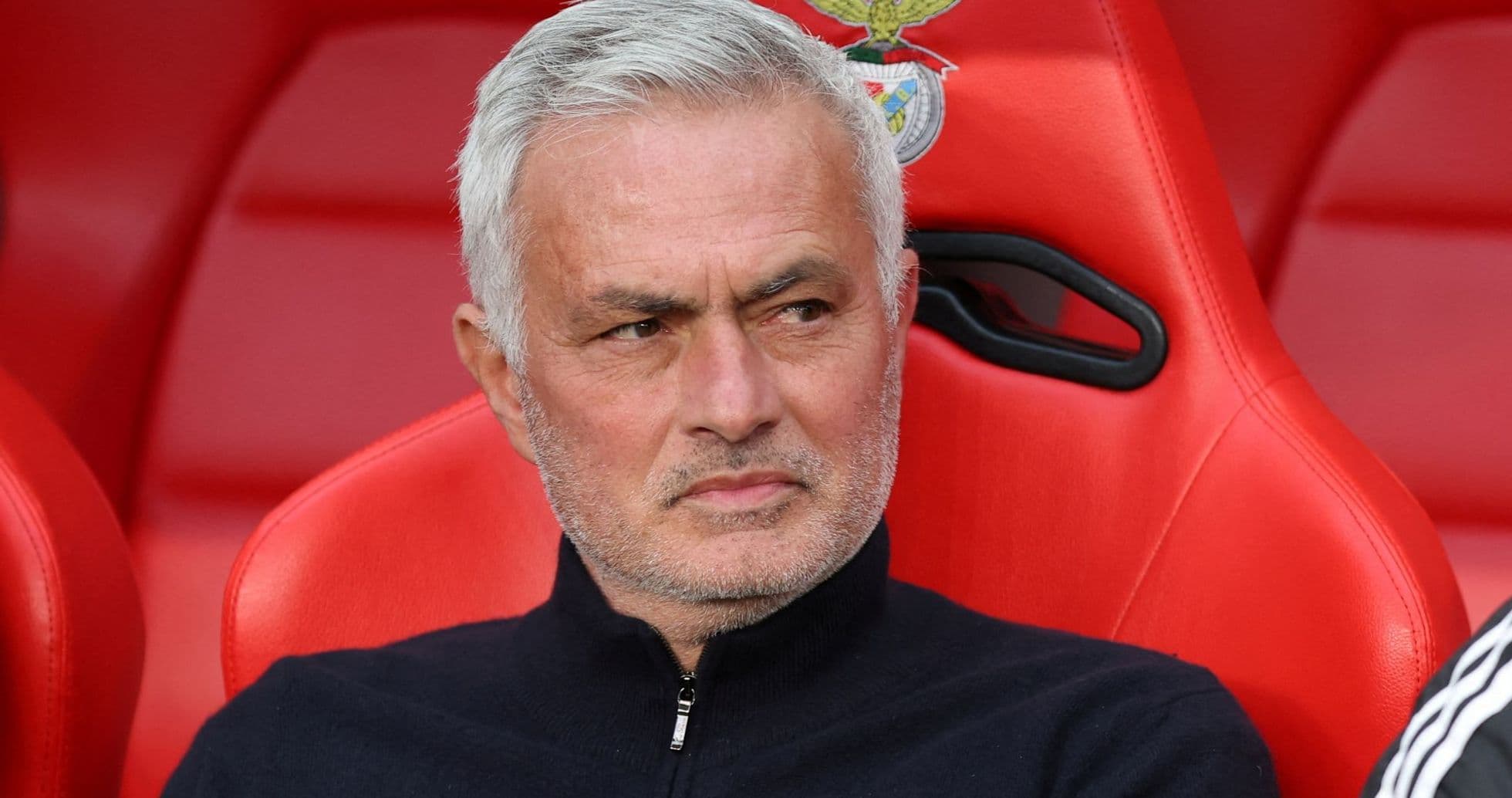
José Mourinho's Departure from Benfica and Return to Real Madrid
José Mourinho slipped out of Lisbon with a trophy, an unbeaten league campaign and, as ever, a message carefully crafted for maximum impact.
Hours after Benfica confirmed his departure, the 63-year-old turned to Instagram, using a heartfelt post to close a brief but striking second spell at the Estadio da Luz. The numbers are stark enough: an undefeated domestic league run, third place in the Primeira Liga and the Supertaca Candido de Oliveira added to the cabinet. The tone of his farewell suggested this one meant something more.
He began at the top. Rui Costa, the president who brought him back, received prominent thanks.
“I would like to thank president Rui Costa for the opportunity he gave me to work for Sport Lisboa e Benfica. Representing this club has been an honour and a privilege,” Mourinho wrote, framing his exit not as a rupture but as the end of a shared mission.
He then widened the lens to the people away from the spotlight.
“I would also like to extend my gratitude to all the staff at Benfica Campus, whose professionalism, dedication and competence have been exemplary.”
For a coach whose career has often been defined by conflict, the message was unusually soft-edged. No veiled digs. No coded complaints. Just appreciation.
The players came next. The squad that helped him navigate a flawless domestic league campaign, only to finish third, received the kind of tribute Mourinho reserves for groups he feels truly bought in.
“To the players with whom I have had the pleasure of working, I offer my sincere thanks and best wishes for every success in their personal and professional lives,” he wrote. Then came the line that will linger in Lisbon: “I leave with the conviction that, more than just a moment, we have forged a lasting bond: my player for a day, my player for life.”
It was a clear attempt to draw a line between the emotional ties built in Portugal and the professional pull dragging him back to Spain. Because this exit was not born of discontent inside Benfica. It was triggered by Real Madrid.
Perez’s big bet
Real Madrid’s pursuit of Mourinho has been relentless and very public. Florentino Perez, the president who first installed him at the Bernabeu and watched him break Barcelona’s domestic dominance between 2010 and 2013, made rehiring the Portuguese coach a central plank of his re-election campaign.
He has now delivered.
Madrid agreed a compensation package worth £13 million (€15m/$17m) with Benfica, clearing the final institutional hurdle. Mourinho is expected to be officially unveiled on Wednesday, a familiar face returning to a club that has grown restless after two seasons without a major trophy.
The choreography around his comeback underlined how serious Madrid are. On Tuesday evening, his agent Jorge Mendes was seen in a central Madrid hotel with director general Jose Angel Sanchez and chief scout Juni Calafat as the final details were ironed out, according to ESPN. Those are not background figures; they are the architects of the club’s sporting strategy.
Perez is not bringing Mourinho back to tread water. He wants a jolt.
The club has already confirmed a €150 million (£129m/$172m) bid for Julian Alvarez, rejected by Atletico Madrid. One offer does not make a revolution, but the scale of that move sends a clear message: the president is ready to re-open the galactico playbook to rebuild a squad that has lost its edge on the biggest stages.
Mourinho walks into that storm willingly. A second act at the Bernabeu, a president staking political capital on him, and a transfer budget that hints at a new superstar era. The stakes could hardly be higher.
Benfica move fast
Back in Lisbon, Benfica refused to dwell on the departure. A club of that size cannot afford a vacuum, not when the man leaving has just delivered an unbeaten domestic league campaign and still finished short of the title.
The solution came from a familiar source for Portuguese football: Marco Silva.
The former Fulham and Sporting CP manager has been confirmed as Mourinho’s successor, signing a deal that could keep him at the club until 2029. He arrives with a Premier League-hardened reputation, having rebuilt his standing in England and shown he can organise teams, develop players and compete against heavyweight opposition.
The assignment is ruthless in its clarity. Maintain, or even improve on, an unbeaten domestic record. Close the gap to the summit of the Portuguese table. Do it all under the shadow of the coach who has just left, a serial winner whose name still dominates every conversation.
Silva steps into a dressing room that has just been told it shares “a lasting bond” with Mourinho. He inherits a fanbase that has tasted invincibility in the league but not the title they crave. He takes over a club that has just been handed a sizeable cheque from Madrid and will be expected to spend it wisely.
Mourinho, meanwhile, returns to the Bernabeu with another chapter written in Lisbon and another fanbase added to the long list that believes it saw a different, more reflective side of him.
Now comes the test that has defined so many eras in European football: can his second spell in Madrid reshape a giant that has gone two years without a major trophy, or will this reunion prove one gamble too many for Florentino Perez?