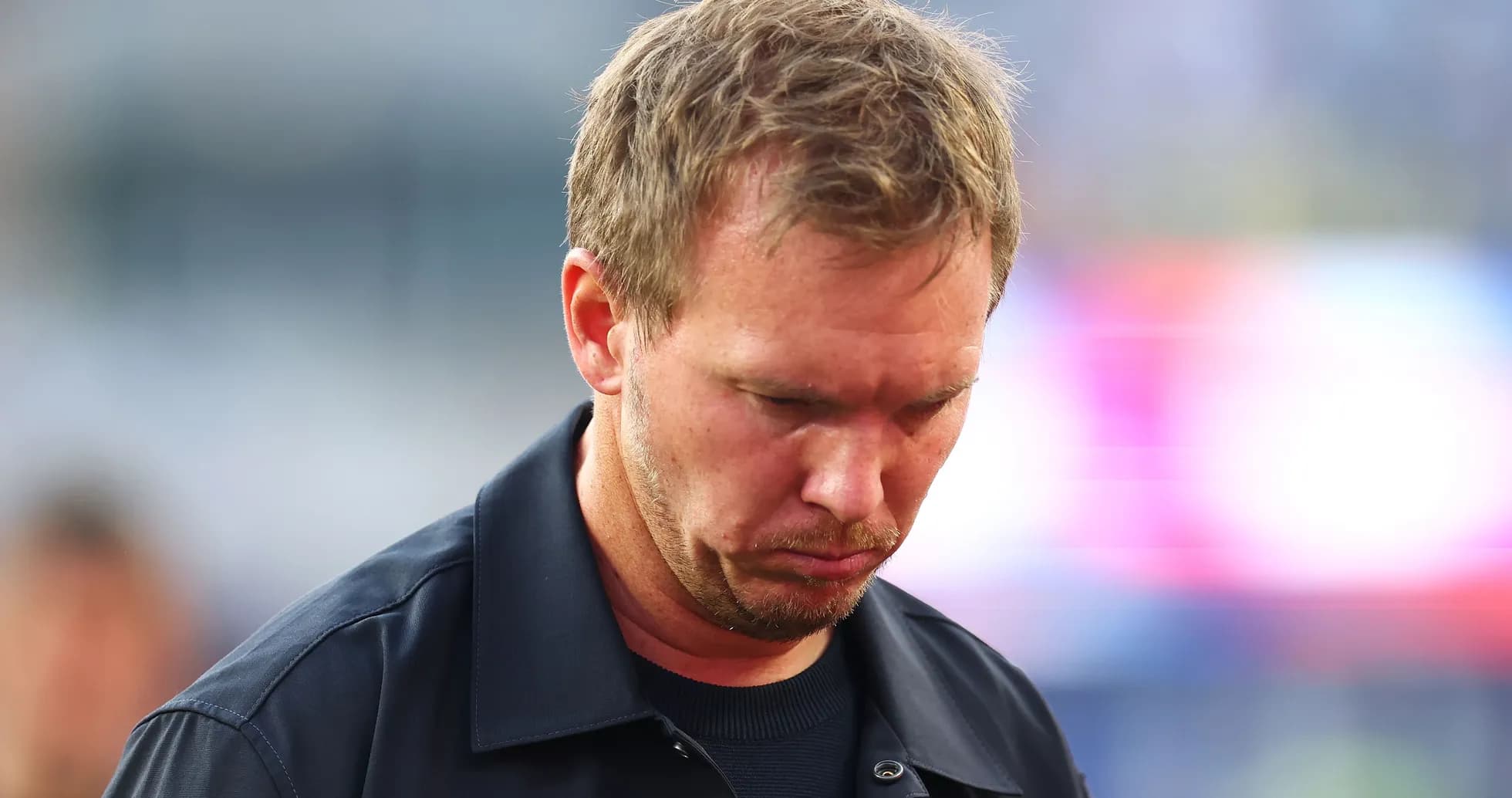
Julian Nagelsmann's Bayern Exit: Insights from Former Psychologist
Julian Nagelsmann’s sacking at Bayern Munich in spring 2023 has long since moved off the back pages. Inside the club, though, the way it happened still rankles. And for one man who worked in the inner circle, the bitterness has never really gone away.
Dr Maximilian Pelka, Bayern’s team psychologist from 2021 to 2023, has broken ranks to criticise the club’s handling of Nagelsmann’s dismissal, calling into question both the timing and the narrative that grew around it.
A Ski Trip, A Sacking, And A Narrative
Nagelsmann was relieved of his duties in March 2023 while on a short skiing holiday during an international break – a trip the club had approved. Days later, Bayern patriarch Uli Hoeneß publicly pointed to that very break as a decisive factor in the decision to part company with the coach.
For Pelka, speaking to kicker, that version of events badly distorts the reality of the situation.
“Perhaps we need to explain again what situation the club was in at the time,” he said, before laying out the sporting context that surrounded the decision.
Bayern were in the quarter-finals of the DFB Cup. They had just eliminated PSG from the Champions League – a PSG led by Lionel Messi, Neymar and Kylian Mbappé. In Europe, the campaign was very much alive. Domestically, though, the picture was more complicated: Bayern sat second in the Bundesliga, behind Borussia Dortmund.
“That brings us to the pressure of expectations. Everyone always wants more, more, more,” Pelka argued. The message was clear: in Munich, being in contention on all fronts still wasn’t enough to buy a coach time.
The Leverkusen Defeat And The “Crisis” Question
The trigger, in sporting terms, came with a 2-1 Bundesliga defeat to Bayer 04 Leverkusen. The loss intensified scrutiny around Nagelsmann, but inside Säbener Straße the coach’s routine did not change.
After that defeat, Pelka recalled, Nagelsmann went into his office at the training ground as usual on the Monday and continued his work. Only once the majority of his squad had departed for international duty did he step away and take a brief break.
“He is an adult. I don't need to recommend anything to him,” Pelka said. International breaks, in his view, offer a rare and necessary chance for coaches to “step off the treadmill for a while.”
So when the skiing trip later surfaced as a symbol of supposed mismanagement of a crisis, Pelka bristled.
“It was not right to suggest that he had failed to deal with the crisis properly,” he insisted.
“Exactly The Right Thing To Do”
Pelka did not gloss over the pressure Nagelsmann was under. The sporting situation was tense, the expectations suffocating. But he remains adamant the coach did nothing wrong in choosing to leave town for a few days.
“Taking three or four days away from the madness to clear his head. With all the national team players away anyway, that was exactly the right thing to do,” he said.
From a psychologist’s standpoint, the logic is obvious: a coach cannot drive at full speed, every day, without a pause. The job devours energy, sleep, and perspective. A short reset, especially when the squad is scattered around the world, can be a tool rather than a luxury.
“In Pelka's view, the Bayern coach had wanted to prepare for the weeks ahead,” the report noted. The idea was not to escape the pressure, but to return better equipped to handle it.
“Of course everyone wants to see you keep working during a difficult period,” Pelka said. “But does that make sense in the end? Or does it make more sense to recharge so you can be fully there again over the following weeks and months? As far as I know, the trip had also been agreed.”
That last line cuts to the heart of his frustration: what began as an internally sanctioned pause was later framed as a misstep, even a character flaw. For someone tasked with protecting the mental resilience of the staff, the shift in narrative clearly stung.
Life After Bayern – And Another Brutal Ending
Nagelsmann did not stay idle for long. In September 2023, he took over as Germany coach at the DFB, stepping into one of the most scrutinised roles in world football.
He remained in charge for almost three years. The project ended abruptly after a disappointing performance at the 2026 World Cup, another high-profile tenure cut short before it could mature into a long-term era. Jürgen Klopp replaced him, a seismic appointment that instantly reset expectations around the national team.
Nagelsmann, once the brightest young coaching talent in Europe, now finds himself without a club.
The numbers, the trophies, the sackings – they all sit on the record. What lingers, in the eyes of those who worked closest to him, is something less tangible: how a club chooses to treat its coach when the pressure peaks, and whether the human being at the centre of it all is allowed even three or four days to breathe.