Juventus Dominates Bologna in Serie A: Tactical Analysis of 2–0 Win
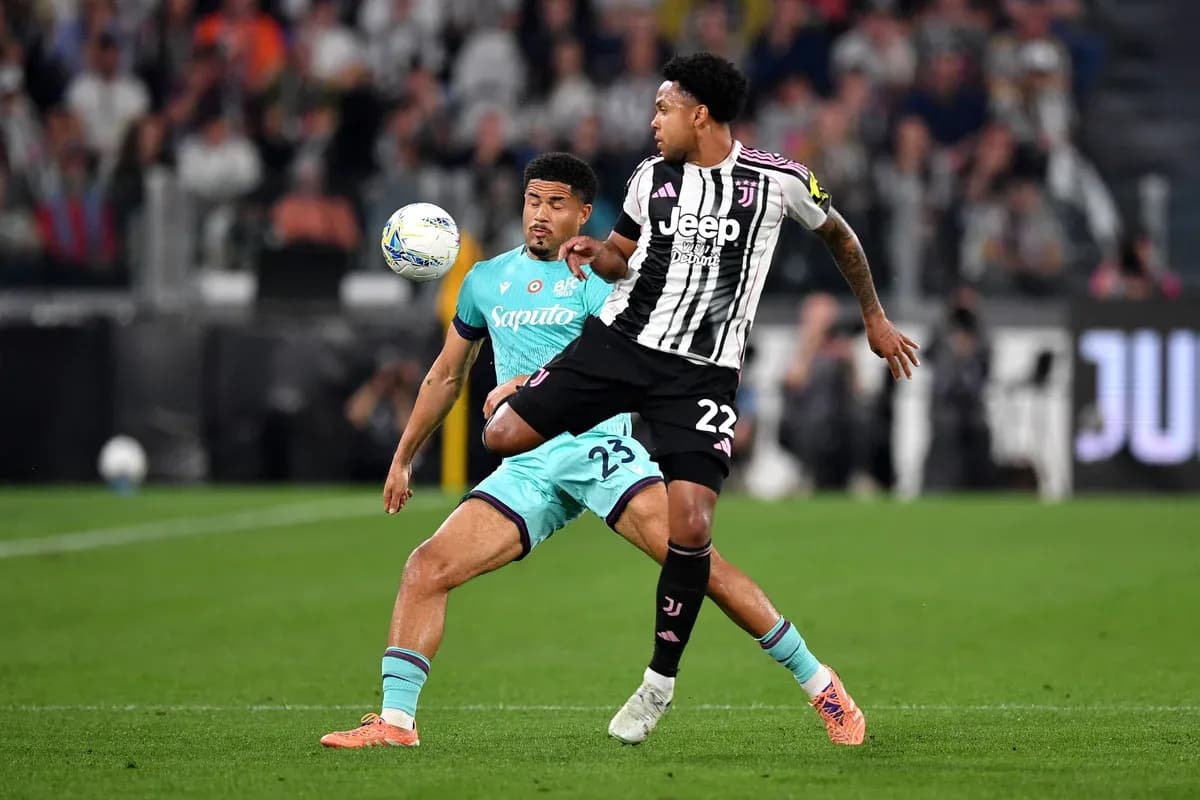
Juventus used Allianz Stadium and a 3-4-2-1 structure to deliver a controlled 2–0 win over Bologna in Serie A Round 33, built on an explosive start and then mature game management. A goal inside two minutes from Jonathan David set the tactical tone, and Khéphren Thuram’s strike on 57’ killed the contest against a Bologna side that never registered a shot on target. The numbers underline Juventus’ superiority: 55% possession, 14 shots to 7, and a 1.31–0.59 xG edge. Michele Di Gregorio was almost unemployed (one save), while Federico Ravaglia’s two saves could not offset structural issues in Bologna’s press and buildup.
Juventus struck immediately. On 2’, Jonathan David finished a move created by Pierre Kalulu, whose advanced positioning from the right side of the back three typified Juventus’ aggressive rest-defense. That early 1–0 allowed Juventus to dictate tempo and force Bologna to chase. The second half opened with Massimiliano Allegri (coach not listed but structure clearly Juventus) adjusting his midfield profile: at 46’, Khéphren Thuram (IN) came on for Emil Holm (OUT), shifting Weston McKennie wider and adding a more progressive carrier in the right half-space.
The change paid off decisively. On 57’, Thuram arrived from midfield to score, assisted by McKennie, whose timing between Bologna’s lines had been a recurring theme. At 58’, Bologna responded with their first structural tweak: Nikola Moro (IN) came on for Tommaso Pobega (OUT), seeking more vertical passing from deep. One minute later, they reshaped their front line: Jonathan Rowe (IN) for Nicolò Cambiaghi (OUT) at 59’, and Lewis Ferguson (IN) for Simon Sohm (OUT) also at 59’, adding more attacking thrust and late runs from midfield.
The match’s only card arrived on 60’, when Manuel Locatelli was booked for a foul, underlining his role as the primary disruptor in front of the Juventus back three. Bologna’s final defensive adjustment came on 68’, with Torbjørn Heggem (IN) replacing Eivind Fauske Helland (OUT), refreshing the right center-back slot. Juventus then moved to energy management and control: at 72’, Edon Zhegrova (IN) came on for Francisco Conceição (OUT), and Kenan Yıldız (IN) replaced Jonathan David (OUT), adding fresh legs and ball retention in the final third. Bologna’s last attacking roll of the dice came on 77’, with Federico Bernardeschi (IN) for Santiago Castro (OUT), shifting their attacking profiles rather than their structure. Juventus closed with defensive consolidation: at 80’, Federico Gatti (IN) came on for Andrea Cambiaso (OUT), tightening the back line, and at 86’ Loïs Openda (IN) replaced Jeremie Boga (OUT), maintaining depth in behind for transitions. The halftime score was 1–0 to Juventus; full time 2–0, with no VAR interventions and no red cards.
From the outset, Juventus’ 3-4-2-1 created a clear superiority against Bologna’s 4-3-3 in the first phase. Bremer anchored centrally, with Lloyd Kelly and Kalulu stepping wide, allowing wing-backs Holm and Cambiaso to push high. This pinned Bologna’s full-backs, especially Juan Miranda, and forced Bologna’s front three to decide between pressing three center-backs or screening Locatelli. They rarely did both.
Locatelli’s role was pivotal: dropping between or beside the center-backs to form a back four in buildup, he created stable circulation and drew out one of Bologna’s midfielders, opening interior lanes for McKennie and Conceição. McKennie, nominally a central midfielder, repeatedly attacked the right half-space, as evidenced by his assist for Thuram’s goal. That second goal encapsulated Juventus’ structure: back three secure in rest-defense, double pivot staggering height, and one of the advanced midfielders arriving late into the box.
Out of possession, Juventus’ Defensive Index was strong: they limited Bologna to 7 shots and 0 on target, with just 0.59 xG conceded. The front three (Boga, Conceição, David) pressed from curved angles to funnel play wide, where the wing-back and near-side center-back could trap. Locatelli’s yellow-card foul at 60’ was the only disciplinary blemish, but tactically it highlighted his willingness to break transitions early.
Bologna’s 4-3-3, on paper, sought width from Riccardo Orsolini and Cambiaghi, with Castro central. In practice, they struggled to progress centrally. Remo Freuler and Sohm were often pinned by Juventus’ double pivot and shadow-pressing from the front line. When Bologna did find Miranda or Zortea, Juventus’ wing-back-plus-center-back press limited clean deliveries, reflected in the fact that Bologna managed only 1 corner and no shots on target.
The substitutions tell the tactical story of Bologna’s chase. Moro’s introduction was aimed at faster vertical progression, Ferguson’s at adding a goal threat from midfield, and Rowe’s at direct running from wide. Yet Juventus’ structure, especially after Gatti’s entry to make the back line more physical, kept them at arm’s length. Bernardeschi’s late appearance for Castro shifted Bologna to more of a false-nine profile, but by then Juventus had dropped into a compact 5-4-1/5-2-3 block, with Yıldız and Zhegrova offering outlets in transition.
Statistically, Juventus’ Overall Form in this match was that of a controlled favorite: 55% possession, 487 total passes at 85% accuracy, and 14 shots generating 1.31 xG. They combined territorial control with risk management, as shown by conceding only 5 fouls and one card. Bologna’s numbers—45% possession, 398 passes at 83% accuracy, 7 shots for 0.59 xG—suggest a team that circulated the ball decently but lacked penetration and final-third clarity.
In goal, Michele Di Gregorio’s reality was almost minimalist: 1 save, 0 goals conceded, and no goals prevented above expectation (0). Federico Ravaglia, with 2 saves and 2 goals conceded against an xG of 1.31, also registered 0 in terms of goals prevented, reflecting that Juventus’ finishes were high-quality and not reliant on goalkeeping errors. Card totals were straightforward: Juventus 1 yellow (Locatelli, foul), Bologna 0. The xG and disciplinary profile together underline a match Juventus controlled both tactically and emotionally, turning an early structural advantage into a routine but highly efficient 2–0.