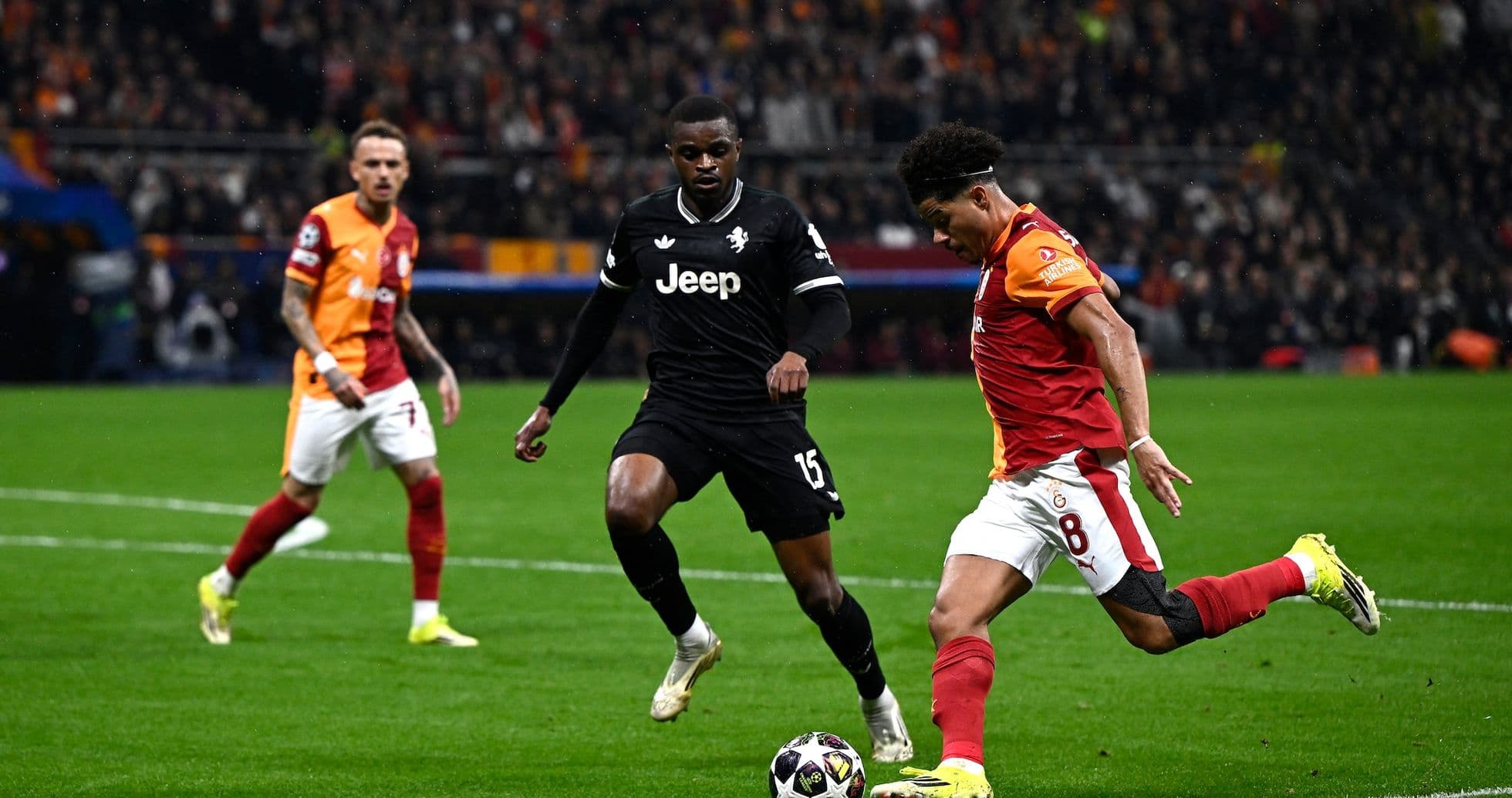
Juventus Edges Galatasaray 3–2 in Champions League Thriller
At Allianz Stadium in Turin, Juventus survived a remarkable extra‑time fightback from Galatasaray to squeeze through their UEFA Champions League Round of 32 tie after 120 breathless minutes. Luciano Spalletti’s side led 3–0 after 82 minutes and looked to be cruising, despite playing more than a half with 10 men. But Okan Buruk’s visitors struck twice in extra time through Victor Osimhen and Barış Alper Yılmaz to set up a frantic finish before the Italians finally staggered over the line. The result consolidates Juventus’s strong continental campaign and leaves Galatasaray’s run halted despite a spirited late surge.
First half analysis
The opening period was cagey and increasingly ill‑tempered rather than expansive. A pre‑kick‑off yellow card for Juventus substitute goalkeeper Carlo Pinsoglio for argument set the tone for a tense night on the touchline. On the pitch, Victor Osimhen’s 14' booking for a foul underlined Galatasaray’s willingness to press aggressively from the front.
Juventus gradually imposed themselves without statistical detail being needed to see the shift, but their progress came at a disciplinary cost. Lloyd Kelly went into the book on 25' for a foul, followed by Kenan Yıldız on 31' as the home back line and front line both felt the strain of Galatasaray’s transitions. Roland Sallai’s 33' yellow for a foul evened up the card count and hinted at a midfield battle on a knife‑edge.
The breakthrough arrived on 37', when Manuel Locatelli converted from the penalty spot to give Juventus a 1–0 lead. With no further goals before the interval and no major attacking events recorded beyond the spot‑kick, the half closed with Juventus ahead but the contest still finely balanced and simmering with disciplinary tension.
Second half and tactical shifts
The second half exploded into life almost immediately after the restart. In the 48', VAR intervened to upgrade Kelly’s earlier caution, and within a minute the Juventus defender saw red for a foul on 49'. Spalletti’s 4‑3‑3 was suddenly a 4‑3‑2 in practice, and the hosts were forced into a long rearguard effort with more than 40 minutes plus extra time to survive.
Okan Buruk reacted first. On 59', he made a double change: Noa Lang went off for Leroy Sané, and Roland Sallai was replaced by Sacha Boey. The introduction of a winger and a full‑back suggested a desire to stretch the 10‑man Juventus side both wide and high. Yet the next key moment belonged to the Italians. After Gabriel Sara was booked for persistent fouling on 60', Spalletti freshened his forward line on 67', withdrawing Francisco Conceição and Jonathan David for Edon Zhegrova and Jérémie Boga.
The response was immediate. On 70', centre‑back Federico Gatti made it 2–0, finishing a move created by fellow defender Pierre Kalulu. Buruk sought more control by bringing İlkay Gündoğan on for Gabriel Sara at 71', but Juventus, despite their numerical disadvantage, struck again. After Spalletti added Vasilije Adžić for Khéphren Thuram on 77', Weston McKennie scored on 82', assisted by Teun Koopmeiners, to stretch the lead to 3–0.
Galatasaray threw everything forward late in normal time: Mario Lemina made way for Mauro Icardi, and Ismail Jakobs for Eren Elmalı on 87', adding an extra striker and fresh legs at left‑back. In extra time, Juventus continued to rotate, with Fabio Miretti replacing Yıldız on 103', while Buruk pushed further by swapping Lucas Torreira for attacking right‑sider Wilfried Singo at the same minute — an overtly attacking gamble.
That shift paid off. Osimhen pulled one back on 105', finishing a move created by Barış Alper Yılmaz, and suddenly the tie was alive. Spalletti responded with more changes on 109', taking off Locatelli for Filip Kostić and Kalulu for Loïs Openda, sacrificing defensive stability for fresh running. Galatasaray goalkeeper Uğurcan Çakır was then booked for time wasting on 111' as the visitors tried to manage momentum. In the 119', the Turkish side made it 3–2: Yılmaz scored, assisted by Singo, the substitute pair vindicating Buruk’s bold reshuffle. Juventus, however, clung on through the final seconds to win after extra time.
Statistical deep dive
Across 120 minutes, the numbers underline just how wild this tie became. Galatasaray controlled 53% of the ball and completed 480 of 576 passes at an impressive 83% accuracy, reflecting their territorial edge, especially after the red card. Juventus, with 47% possession and 395 accurate passes from 498 (79%), were more direct and pragmatic once reduced to 10 men.
Yet it was Juventus who carried the greater attacking volume: 28 total shots to Galatasaray’s 16, with a 9–8 edge in efforts on target and a heavy 23–11 advantage in shots inside the box. The expected goals (xG) figures reinforce that story — 5.06 for Juventus against 2.01 for Galatasaray — suggesting Spalletti’s side consistently carved out the higher‑quality chances even while under‑manned. Both goalkeepers made six saves, indicating that neither defence was fully in control.
Discipline was a major subplot. Juventus committed 17 fouls to Galatasaray’s 14 and collected three yellows plus Kelly’s decisive red. Galatasaray picked up four yellow cards, including one for time wasting to Uğurcan Çakır, as the game’s intensity escalated deep into extra time.
Standings and implications
Juventus, ranked 13th with 13 points and a +4 goal difference (14 scored, 10 conceded), reinforce their status as a resilient knockout contender, extending a strong run of form (now unbeaten in five with a DWWWD sequence before this match). Their home record in Europe remains robust, with two wins and two draws from four in Turin and 9–5 in goals. Galatasaray, 20th in the overall table with 10 points and a –2 goal difference (9 for, 11 against), exit despite three wins in eight and a competitive campaign. Their away form — three defeats in four, conceding eight — ultimately told against them on a dramatic night in Turin.