Kendry Paez: From Prodigy to Academy Player at Chelsea
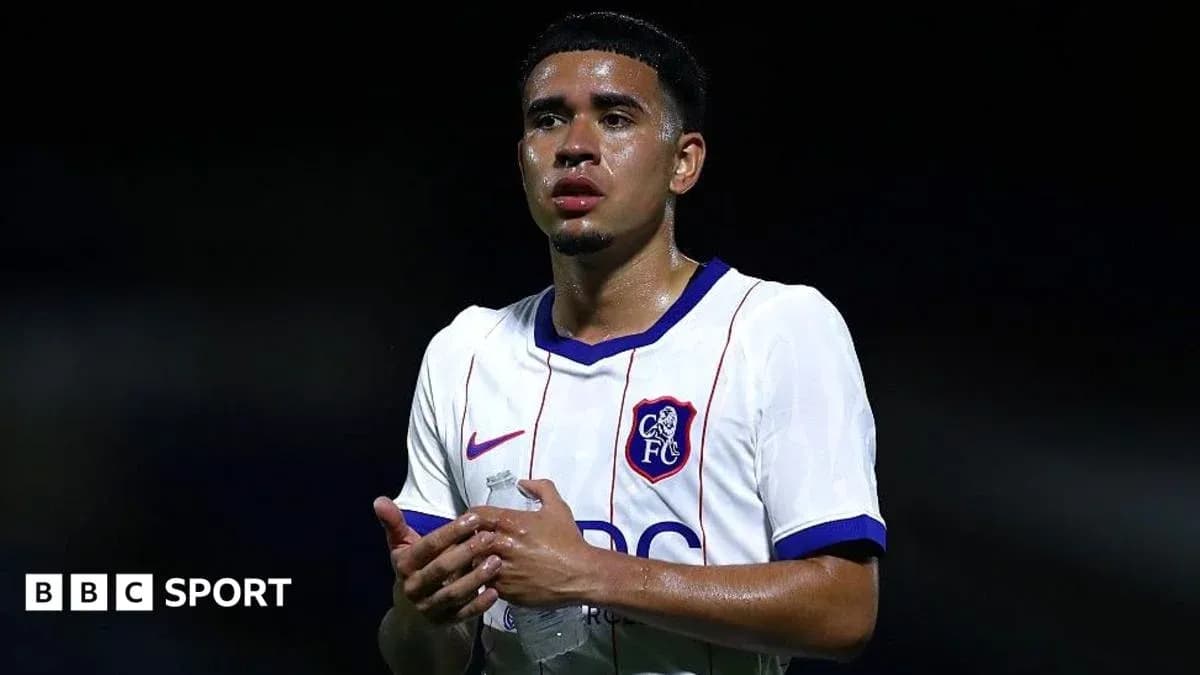
Kendry Paez finally pulled on a Chelsea shirt at the weekend. Not under the lights at Stamford Bridge, not with the TV cameras rolling, but as a 12th‑minute substitute for Cobham Next Gen in a 4-1 win away at Arsenal’s Under-21s.
Three years after Chelsea agreed a £17.27m deal with Independiente del Valle for a 16-year-old prodigy, the reality is stark: at 19, one of South America’s most hyped talents is starting again in academy football.
From record-breaker to reality check
Paez’s story was supposed to be different.
At 15, he became the youngest debutant and goalscorer in Ecuador’s top flight. He stepped straight into the Copa Libertadores that same season. By 16 years and 131 days, he was the second-youngest South American ever to play in a World Cup qualifier, behind only Diego Maradona. A month later, he became the youngest South American to score in one, netting in a 2-1 win away to Bolivia.
By the time Chelsea struck their agreement in 2023, Paez already had 18 caps and two goals for Ecuador. The club thought they were getting a phenomenon. The numbers, the noise, the clips from Quito and beyond all said the same thing: this was the next big one.
Chelsea treated him like it. He trained regularly with the first team before he was even eligible to sign, waiting for his 18th birthday to make the move official. When violence erupted in Ecuador in early 2024, the club helped provide security for Paez, his family and the family of international team-mate Moises Caicedo.
The pathway looked clear. The talent seemed undeniable. Then the complications began.
Loans, criticism and a stalled rise
A video of Paez in a New York strip club while away on international duty surfaced a few months later. It was a flashpoint that fed into a growing narrative around his decision-making off the pitch.
On it, his Chelsea journey took its first detour through Strasbourg. The French club, linked to Chelsea through shared ownership, looked like the ideal halfway house: top-flight minutes, lower pressure, room to grow.
At first, it worked. Paez won Ligue 1’s Young Player of the Month award in September. The hype flickered back into life. Then came the demands of a full season, and the tone changed.
“We expect more, clearly,” then-Strasbourg manager Liam Rosenior said later in the campaign. “I’m tired of using the excuse of the player’s youth.”
One goal in 21 appearances told its own story. The loan was cut short despite the ownership links, and Paez moved again, this time to River Plate on a two-year deal that was supposed to reboot his trajectory in one of the most intense football environments on the planet.
Argentina brought more questions. Sources there echoed concerns about his attitude and pointed to a flat display in April’s Superclasico, a 1-0 defeat to Boca Juniors at the Monumental, as a symbol of his struggle to impose himself. Soon after, River Plate president Stefano Di Carlo named Paez among 15 players training away from the first team. Others around the club felt he deserved more chances, but the outcome was the same.
His loan ended by mutual consent. One goal, 14 appearances, 461 minutes. Another restart required.
Ecuador’s golden hope under scrutiny
Back home, the doubts grew louder. Ecuador had built Paez up as their next great attacking talent, a future star already carrying the weight of 27 caps and a World Cup appearance before turning 20.
Michel Deller, the owner of Independiente del Valle, spoke with a mixture of affection and concern to Hincha Amarillo.
“He’s like a son to us. We care about him deeply,” Deller said. “He’s a good kid who’s had a tough time and has made decisions that have complicated his life.
“We are always hopeful he’ll show his exceptional talent once again but right now, it’s up to him to decide what to do with his life.”
Chelsea and those close to Paez do not dismiss those worries entirely, but they see a different picture. They believe the criticism has swelled beyond reality, that a teenager who has already played more than 100 senior games is being judged as if he were a finished product rather than a work still very much in progress.
A quiet night, a late reminder
That brings the story back to England, and to far smaller stages.
At Wycombe Wanderers in the EFL Trophy on Tuesday, in front of just 778 fans, Paez offered a glimpse of the player Chelsea thought they were signing. It came late, almost as an afterthought, but it was there.
Cobham Next Gen were trailing when he stepped over a short corner and whipped in an outswinging cross that Harrison Bettoni tapped home in added time. Moments later, another delivery from the right caused panic in the box as Chelsea hunted an equaliser.
Until then, he had drifted on the fringes of the game. Used as a right-sided No 10 in a system mirroring Xabi Alonso’s back-three shape, Paez struggled to influence proceedings. He had joined the warm-up but mostly kept to himself before coming on in the 62nd minute, a Spanish-speaking outlier in a young group still getting used to him.
Chelsea lost. Paez’s contribution, outside those late flashes, was limited. Yet inside the club, that brief spell still mattered. It was a reminder of his left foot, his delivery, his ability to tilt a game in seconds when his head and body are in sync.
Alonso’s stance and Chelsea’s plan
The context around his current role is unflinching. New manager Xabi Alonso has already said Paez is “not in my plans”. On the club website, he is listed as an academy player. For a teenager once spoken about as a generational talent, that is a jolt.
Chelsea even tried to find him a loan in English football for this season. Fifa regulations blocked any move abroad after the club used all six of their available international loan slots. The solution, at least for now, is simple: keep him at Cobham, keep him playing, and keep him close.
Inside the training ground, they like what they see. The club has been encouraged by his attitude since returning. He is back in a stable, elite environment, surrounded by staff who know his story and family members who have been present at recent matches.
This is not a player starting from scratch. Paez has already made 70 appearances for Independiente del Valle and passed the 100-game mark in senior football. He has lived more careers by 19 than many manage by 25. That experience, Chelsea believe, can anchor him rather than weigh him down.
What comes next?
The next step is clear and unforgiving: perform.
Academy games at Chelsea are heavily scouted by clubs across the English Football League and beyond. If Paez strings together performances, a loan move in January is a realistic target, either within England or, if one of Chelsea’s six international loan slots opens up, abroad again.
Those close to him remain optimistic. They argue that his situation is more than salvageable, that the qualities which made him one of the most coveted young players in South America have not disappeared, only stalled.
For now, Kendry Paez is not the wonderkid lighting up Stamford Bridge. He is the 19-year-old trying to catch the eye on cold nights in front of a few hundred people, delivering crosses that hint at something more.
The question is no longer whether he can be special. It is whether he can fight his way back to the level where that talent actually matters.