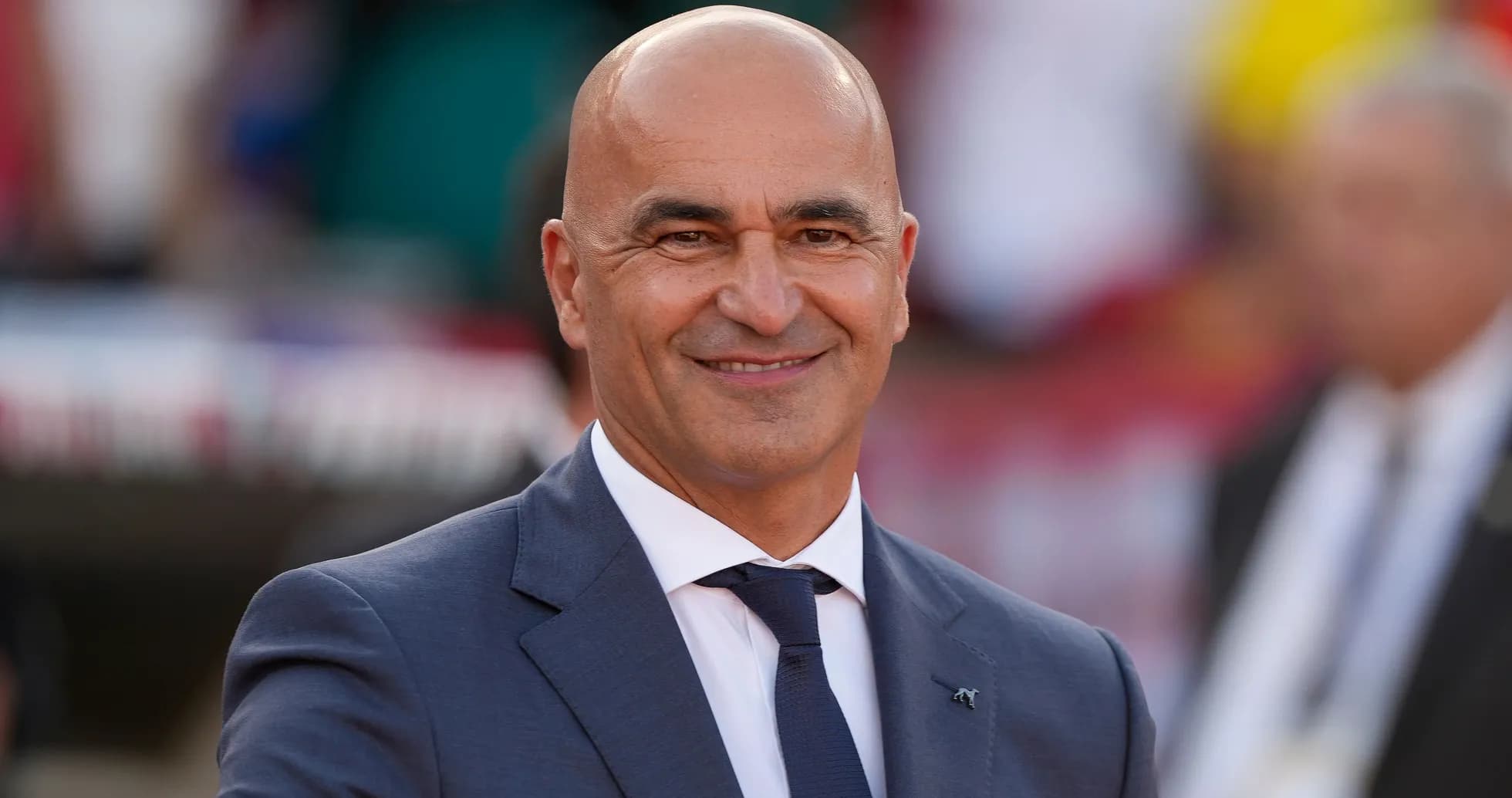
KNVB Pursues Roberto Martínez as New Coach
The KNVB has torn up its usual script in the hunt for Ronald Koeman’s successor – and all roads now lead to Malaga.
According to De Telegraaf, technical director Nigel de Jong has travelled to Spain for face-to-face talks with 53-year-old Roberto Martínez, a move that underlines just how far the Dutch federation is prepared to go after a string of setbacks with homegrown candidates. This is no routine round of phone calls. It is a full-on charm offensive.
Dutch doors closing, Spanish option opening
The KNVB’s first plan was clear: a top Dutch coach for the top Dutch job. That plan has collapsed piece by piece.
- Peter Bosz said no.
- Arne Slot stepped away.
- Erik ten Hag also removed himself from the running.
All three did so for professional reasons, leaving the federation scrambling. Each withdrawal pushed the KNVB further from its long-standing tradition and closer to a bold, foreign solution.
That solution could be Martínez. And if it happens, it would be historic.
The Netherlands have not appointed a non-Dutch national team coach since Austrian Ernst Happel, who guided the Oranje to the 1978 World Cup final. For nearly half a century since, the most prestigious dugout in Dutch sport has been reserved exclusively for Dutch managers. Changing that now would mark a clear break with the past, and a public statement that the KNVB is prepared to prioritise philosophy and pedigree over nationality.
A Spaniard steeped in Dutch ideas
On paper, Martínez is Spanish. In footballing terms, many inside the KNVB see him as something else entirely.
He is a close friend of Jordi Cruijff. He has long championed the Johan Cruijff school of thought – positional play, dominance with the ball, aggressive pressing, a clear structure in possession. Those ties matter in Zeist. They allow the federation to argue that, even if the passport changes, the footballing DNA does not.
That is why Martínez has moved from an outside name to a serious candidate. The federation wants continuity of style without being bound by nationality. In Martínez, some see a coach who can speak the language of Dutch football without being Dutch.
Slot sets the record straight
While Martínez has moved into the spotlight, Arne Slot has been forced to address the rumours swirling around his own brief candidacy.
The Feyenoord coach had been in talks to take over the national team but decided to withdraw. Reports quickly surfaced that money and contract length had driven him away. Slot pushed back hard.
“Over the past few weeks, and particularly the past few days, various reports have appeared regarding the vacancy at the Dutch national team, suggesting that I had withdrawn from the process after lengthy negotiations, including regarding salary and contract duration. That speculation is incorrect. We simply never reached that stage of the talks,” he said in a statement.
Then came the key line – and the real reason.
“At this stage of my career, I prefer to see myself on the training pitch with my players every day. Something that is simply not possible in the same way with a national team.”
Slot’s message was blunt: this was about the day-to-day rhythm of club work, not pay or power. For the KNVB, it was another door closing, but for Slot, it was a reaffirmation of where he believes his future lies right now.
Internal solutions explored, then parked
As the external search gathered pace, the KNVB also looked inward.
Nigel de Jong and Clarence Seedorf, together with director of professional football Marianne van Leeuwen, held an exploratory meeting with Jong Oranje coach Michael Reiziger at the Okura Hotel in Amsterdam. The timing was symbolic, coming just before the Johan Cruijff Schaal clash between PSV and AZ – a showcase of Dutch talent and Dutch coaching.
The conversation with Reiziger, though, appears to have gone no further. Reports indicate there have been no follow-up talks, suggesting that while the KNVB wanted to test internal options, it has not yet seen a natural, ready-made successor in its own youth structure.
Van Gaal left on the sidelines
All of this has unfolded against a backdrop of public nostalgia.
Many supporters have called for Louis van Gaal to return for a fourth spell in charge. His name carries weight, his track record with the national team is undeniable, and his presence would have offered the KNVB a safe, familiar option in a turbulent search.
Yet the federation has not contacted the 75-year-old at any stage of this process. That omission has sparked controversy and debate, with questions over why such an experienced figure has been left outside the conversation while the KNVB flies abroad to court a foreign coach.
The message, intentional or not, is clear: the federation is trying to move forward, not back.
So the picture is set. Domestic heavyweights have stepped aside. Internal candidates remain on standby rather than on the front line. Van Gaal watches from a distance. And in Malaga, Nigel de Jong sits across the table from Roberto Martínez, sounding out whether the next era of Dutch football could be led by a Spaniard steeped in Cruijffian thought.
If the KNVB makes that leap, it will not just be appointing a new coach. It will be rewriting nearly 50 years of its own history.