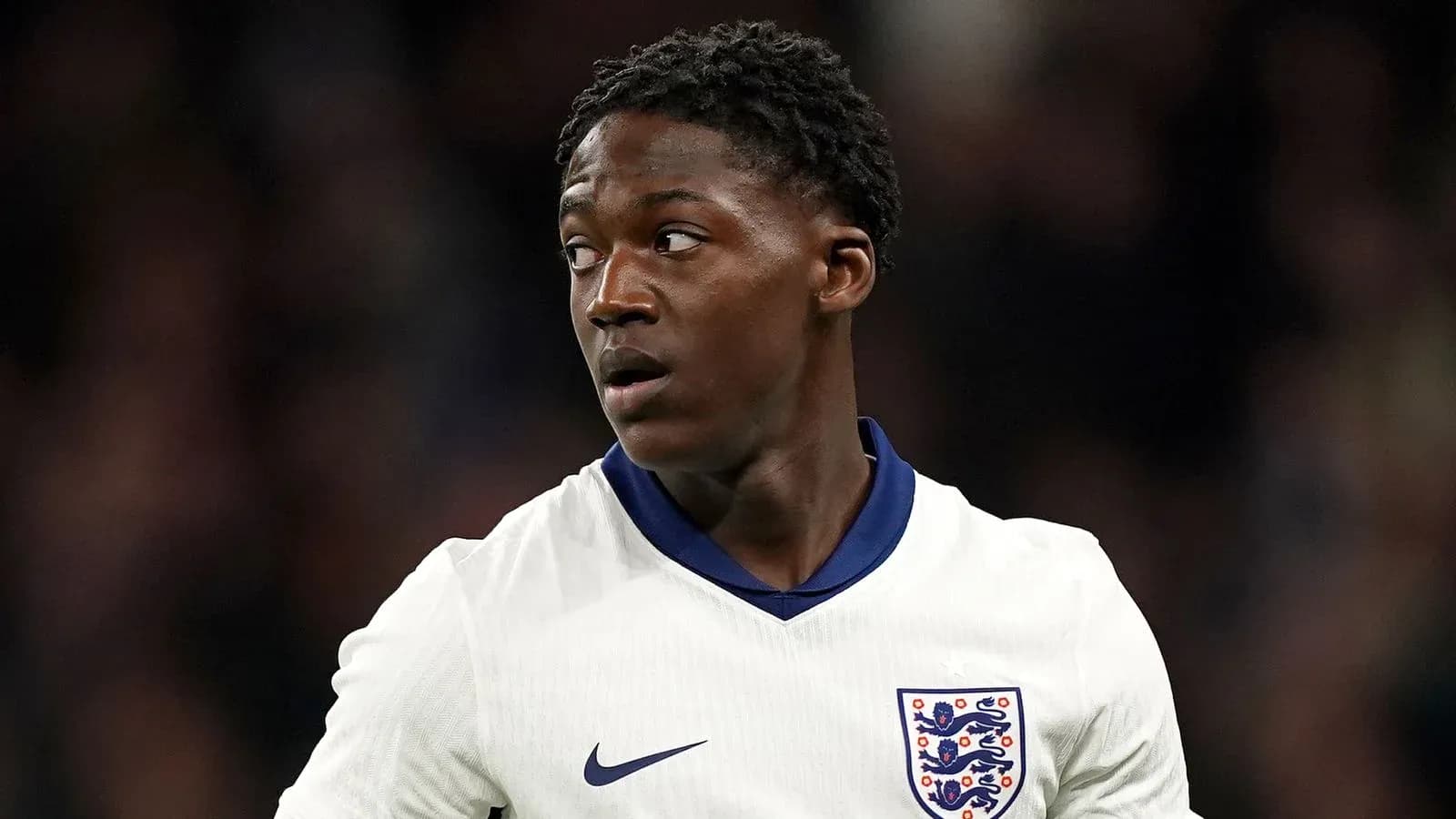
Kobbie Mainoo's World Cup Journey: A Young Talent in the Shadows
Kobbie Mainoo cuts a lonely figure at this World Cup.
While England stride towards a semi-final with Argentina, one of their brightest young talents has spent the summer in the shadows, slipping quietly out of dressing rooms and onto team buses, unseen on the pitch and increasingly easy to forget amid the noise.
He is not alone in being unused, but his story feels different. Ivan Toney knew his brief from Thomas Tuchel: he is the “finisher”, the man for a crisis if Harry Kane breaks down or a penalty shoot-out looms. Kane has been relentless, six goals and no hint of injury, and England have avoided the lottery of spot-kicks. Toney’s time has simply never come.
Trevoh Chalobah? A late call-up after Tino Livramento’s injury, drafted in as cover and always likely to sit behind John Stones in the pecking order. He arrived knowing his role, and the tournament has played out exactly as expected.
Mainoo’s situation carries a different weight. There is no obvious label for him, no neat explanation that makes this exile feel logical.
This is the teenager who started a European Championship final for England at 18, who walked off that pitch in Berlin last summer with the world seemingly opening in front of him. That night felt like the start of a decade in the national shirt. Instead, in the USA and Mexico, he has not played a single minute.
You see it in the small details. After every one of England’s six matches, Mainoo has been the first out of the dressing room, the first up the steps of the team bus. No entourage, no arm around the shoulder from a team-mate. He does not stomp or sulk. He just looks… detached. A little lost, as if he is still trying to work out how he has gone from the centre of the stage to the edge of the frame so quickly.
The context makes his absence even more striking. Jordan Henderson’s World Cup ended the moment he broke his wrist during the celebrations that followed the win over Mexico. A midfield slot opened up and stayed open. Mainoo never stepped through it.
Tuchel has instead leaned heavily on Declan Rice and Elliot Anderson, the pair who have driven England through this tournament. Rice, the vice-captain and tactical anchor, has been inked onto the team sheet whenever remotely fit. Anderson, whose mid-tournament move to Manchester City seemed to turbocharge his confidence, has grown with every game and delivered his standout display in the quarter-final win over Norway.
Rice has been nursing illness and injury for weeks, patched up and pushed on. Until Norway. A vicious stomach bug picked up in Mexico left him bedridden for three days before the game in Miami. He could give Tuchel only 45 minutes in the sweltering heat.
If ever there was a moment for Mainoo, this looked like it.
Instead, Tuchel went another way. He turned to Eberechi Eze, asking the Arsenal man to slide inside and tilt the game in England’s favour with more attacking thrust, sharper passing between the lines, more incision. Eze is not a like-for-like replacement for Rice, but Tuchel wanted to tilt the balance towards risk and creativity.
Mainoo would have watched that change and wondered. His own game is built on energy, tempo, and crisp, forward-minded passing. In those draining second-half conditions, with legs heavy and minds slowing, his profile seemed perfectly suited to lift England’s midfield.
Tuchel thought differently again as the half wore on. On came Reece James into midfield, another player operating outside his natural starting position and another trusted lieutenant for the England manager. James has often been redeployed as a defensive midfielder under Tuchel, both for England and at Chelsea, even though his defined role in this squad is at right-back. He arrived here nursing a hamstring problem, yet still moved ahead of Mainoo in the queue.
Then came another twist. Ezri Konsa, filling in at right-back, cramped up and had to come off. James dropped back into defence. A vacancy appeared in midfield once more. For a moment, Mainoo must have felt the door finally creaking open.
It slammed shut again. Morgan Rogers entered the game, taking a central role while Eze drifted out to the left wing.
By that point, the pattern was impossible to ignore. When Tuchel looked to adjust his midfield, he preferred to bend others out of position rather than turn to the Manchester United youngster waiting patiently on the bench.
Coldly, the logic is understandable. James offers defensive assurance Tuchel trusts. Eze provides attacking flair and ball-carrying from deep. Rogers adds another layer of energy and movement. All three are more established in the manager’s mind, more familiar pieces in a puzzle he is trying to solve in real time with the World Cup on the line.
For Mainoo, that reality bites. This is not about a lack of talent. It is about hierarchy, timing, and a manager who is narrowing his circle as he chases the ultimate prize.
England face Argentina next, a semi-final loaded with history and tension. The margins will be tiny, the decisions even more ruthless. Tuchel will again lean on those he trusts most, those who have already delivered for him in this tournament.
Somewhere on that touchline, Kobbie Mainoo will pull his bib over his head, jog down the touchline, and wait again. The question now is not whether he belongs at this level. It is when, and under whom, he will be allowed to show it.