Kylian Mbappé vs Lionel Messi: The Ballon d'Or Race
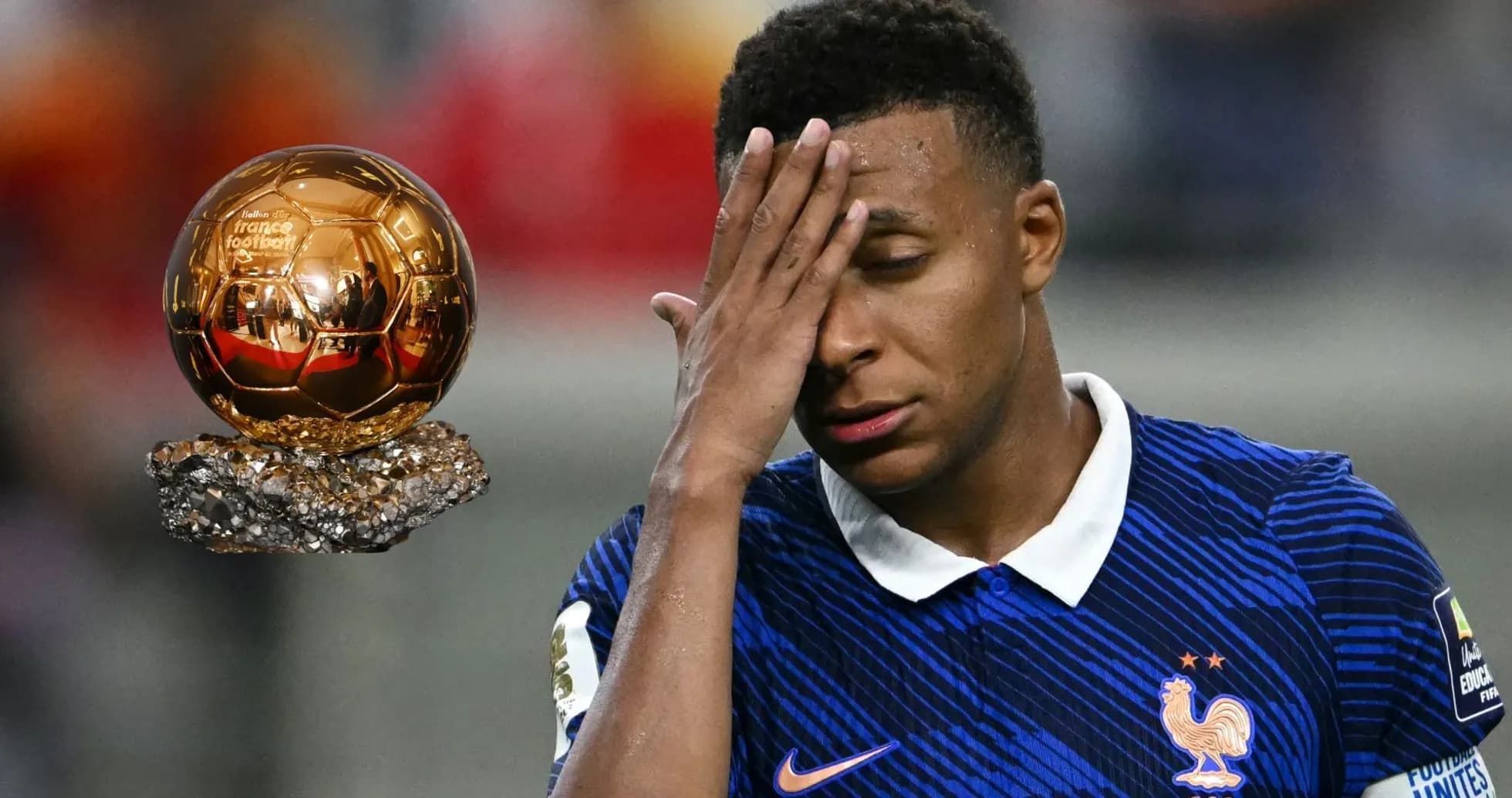
Kylian Mbappé arrived in North America looking every inch the new “Galáctico” ready to seize football’s biggest individual prize. Eight goals, a march to the semi-finals, and long, surging runs that bent games to his will – his World Cup campaign screamed Ballon d’Or contender.
Then Spain shut the door.
That defeat has done more than end France’s latest tilt at global domination. It has also stripped away the one thing Mbappé needed most this year: a defining, winner’s moment on the biggest stage. At club level, the picture is just as unforgiving. Two straight seasons at Real Madrid without a major trophy is a brutal line on any Ballon d’Or résumé, never mind for a man expected to own the next decade.
The rules of this game are harsh and simple. To stand on that Paris stage, you don’t just dazzle. You have to win.
Messi, again, from the shadows
While Mbappé’s season has been framed by near-misses, Lionel Messi has quietly, almost stubbornly, dragged himself back to the centre of the conversation. At 39, in a league many in Europe still sneer at, he has stacked up the kind of year that Ballon d’Or voters rarely ignore.
Eight goals on the road to another World Cup final with Argentina. A chance to defend the crown he lifted in Qatar in 2022. MLS Cup and MVP honours with Inter Miami in 2025. This is not a farewell tour. It’s a veteran reasserting control of a stage he once owned without challenge.
A ninth Golden Ball suddenly feels less like a romantic fantasy and more like a very real possibility – especially if he produces one more signature performance against Spain.
Jeremie Aliadière sees the landscape clearly. Speaking to GOAL in association with Betinia NJ, the former France international didn’t hesitate when asked if Mbappé is likely to see his Ballon d’Or drought extended.
“Yeah, I think so,” he said. If Mbappé had capped his season with silverware at Real Madrid, the conversation might be different. “Then he probably could still be in the running,” Aliadière admitted. But he didn’t. And that, in this race, is everything.
Aliadière praised Mbappé’s output – “a ridiculous amount of goals” and a season where he “carried the team for most part of the season.” Individually, it was elite. Collectively, it fell short. No Champions League. No World Cup. No Euros. In Ballon d’Or terms, that’s a locked door.
“So, having not done that, I can't see him being the Ballon d'Or,” Aliadière concluded. The same, he argued, goes for Harry Kane. The England captain also had the numbers and the narrative in place, but England’s failure to “go all the way” ripped his ticket out of the ballot box.
Aliadière’s verdict is blunt: “I think it’ll probably be one of Argentina.” And if Messi lifts it again? “I think everybody's just going to be mesmerised by the age and what he's produced at the World Cup and forget that he plays in MLS for Inter Miami.”
Age, league, and the illusion of decline
Messi’s age has become part of the spectacle. Thirty-nine is supposed to be the twilight, the slow fade. Instead, his 2025 in North America has been all about control and impact. MLS Cup in his hands. MVP status confirmed. Inter Miami built around his rhythm and imagination.
Then there is Argentina. England learned the hard way in Atlanta, undone by Messi’s influence in a dramatic semi-final that felt like another chapter from his prime years, not a late-career cameo. The idea of him lifting another Golden Ball at the World Cup no longer feels sentimental. It feels logical.
Kleberson, who knows both MLS and the World Cup pressure cooker, put it simply when speaking to GOAL about Messi’s chances of pulling four Ballons d’Or clear of Cristiano Ronaldo.
“Wow! That guy never stops!” he said. For Kleberson, Argentina’s chances of winning the World Cup are higher “with Messi than any other country, just because Messi is still playing at a good level.”
The comparison with Ronaldo is unavoidable, and Kleberson did not dodge it. Ronaldo, he said, is “still playing at a level,” but the environment around him is not the same. The chemistry, the support cast, the collective purity of Argentina’s structure around Messi – all of it tilts the scales.
“What Portuguese players have and Argentine players have is completely different,” Kleberson argued. “That’s why Messi has a lot of chance.”
The equation is stark: if Messi wins the World Cup again, “100 per cent he’s going to be up to win the Ballon d’Or again.” Not as a nostalgia vote, but as the logical choice. Kleberson went further, pointing out that even Brazilian players and fans “want to see good players win the Ballon d’Or and the World Cup – players that are a joy to see play. Messi is one of those.”
The standard Mbappé must meet
Strip away the emotion and the storylines, and the Ballon d’Or battle comes down to this: Messi is still delivering titles and decisive World Cup moments. Mbappé, for all his brilliance, is not.
The Frenchman’s numbers are monstrous. His influence at Real Madrid is undeniable. Yet the modern Ballon d’Or, shaped by the Messi-Ronaldo era, demands more than individual dominance. It demands that those performances translate into the sport’s biggest trophies.
Messi, improbably, is still doing that at 39.
If he walks away from this World Cup with another medal around his neck and another Golden Ball under his arm, the debate may not just be about this year’s award. It will be about something more uncomfortable for Mbappé and his generation.
How long can they keep chasing a man who refuses to step aside?