Lando Norris Secures Pole Position in Chaotic Sao Paulo Grand Prix Qualifying
Lando Norris stepped out of the McLaren on Saturday evening looking drenched, drained – and absolutely delighted. Interlagos had thrown a storm at Formula 1, and he had danced through it better than anyone.
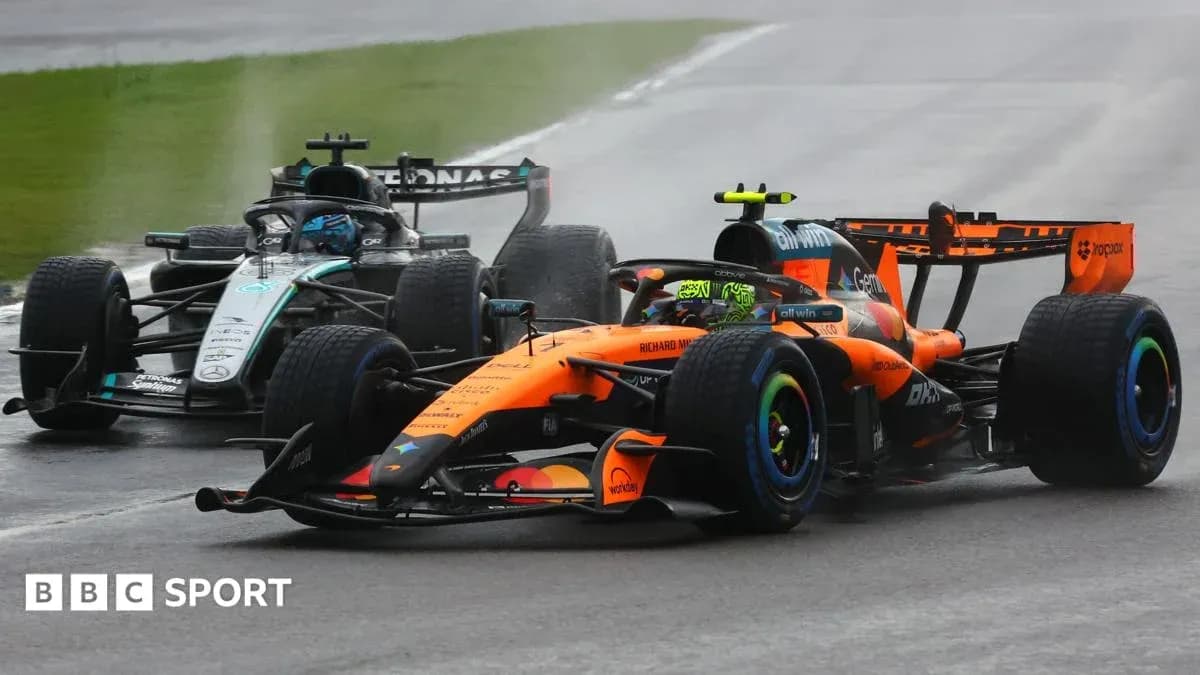
“This is some of the wettest conditions I’ve ever driven in,” he said, and it was no exaggeration. The Sao Paulo Grand Prix qualifying session was halted for nearly 90 minutes, the track on the edge of undriveable, the spray so thick it turned the main straight into a grey tunnel.
Yet when the chaos cleared, Norris was on pole in Brazil for the third year in a row. In a car he openly admits was not fast enough in the dry.
A grid turned upside down
The storm did more than test reflexes. It ripped up the form book.
Grid penalties for four of the usual heavyweights, including George Russell, Lewis Hamilton and Max Verstappen, collided with the weather to produce a surreal starting order.
Behind Norris, Russell will line up second on Saturday’s timesheet but not on Sunday’s grid, his five-place penalty shuffling him down the order. That opens the door for an unlikely second row: Liam Lawson in the Racing Bulls and Nico Hulkenberg in the Audi, both seizing a rare shot at the spotlight.
Oliver Bearman, the Haas rookie, starts sixth. Fernando Alonso and Alex Albon, who had not seen Q3 all year in 2026, finally broke through to eighth and ninth.
At the other end, the back of the grid reads like the front row of a title decider. Ferrari’s Lewis Hamilton and Red Bull’s Max Verstappen, winner here from 17th in the wet two years ago, start 20th and 21st after engine changes pushed them beyond their seasonal allocation. Charles Leclerc, fourth in qualifying, tumbles 10 places for the same reason.
Interlagos loves disorder. The forecast for Sunday is for light rain, but nobody in the paddock believes that tells the full story. This place has a habit of making its own weather – and its own drama.
Norris thrives where others flinch
Norris had not taken pole since Spain in September. McLaren have brought upgrades, and he acknowledged they have sharpened the car. But he was blunt: this one belonged to the clouds.
“We’re lucky it’s wet, because if it was dry, I wouldn’t be sitting here,” he admitted. “In the dry, we definitely didn’t have the pace.”
McLaren looked better than in recent races, yet still short of Mercedes over one lap. The rain levelled the field. Norris did the rest.
“These are conditions where you feel like you can make a little bit more of a difference,” he said. Against a group of proven rain specialists, he stitched together two laps that broke the session open, managing the risk on a track that punished the slightest misjudgement.
“It was tense when you want to push so much. You need to learn about the conditions, but you also need to not make a single mistake.”
Q3, with the light fading and the puddles multiplying, was the real test. Visibility dropped, dry lines vanished and reappeared from corner to corner. Norris called it “more rewarding”. It looked like a driver completely at ease in chaos.
He wants more of the same on Sunday.
“I’m hoping for a wet race. There’s a good likelihood it’ll be wet… we could just have an exciting race with a little bit of everything, honestly.”
Russell’s near-miss and a year of frustration
For Russell, the session brought another jag of frustration in a season that has left more bruises than trophies.
He qualified second, but walked away convinced pole had been his.
Q1 had already bordered on the insane. “The visibility was zero down the straight into Turn Four,” he said. “I was wheel-spinning in fifth gear, over 200km/h, aquaplaning. When you’re aquaplaning on the straight and you can’t see in front of you… it does seem a bit crazy.”
He loves the rain, especially here. Yet even he questioned whether those conditions would have been acceptable in a race.
The real sting came later. On what he believed was his best lap, Russell was told to back off after catching Albon in the middle sector. Mercedes gambled that the incoming heavier rain would hold off long enough for him to go again on a clearer track.
It didn’t. The rain arrived, the track slowed, and Russell’s radio response left no doubt about his mood.
Toto Wolff reminded him he was still P2. Russell snapped back that he was not there to be second.
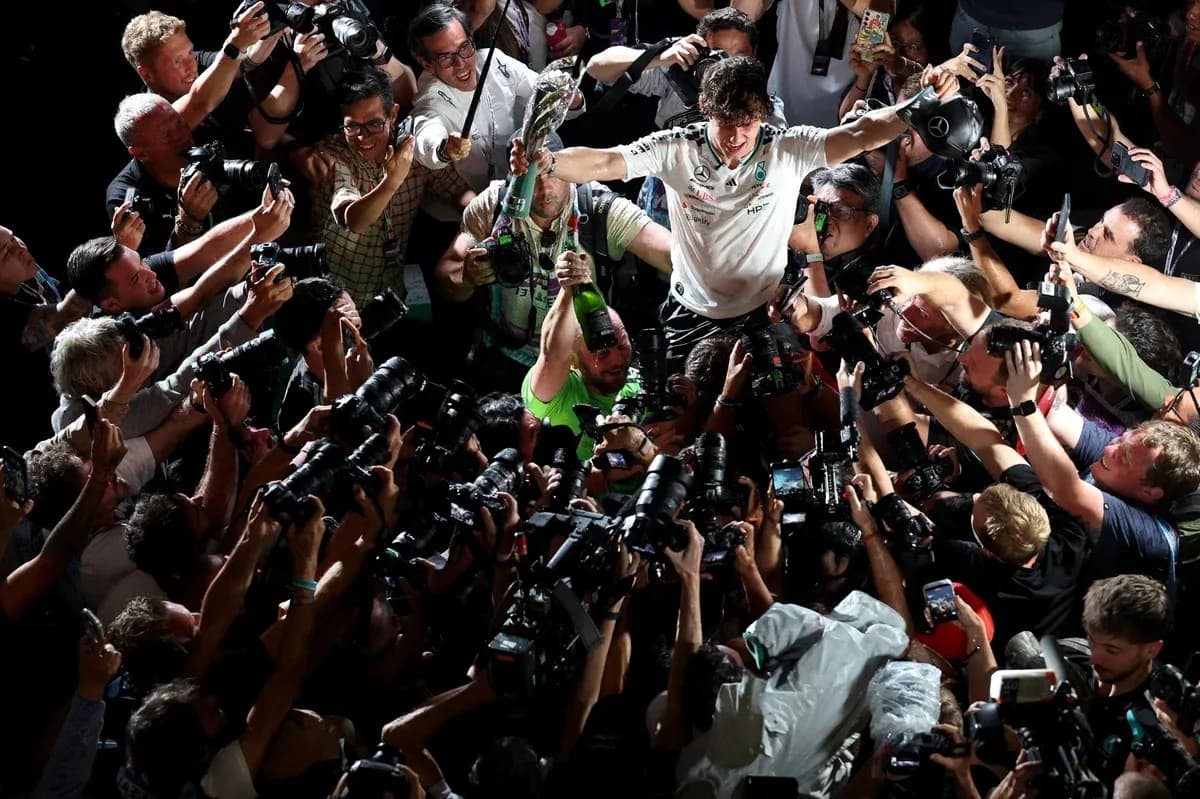
On paper, it was a moot point. His five-place penalty meant he would not have started from pole even with the fastest time. For Russell, that was irrelevant. This was about proving something to himself after a year overshadowed by Kimi Antonelli, who sealed the world title last weekend while Russell watched.
“Gives me the confidence and reminds me again that I haven’t forgotten how to drive,” he said. “It would have meant a lot to me to clinch the pole with a great performance like we showed in qualifying.”
He left convinced that, with Norris, he had been one of the two standout drivers in the rain.
“I felt really confident in the rain. I think my pace, along with Lando’s, was by far the best out there. I hope it is wet tomorrow. I feel I’ve got a greater chance if it’s wet.”
Alonso’s reminder of what’s been wasted
The downpour also handed Fernando Alonso something he has barely had all year: a chance to show what he can still do.
The Aston Martin-Honda package has been a grind – short on power, tricky in its delivery, and rarely anywhere near the sharp end. Glimpses of the old Alonso have been fleeting.
Interlagos gave him a window. He charged through Q1 and Q2, taking risks when the grip level was anyone’s guess, and made his first Q3 of the season.
In the final shootout, the magic faded a touch. Eager to bank a lap before the next wave of rain, Alonso was first in the pit-lane queue. It might have cost him.
“The tyres were ice cold in Q3, so I had no grip,” he said. By the time he looked at the timing screens, sixth place was 1.8 seconds up the road. Any dream of something higher evaporated.
Even in the wet, the limitations of the Honda power unit lurk in the background. Less full-throttle time helps mask the deficit, but the way the engine delivers its power in the corners still unsettles the car.
“These conditions are more about the level of risk you want to take,” Alonso said. A little aquaplaning here, a snap of oversteer there – the margins are razor-thin.
He, too, wants rain on Sunday. A dry race, with a long drag up the hill and down the main straight, would expose Aston Martin’s weaknesses and likely send him sliding backwards.
Hamilton, Leclerc and Verstappen in traffic
If the front of the grid feels unfamiliar, the back looks downright absurd.
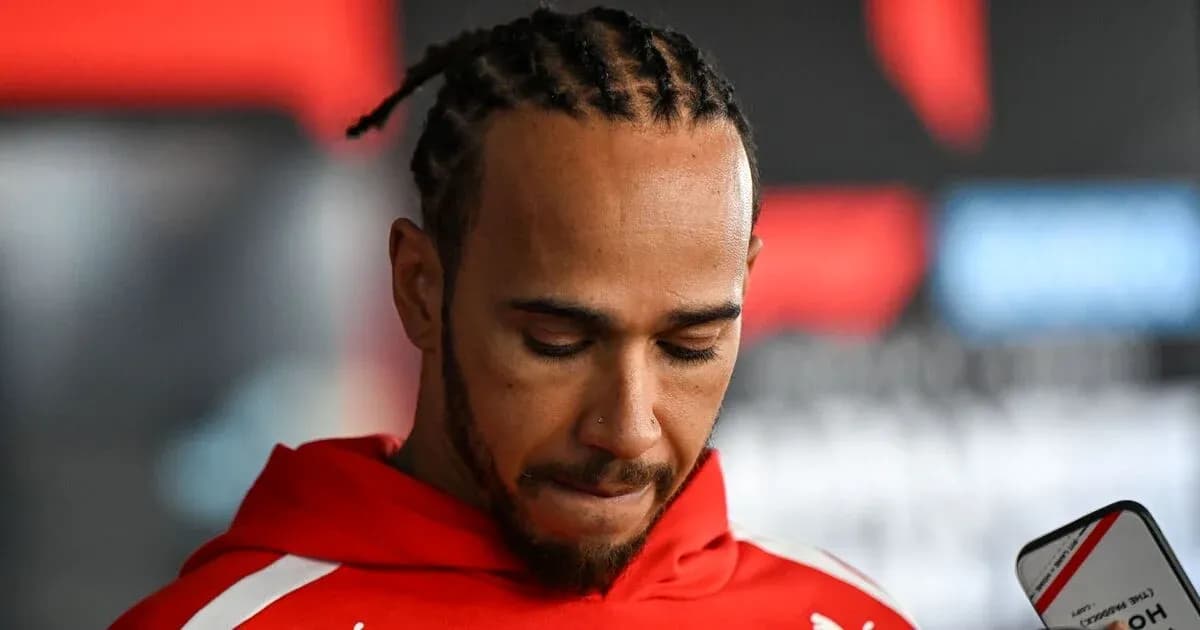
Hamilton and Verstappen, multiple champions, line up 20th and 21st. Both took fresh internal combustion engines and blew through their allocation; Hamilton needed a second new unit after his first replacement failed in final practice, dropping him all the way to the tail with Verstappen.
Leclerc, who starts between them after his own 10-place penalty, has had a turbulent week on and off the track.
On Thursday, he and Hamilton held clear-the-air talks after their first-lap clash in Mexico cost Ferrari a likely win. The fallout had rumbled on too long for Leclerc’s liking.
“It was good to speak. This is always needed after a moment like this,” he said. “It took proportions that are way too big, but it has been around also for way too long.”
He had flown back to Europe between races for the birth of his first child, a daughter named Bianca, and only now found the space to address the Mexico incident properly.
“I really believe that when we speak, things are much better straight away,” he added. “Of course, there is tension. Of course, we want to finish ahead of each other… it’s OK sometimes to disagree on the way you see things, but at the same time, discussing about those then helps a whole lot.”
Hamilton echoed the sentiment.
“Me and Charles sat and spoke and we squashed it, and we’re moving on,” he said. “We still have a huge amount of respect for each other… Sometimes in those scenarios it takes having a conversation and there’s been no demands from either side. It’s both just giving our points and areas we can do better and support each other.”
Ferrari might quietly welcome the fact that their two drivers are separated by six places on the grid. Less chance of a repeat of Mexico, more room to attack.
Both, along with Verstappen, now face the same brutal question: how far can they cut through the field in cars that, under this year’s regulations, find overtaking at Interlagos tougher than before?
A stormy stage for Sunday
Light rain, a soaked grid of egos and ambitions, a front row led by a driver who believes he only wins this fight if the clouds stay dark.
Behind him, a frustrated Russell, a hungry Lawson, a defiant Hulkenberg, a revitalised Alonso – and, buried in the pack, Hamilton, Leclerc and Verstappen, all aiming to turn a compromised Saturday into a statement Sunday.
Interlagos has already shown its teeth. If the rain returns, who dares the most?