Liverpool and Chelsea Draw 1–1 in Tactical Battle
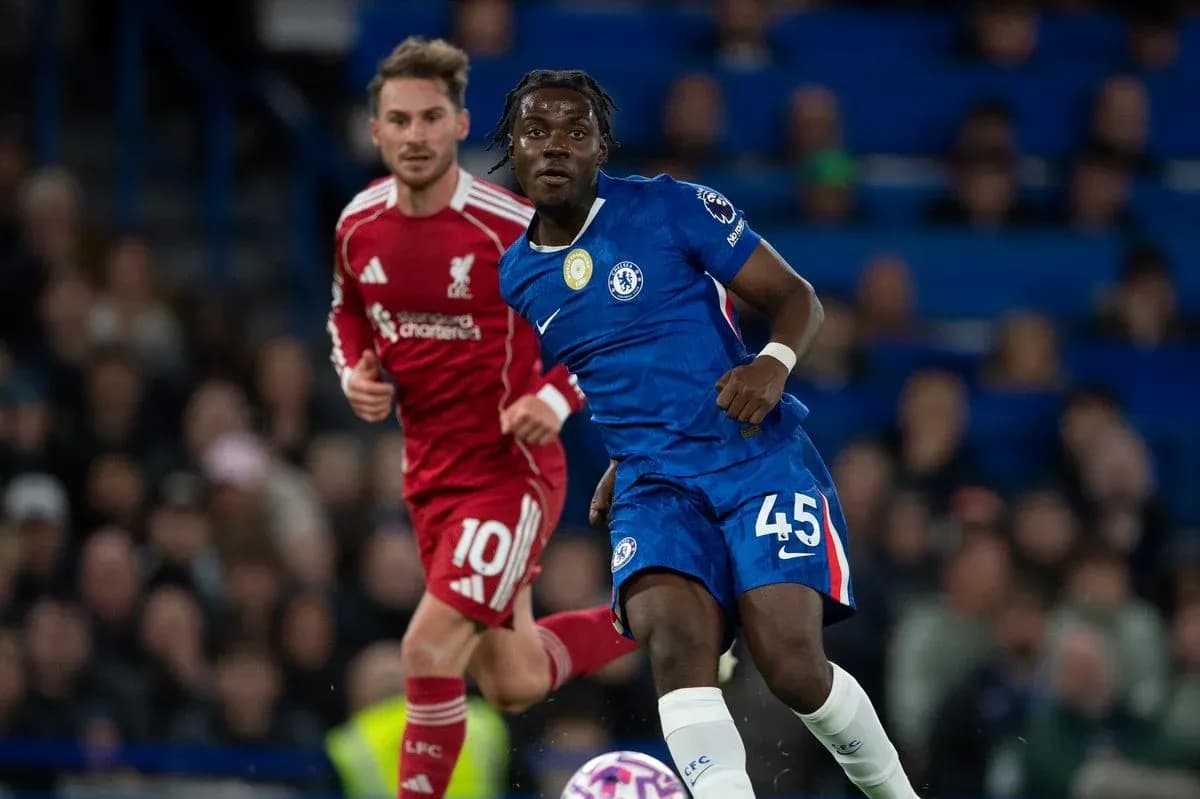
Liverpool and Chelsea shared a 1–1 draw at Anfield in Premier League Round 36, a match that quickly settled into a tactical arm-wrestle rather than a chance-laden shootout. Liverpool struck early through Ryan Gravenberch, but Enzo Fernández’s equaliser before the break restored parity and set up a second half dominated by structure, duels, and small adjustments rather than clear openings. With expected goals essentially level (0.56 vs 0.50) and both goalkeepers registering just two saves apiece, the contest became a test of pressing schemes, rest defence, and midfield control more than attacking fluency.
The scoring opened on 6 minutes when Ryan Gravenberch arrived from midfield to finish a Liverpool move, assisted by Rio Ngumoha. The pattern reflected Arne Slot’s intent: interior midfielders breaking Chelsea’s first line and attacking the box. Chelsea answered on 35 minutes, Enzo Fernández stepping up from midfield to level with a “Normal Goal”, capitalising on space in front of Liverpool’s back line.
Early in the second half, Chelsea thought they had turned the game around when Cole Palmer scored at 50 minutes, but VAR intervened and the goal was cancelled. That decision preserved the 1–1 scoreline and subtly altered the tactical risk appetite of both sides, with neither willing to fully unbalance their structure in pursuit of a winner.
From 63 minutes onward, the match flow was shaped heavily by substitutions and discipline. At 63', Andrey Santos (OUT) made way for Reece James (IN) in Chelsea’s first change, signalling a shift towards more width and crossing threat from the right. On 67', Jorrel Hato received a yellow card:
67' Jorrel Hato (Chelsea) — Foul
Moments later at 67', Liverpool adjusted their front line: Rio Ngumoha (OUT) was replaced by Alexander Isak (IN), adding a more traditional central reference in attack.
At 73', Chelsea’s midfield control came at a disciplinary cost:
73' Enzo Fernández (Chelsea) — Foul
Liverpool then reshaped their defensive structure with a double substitution at 77': Cody Gakpo (OUT) was replaced by Federico Chiesa (IN), and Ibrahima Konaté (OUT) was replaced by Joe Gomez (IN). Chiesa’s introduction hinted at a more direct, one-vs-one threat from wide areas, while Gomez’s entry aimed to stabilise the back line and help in build-up.
Chelsea’s defensive unit continued to absorb pressure but again crossed the disciplinary line:
83' Marc Cucurella (Chelsea) — Foul
The closing minutes saw rising tension and game management incidents. At 88', Liverpool’s Joe Gomez was booked:
88' Joe Gomez (Liverpool) — Argument
Chelsea’s midfield shield then picked up another caution at 89':
89' Moisés Caicedo (Chelsea) — Handball
Finally, at 90+4', Liverpool’s deep playmaker was sanctioned:
90+4' Alexis Mac Allister (Liverpool) — Persistent fouling
Card totals, locked from the events: Liverpool 2 yellow cards, Chelsea 4 yellow cards, total 6.
Tactically, Slot’s Liverpool leaned into a possession structure built on a back four of Curtis Jones, Ibrahima Konaté, Virgil van Dijk and Miloš Kerkez, with Giorgi Mamardashvili behind them. Despite Jones being listed as a defender, his profile allowed Liverpool to morph in possession, likely stepping into midfield at times to support Alexis Mac Allister and Ryan Gravenberch. Jeremie Frimpong and Dominik Szoboszlai, both named as midfielders, provided verticality and half-space occupation, while Rio Ngumoha functioned as a creative link to Cody Gakpo.
Liverpool’s 48% possession, 473 total passes and 84% accuracy show a side comfortable without absolute control of the ball but intent on fast, structured progressions. Their 8 total shots (3 on target) and 0.56 xG underline a measured but not explosive attacking output; most of the danger was concentrated early, particularly around Gravenberch’s goal. The introduction of Alexander Isak and Federico Chiesa in the second half was a clear attempt to add penalty-box presence and individual incision, but Chelsea’s compactness limited their influence.
Defensively, Liverpool’s “Defensive Index” in this match is reflected by allowing only 6 shots and 0.50 xG. Mamardashvili made 2 saves, and the low shot volume conceded suggests that the Van Dijk–Konaté axis (later with Gomez) managed Chelsea’s forward João Pedro effectively, while Mac Allister and Gravenberch worked to block central lanes to Cole Palmer and Enzo Fernández. However, the bookings for Joe Gomez (Argument) and Alexis Mac Allister (Persistent fouling) indicate rising strain in late-game duels as Liverpool tried to prevent transitions.
Calum McFarlane’s Chelsea approached the game with a slightly more possession-oriented plan: 52% of the ball, 515 passes at 87% accuracy. The back four of Malo Gusto, Wesley Fofana, Levi Colwill and Jorrel Hato supported a technically strong midfield of Andrey Santos, Moisés Caicedo and Enzo Fernández, with Cole Palmer and Marc Cucurella operating between the lines behind João Pedro. This structure sought to overload central zones and then find Palmer or Cucurella in pockets.
Chelsea’s 6 shots (3 on target) and 0.50 xG show that while they controlled phases of the ball, Liverpool largely kept them to half-chances. The disallowed goal for Palmer at 50' was the clearest sign of Chelsea’s capacity to break lines when Palmer could receive between Liverpool’s midfield and defence. After Santos (OUT) was replaced by Reece James (IN), Chelsea gained a more natural wide outlet on the right, but this did not translate into a flurry of high-quality chances.
Discipline was a key differentiator in Chelsea’s tactical story. Four players were booked: Jorrel Hato, Enzo Fernández and Marc Cucurella all for “Foul”, and Moisés Caicedo for “Handball”. This pattern points to a defensive unit repeatedly forced into last-ditch or recovery actions against Liverpool’s runners and rotations. The handball by Caicedo at 89' underlines the pressure on Chelsea’s midfield shield in the closing stages.
From a statistical verdict, the draw is supported by almost perfectly balanced underlying numbers. Liverpool’s xG of 0.56 narrowly edged Chelsea’s 0.50, while both goalkeepers, Giorgi Mamardashvili and Filip Jørgensen, made 2 saves each and posted identical goals prevented figures of -0.49, suggesting that both conceded roughly what the chances warranted. Possession (48% vs 52%) and total passes (473 vs 515) tilt slightly towards Chelsea, but Liverpool’s higher shot volume (8 vs 6) reflects their more direct use of the ball.
Both sides committed 17 fouls, but the card distribution — Liverpool 2, Chelsea 4 — indicates that Chelsea’s infractions were more often of a type that broke attacking patterns or occurred in dangerous zones. In overall form terms, Liverpool showed a cohesive pressing and rest-defence structure, while Chelsea’s defensive index was solid but stretched, relying on tactical fouls and late interventions. The 1–1 scoreline, supported by the xG and defensive metrics, accurately captures a match where tactical discipline and structure outweighed attacking risk.